
Why Climb Kilimanjaro? 10 Reasons to Make the Trek
Why climb Kilimanjaro? For some, it is the challenge of reaching Africa's highest point. For others, it is the scenery, the shared experience or the chance to achieve something they will remember for the rest of their lives.
- Africa's highest mountain
- Extraordinary scenery
- A personal challenge
- An unforgettable experience
What Makes Climbing Kilimanjaro So Special?
There is no single reason why people climb Kilimanjaro. Some arrive with a lifelong ambition to stand on Africa's highest point. Others are drawn by the challenge, the landscapes or the experience of spending several days walking through one of Tanzania's most remarkable mountain environments.
What makes Kilimanjaro unusual is that the standard routes are trekking routes rather than technical mountaineering climbs. You don't need ropes, ice axes or previous climbing experience on the normal routes, but that doesn't make the mountain easy. Reaching 5,895 metres requires preparation, patience and enough time for your body to adjust to the altitude.
For many hikers, however, the reason they remember Kilimanjaro has as much to do with the journey as the summit — the changing landscape, the people they climb with, the mountain crew supporting them and the experience of watching the world change as they move higher each day.
10 Reasons to Climb Kilimanjaro
People often arrive focused on the summit. By the end of the climb, many of the stories they tell are about everything that happened on the way there.
The Mountain, the Challenge and the Scenery
Stand on Africa's Highest Point
At 5,895 metres above sea level, Uhuru Peak is the highest point on Mount Kilimanjaro and the highest point in Africa. For many hikers, simply standing there is reason enough to take on the mountain.
Reaching the summit is not about technical climbing. It is about walking steadily for several days, allowing your body time to acclimatise and continuing when the altitude, cold and fatigue make each step harder.
If you are wondering what that challenge actually involves, read our guide to how difficult it is to climb Kilimanjaro .
Take on a Genuine Personal Challenge
Kilimanjaro asks a lot of you without requiring you to be an experienced mountaineer. Long days on foot, changing weather, increasing altitude and summit night all test your preparation and determination.
That balance is part of its appeal. The challenge is significant, but for a well-prepared trekker it is a realistic goal rather than an expedition reserved only for technical climbers.
On Kilimanjaro, going slowly is part of climbing well. Our guides deliberately control the pace to help hikers conserve energy and adjust gradually to the altitude.
Experience Extraordinary Mountain Scenery
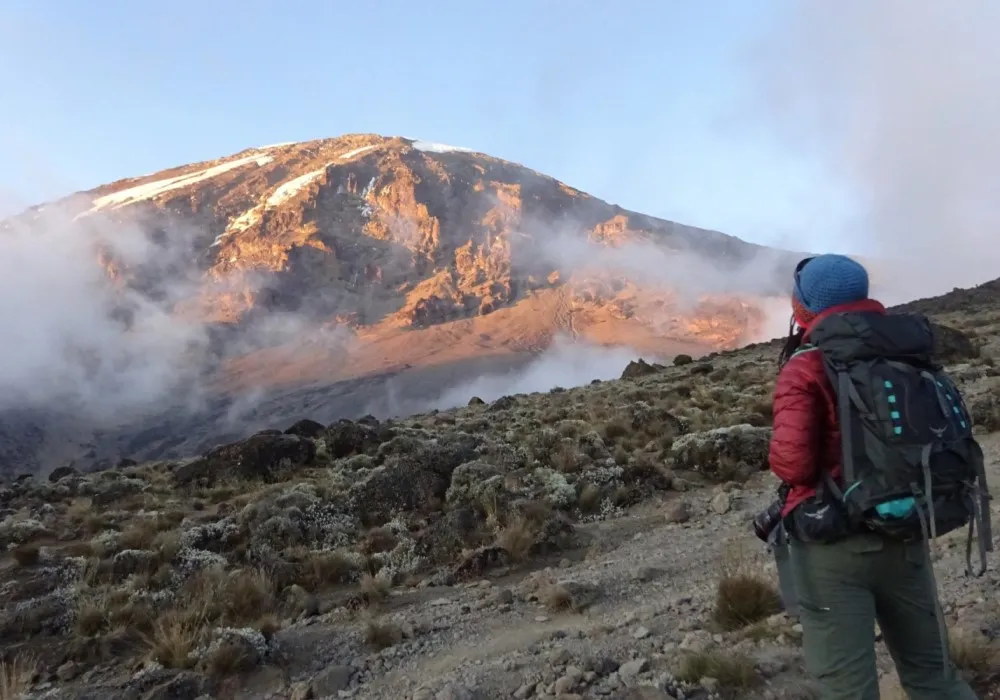
Kilimanjaro is much more than the view from Uhuru Peak. Over the course of the climb, the mountain changes around you — from greener lower slopes to open moorland, volcanic landscapes and the stark high-altitude terrain near the summit.
There are mornings above the clouds, enormous views across northern Tanzania and moments when Kibo seems to dominate the entire horizon. The scenery is one of the reasons the journey itself can become as memorable as reaching the top.
From Changing Landscapes to Summit Sunrise
Walk Through Dramatically Changing Landscapes
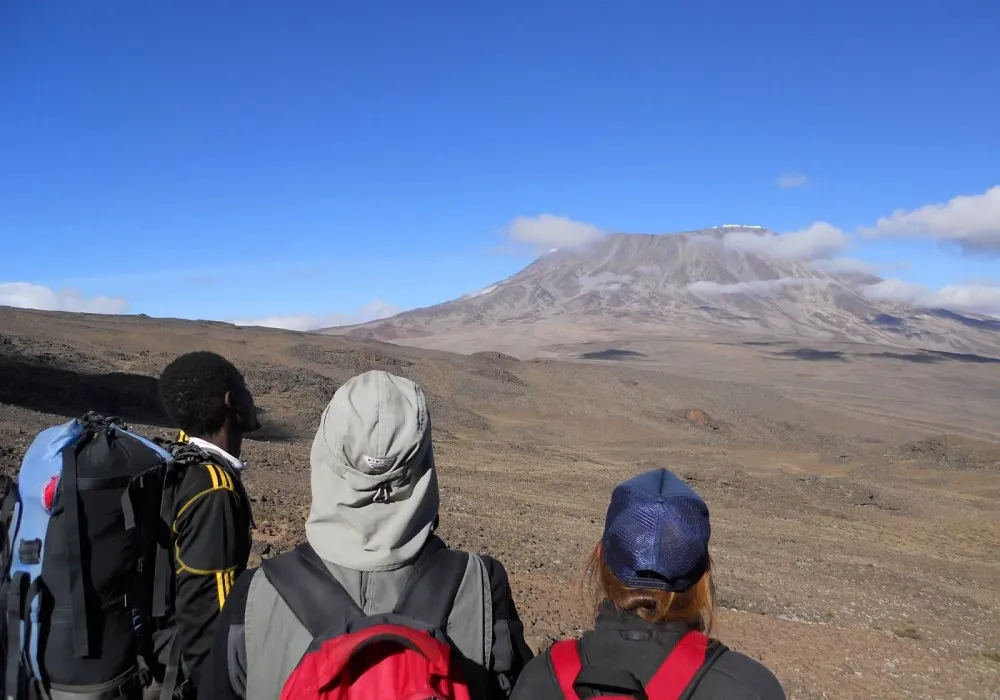
Few multi-day treks change character as noticeably as Kilimanjaro. The journey begins in greener surroundings on the lower mountain before opening into heath and moorland, then increasingly sparse alpine desert and finally the cold, exposed terrain near the summit.
You don't simply look at these landscapes from a distance — you walk through them over several days. Temperature, vegetation and the feel of the trail change as you gain altitude, making each stage of the climb noticeably different from the one before it.
EXPLORE KILIMANJARO'S CLIMATE ZONES →Experience Sunrise High on Kilimanjaro
Summit night usually begins around 23:00, with hikers climbing through the darkness towards the crater rim. As morning approaches, the sky begins to change and the mountain slowly emerges from the night.
Depending on your pace, sunrise may find you approaching Stella Point, on the crater rim or continuing towards Uhuru Peak. After hours of climbing by headlamp in the cold and darkness, seeing daylight spread across the mountain can be one of the most memorable moments of the trek.
Some of the strongest memories are made before the summit sign appears — the line of headlamps in the darkness, the first light over the horizon and finally seeing the landscape around you again.
The People and the Life You Share on the Mountain
Share the Journey With Other People
Even when reaching Kilimanjaro is a personal goal, very few people experience the mountain alone. You walk with your guide, spend days alongside the mountain crew and, on a group climb, share the trail with hikers who may have arrived from completely different parts of the world.
Over several days, simple things become shared experiences — reaching camp after a long afternoon, eating together, encouraging someone through a difficult stretch or hearing another hiker's alarm go off while everyone is getting ready for summit night.
For solo travellers in particular, joining a group doesn't mean giving up the personal nature of the challenge. You still climb the mountain yourself; you simply have other people experiencing it alongside you.
Experience Life on the Mountain
Kilimanjaro quickly develops its own daily rhythm. You wake in camp, eat breakfast, pack your daypack and start walking while the crew prepares to move camp. Later, you arrive to find the next camp taking shape before dinner, a health check and the briefing for the following day.
Life becomes surprisingly simple. Walk. Eat. Drink. Rest. Talk. Sleep. Then get up and do it again.
There are no complicated sightseeing schedules and very few everyday distractions. For several days, your world becomes the trail in front of you, the weather, the next camp and the people around you.
A Big Mountain Goal — and an Achievement to Remember
Take on a Major Trek Without Technical Climbing
One of Kilimanjaro's unusual attractions is that you can trek to 5,895 metres without needing technical mountaineering skills on the standard routes. There are no technical rock-climbing sections and climbers do not normally need ropes, crampons or previous mountaineering experience.
That makes Kilimanjaro accessible to ordinary hikers who are prepared to train for it — but accessible should never be confused with easy. Altitude remains the biggest challenge, which is why route choice, acclimatisation and allowing enough days on the mountain matter so much.
Learn more about how difficult it is to climb Kilimanjaro .
Discover What You're Capable Of
Kilimanjaro has a way of reducing a large goal into very small ones. Reach the next camp. Eat even when your appetite has disappeared. Put on another layer. Keep a steady pace. Take another step.
For many hikers, that is where the personal side of the climb develops. The mountain doesn't require you to be the fastest person in the group. It asks for patience, preparation and the willingness to keep working towards the goal one day at a time.
We regularly remind hikers that Kilimanjaro rewards patience. Conserving energy and giving your body time to adjust is more useful than trying to prove how quickly you can walk.
Create a Memory That Stays With You
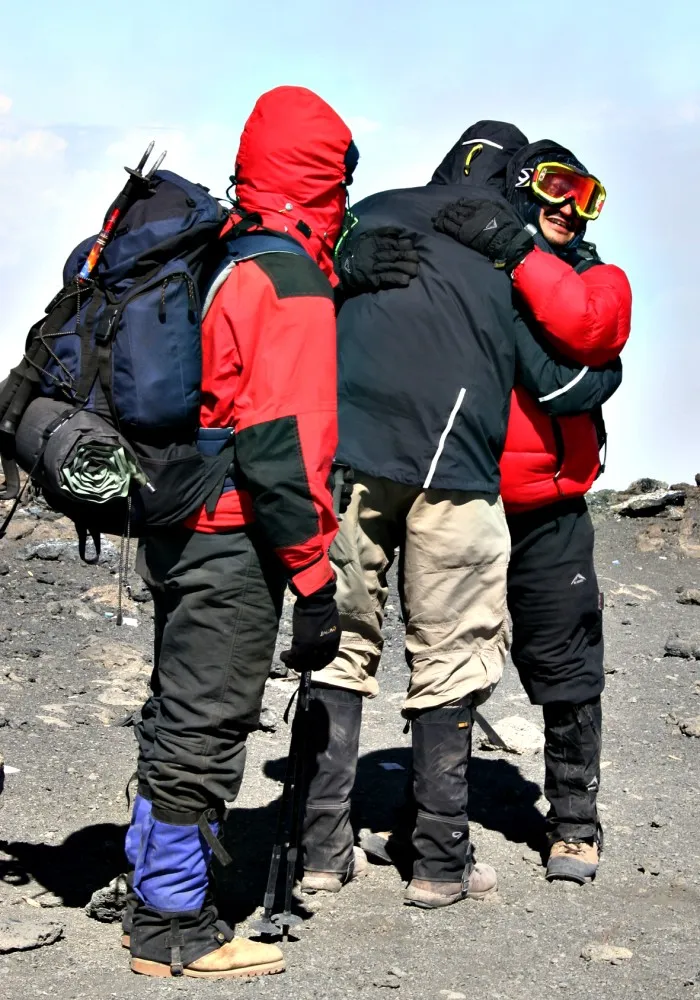
Eventually the climb ends. The tents come down, boots are packed away and everyone returns to ordinary life. What remains are the moments that happened along the way.
For some people it will be reaching Uhuru Peak. For others it may be sunrise on summit morning, laughing around camp, a difficult afternoon they managed to finish or the people who shared the mountain with them.
That may be the best answer to the question, “Why climb Kilimanjaro?” You go there hoping to reach the summit, but you come home remembering an entire journey.
Is Kilimanjaro the Right Challenge for You?
Wanting to climb Kilimanjaro is the first step. The next question is whether you are prepared for what the mountain actually involves.
You don't need to be an experienced mountaineer or an elite athlete, but you do need enough walking fitness, time to prepare and a willingness to take altitude seriously. Choosing an itinerary that gives you enough time to acclimatise is just as important as arriving physically prepared.
Can You Walk for Several Days?
Kilimanjaro requires repeated days of hiking rather than one exceptionally difficult day. Training should therefore build walking endurance, leg strength and comfort spending several hours on your feet.
KILIMANJARO TRAINING PLAN →Are You Prepared for Altitude?
Fitness helps you cope with the physical work, but it does not make you immune to altitude sickness. Going slowly, allowing enough days for acclimatisation and telling your guide how you feel are important parts of climbing responsibly.
ALTITUDE SICKNESS & ACCLIMATISATION →Have You Chosen Enough Time on the Mountain?
We generally favour longer itineraries such as the 8-day Lemosho and 7-day Machame because they provide more time for gradual acclimatisation than shorter schedules.
Are You Willing to Prepare Properly?
A successful Kilimanjaro climb begins before Tanzania. Training, tested footwear, suitable clothing, insurance and understanding what to expect all matter.
PREPARE TO CLIMB KILIMANJARO →Why Climb Kilimanjaro FAQs
Still deciding whether Kilimanjaro belongs on your list? Here are quick answers to some of the questions people ask when considering the climb.
Why do people climb Mount Kilimanjaro?
People climb Kilimanjaro for many different reasons. Some want the challenge of reaching 5,895 metres at Uhuru Peak, while others are drawn by the scenery, the changing landscapes, the shared experience or the chance to achieve a long-held personal goal.
What is so special about climbing Kilimanjaro?
Kilimanjaro combines a major high-altitude challenge with a trekking experience that does not require technical mountaineering skills on the standard routes. Over several days you move through dramatically different environments before attempting to reach the highest point in Africa.
Is Kilimanjaro worth climbing if I am not a mountaineer?
Yes. Most people who climb Kilimanjaro are trekkers rather than technical mountaineers. You don't need previous climbing experience on the standard routes, although you should prepare properly for several days of hiking and the effects of high altitude. Read more about how difficult it is to climb Kilimanjaro .
Do I need to be very fit to climb Kilimanjaro?
You don't need elite fitness, but you should be comfortable walking for several hours on consecutive days. Training for walking endurance, hills and leg strength will make the trek more manageable. Our Kilimanjaro Training Plan explains how to prepare.
What is the biggest challenge when climbing Kilimanjaro?
For most climbers, altitude is the biggest challenge. Fitness is important, but being fit does not make you immune to altitude sickness. A slower pace and an itinerary that provides enough time to acclimatise are important. Learn more about altitude sickness and acclimatisation .
Which Kilimanjaro routes are good choices for first-time climbers?
KHT generally favours the 8-day Lemosho Route and 7-day Machame Route . Both give climbers more time on the mountain than shorter itineraries, which allows a more gradual approach to acclimatisation.
Can I climb Kilimanjaro as a solo traveller?
Yes. Solo travellers can join one of our scheduled group climbs rather than arranging a completely private trek. KHT groups have a maximum of 12 hikers and are often much smaller. See our Kilimanjaro group climbs for upcoming departures.
Plan Your Kilimanjaro Climb
How Hard Is It to Climb Kilimanjaro?
Understand altitude, fitness, summit night and the main factors that make Kilimanjaro challenging.
Read Difficulty Guide →Prepare to Climb Kilimanjaro
Work through the practical preparation needed before travelling to Tanzania for your climb.
Preparation Guide →Kilimanjaro Training Plan
Build the walking endurance, strength and fitness needed for several consecutive days on the mountain.
View Training Plan →Kilimanjaro Group Climbs
Explore scheduled Lemosho and Machame departures and join other hikers heading for Kilimanjaro.
View Group Climbs →Your Kilimanjaro Adventure Starts Here
There are many reasons to climb Kilimanjaro, but eventually the decision becomes personal. If reaching Africa's highest point is something you would like to experience, explore our upcoming group climbs or talk to us about planning a Kilimanjaro climb that gives you the time and support you need.