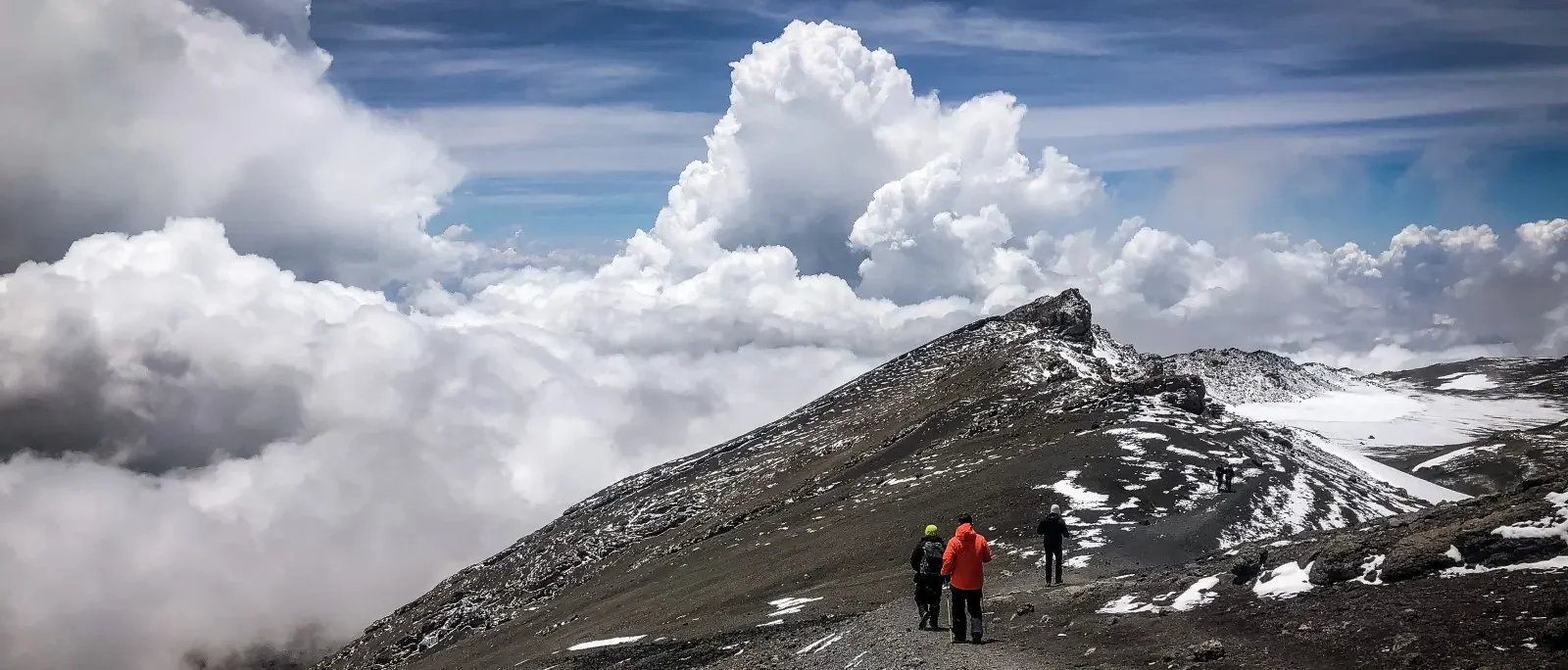
Kilimanjaro guides and porters with Mount Kilimanjaro in the background

Meet Your Kilimanjaro Mountain Crew

Kilimanjaro Guides & Porters

The Team Behind Every Successful Climb

Your Kilimanjaro guides and porters play a vital role in your safety, comfort and experience on the mountain. From setting the pace and monitoring your health to carrying equipment and preparing camp, your crew supports you every step of the way.
Since 2008 Kilimanjaro Guiding Experience
Max 12 Hikers Small Group Climbs
Emergency Oxygen Carried on Every Climb
KPAP & KRTO Independent Monitoring Rated Excellent Trustpilot Reviews

The People Behind Your Climb

Meet Your Kilimanjaro Mountain Crew

Climbing Kilimanjaro is a team effort. While your guides walk with you on the trail and monitor your progress, a larger mountain crew works behind the scenes to move equipment, prepare meals and have camp ready when you arrive. Every role contributes to a safer, smoother and more comfortable climb.

01

Head Guide

Leads the climb, manages the mountain team, monitors hikers and makes important decisions relating to pace, altitude, safety and the summit attempt.

02

Assistant Guides

Support the head guide and hikers throughout the trek, helping maintain a steady pace and providing additional support when members of the group need assistance.

03

Kilimanjaro Porters

Carry expedition equipment and hikers' duffel bags between camps while helping move and set up the infrastructure required for the trek.

04

Cook & Camp Crew

Prepare meals, organise the dining area and help establish camp so that food, shelter and essential facilities are ready after each day's hike.

Your crew works as one team. The roles may be different, but every guide, porter and camp crew member contributes to your experience on Kilimanjaro.
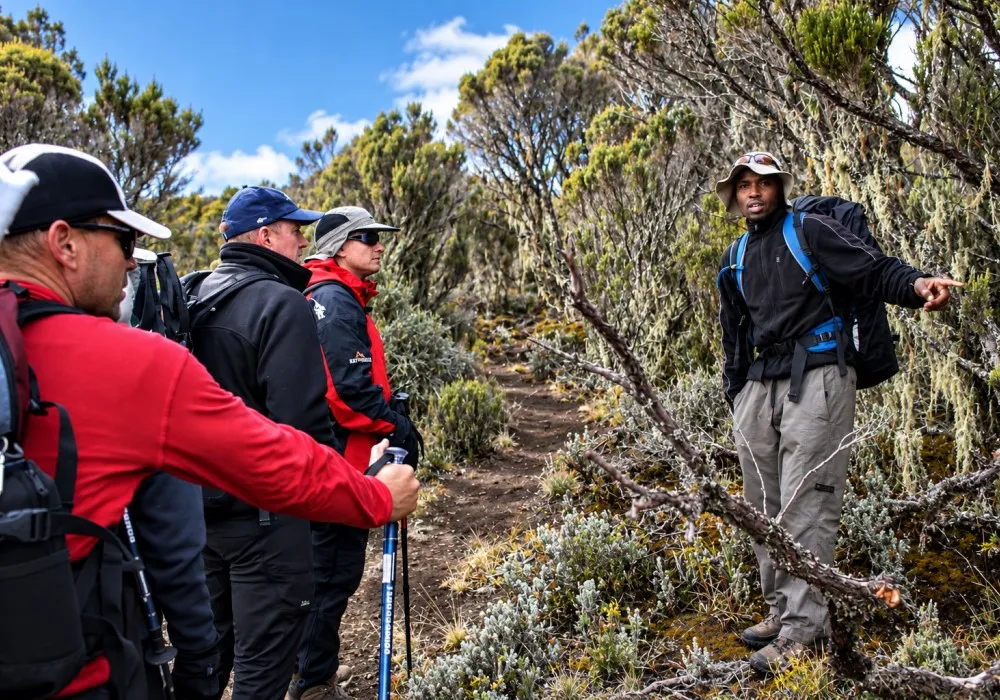
Kilimanjaro guide walking with hikers on the mountain

Your Guides on the Mountain

Experienced Kilimanjaro Guides

Your Kilimanjaro guides do far more than show you the way. They set the pace, monitor how you are adapting to altitude, coordinate the mountain crew and help you make safe decisions throughout the climb.

Every group is led by a head guide, with assistant guides added according to group size. Our Kilimanjaro trekking guides stay closely involved with hikers throughout the journey, from the first day on the trail through to the summit attempt and descent.

  • Setting a steady, manageable hiking pace
  • Monitoring hikers for signs of altitude illness
  • Coordinating assistant guides and mountain crew
  • Managing route, weather and summit decisions
  • Providing daily briefings and trail guidance
  • Responding when a hiker needs additional support
Good guiding is about judgement as much as experience. Your guide's responsibility is not simply to reach the summit, but to help manage the climb safely from start to finish.

Safety on Kilimanjaro

Health Monitoring Is Part of the Guide’s Job

Altitude affects everyone differently, which is why your guides monitor how you are feeling throughout the climb. Their role is to spot problems early, keep communication open and act when a hiker needs extra support.

Twice-Daily Health Checks

Guides check how hikers are feeling and look for signs that altitude may be affecting their ability to continue safely.

O₂

Pulse Oximeter Readings

Blood oxygen saturation and pulse readings are taken as part of the regular health checks carried out on the mountain.

+

Emergency Oxygen

Emergency oxygen is carried on every climb and is available when required as part of the guide team's emergency response.

Descent When Necessary

If a guide believes continuing higher would be unsafe, the priority becomes getting the affected hiker to a lower altitude.

The Summit Is Never More Important Than Your Safety

Your guides continually assess how the group is progressing. If altitude illness or another medical concern makes continuing unsafe, a guide may recommend or require descent. Reaching Uhuru Peak is the goal, but returning safely is always the priority.

The Team Moving Ahead

Kilimanjaro Porters Keep the Expedition Moving

Kilimanjaro porters are a vital part of every supported climb. While hikers carry their own daypacks, porters move the larger expedition equipment and duffel bags from camp to camp.

They often leave after the hikers and move ahead on the trail, carrying the equipment needed for the next camp. By the time you arrive, much of the work required to establish camp is already underway.

  • Carry hikers' duffel bags between camps
  • Transport tents, food and expedition equipment
  • Help establish and break down camp each day
  • Support the cook, dining setup and camp logistics
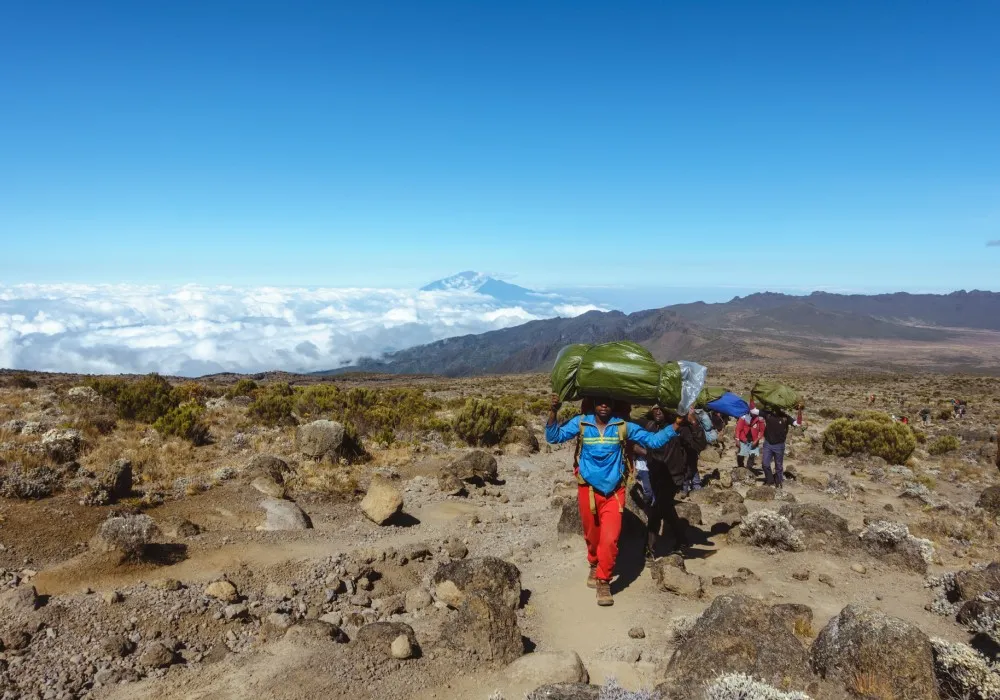
You still carry your own daypack. Your porter carries your main duffel bag, while you carry the items you need during the day's hike, such as water, clothing layers and personal essentials.
Kilimanjaro porters carrying luggage and expedition equipment on the mountain

Porter Loads & Welfare

How Much Weight Do Kilimanjaro Porters Carry?

Porter loads are carefully managed on Kilimanjaro. Your own luggage allowance is limited, while responsible trekking standards are used to protect the people carrying expedition equipment between camps.

Your Mountain Duffel

Your Personal Luggage Limit

Each hiker may place up to 15 kg of personal equipment in the duffel bag carried by the mountain crew. Keeping within this allowance helps us manage porter loads responsibly.

15 kg Maximum hiker duffel allowance
approximately 32 lb

You carry your own daypack during the hike. If you need help carrying a daypack, an additional porter can be arranged, subject to the applicable load limit.

Responsible Treatment of Kilimanjaro Porters

Responsible trekking is not only about what porters carry. It also includes fair working conditions, suitable meals, appropriate shelter and equipment, and proper management of porter loads throughout the climb.

  • Porter loads managed within responsible trekking limits
  • Three meals per day provided for mountain crew
  • Appropriate shelter and working conditions
  • Wages managed according to responsible trekking standards
  • Crew welfare monitored during the climb
  • Independent oversight through responsible trekking partners
KHT supports independently monitored responsible trekking. Porter welfare is an important part of how we operate, with working conditions and load management assessed against recognised Kilimanjaro responsible trekking standards.

Behind the Scenes

A Day With Your Kilimanjaro Mountain Crew

While hikers focus on the trail, the mountain crew is constantly working ahead and behind the scenes. Guides, porters, cooks and camp staff coordinate throughout the day to keep the expedition moving smoothly.

01

Early Morning

Breakfast & Breaking Camp

The cook prepares breakfast while hikers pack their duffels. The crew begins dismantling tents and organising equipment for the move to the next camp.

02

On the Trail

Guides Stay With the Hikers

Your guides manage the group's pace, observe how hikers are coping and provide support while the porter team moves expedition equipment towards the next camp.

03

Ahead of You

The Next Camp Takes Shape

Porters and camp staff arrive ahead of the hiking group and begin setting up tents, organising the dining area and preparing everything needed for your arrival.

04

Evening

Dinner, Briefing & Health Checks

After the day's hike, the crew serves the evening meal while guides conduct health checks and brief the group on the route, conditions and plan for the following day.

Much of the Work Happens Before You Reach Camp

By the time you arrive at the next campsite, your mountain crew may already have transported the equipment, erected tents and started preparing your next meal. That behind-the-scenes work is a major part of what makes a supported Kilimanjaro climb possible.

Why Your Crew Matters

The Right Mountain Team Can Shape Your Entire Climb

A Kilimanjaro climb is about much more than reaching the summit. The quality of the people around you affects your safety, pace, comfort and overall experience from the first day on the trail to the final descent.

01

Experienced Leadership

Your guides manage pace, altitude, trail conditions and group decisions throughout the climb.

02

Small Group Support

KHT group climbs are limited to a maximum of 12 hikers, allowing guides to stay more closely involved with the group.

03

Daily Health Monitoring

Regular health checks help guides monitor how hikers are responding to altitude during the climb.

04

Emergency Preparedness

Emergency oxygen is carried on every climb, with guides responsible for responding when additional support is needed.

05

Responsible Porter Welfare

Porter loads, meals and working conditions are managed in line with responsible trekking standards.

06

One Coordinated Team

Guides, porters, cooks and camp staff work together so that the expedition runs smoothly from camp to camp.

Your Mountain Crew Is Part of Your Kilimanjaro Experience

The people supporting you on the mountain are with you through long hiking days, changing weather and the challenges of altitude. A well-supported climb gives you the best opportunity to focus on walking, acclimatizing and enjoying the journey.

Frequently Asked Questions

Kilimanjaro Guides & Porters FAQ

These are some of the most common questions climbers ask about Kilimanjaro guides, porters, luggage limits and the mountain crew.

How many guides are there on a Kilimanjaro climb?

Every climb has a head guide, with assistant guides added according to the number of hikers in the group. This ensures that hikers can receive support throughout the trek and that the guide team can respond if members of the group need to separate or descend.

What do Kilimanjaro guides do?

Kilimanjaro guides lead the route, manage the hiking pace, monitor hikers for signs of altitude illness, coordinate the mountain crew and make important safety decisions during the climb.

How much weight do Kilimanjaro porters carry?

Porter loads are managed according to responsible trekking standards. For KHT hikers, the personal duffel bag allowance is limited to a maximum of 15 kg, approximately 32 lb.

Do I carry my own bag on Kilimanjaro?

You carry your own daypack while hiking. It normally contains the items you need during the day, such as water, clothing layers, rain gear, snacks and personal essentials. Your main duffel bag is carried by the mountain crew.

Can a porter carry my daypack?

Yes. If you need assistance carrying your daypack, an additional porter can be arranged. The additional porter may carry a daypack up to the applicable load limit.

Can you climb Kilimanjaro without a guide?

No. Kilimanjaro climbs must be undertaken with a licensed mountain operator and qualified mountain guide. Independent, unguided trekking is not permitted within Kilimanjaro National Park.

Do Kilimanjaro guides speak English?

Yes. KHT group climbs are led by English-speaking guides who provide daily briefings, explain the route and communicate with hikers throughout the climb.

How are Kilimanjaro porters treated?

Responsible porter treatment includes proper load management, meals, suitable working conditions, appropriate equipment and fair wage practices. KHT supports independently monitored responsible trekking standards.

What happens if I become sick on the mountain?

Guides monitor hikers throughout the climb and conduct regular health checks. If altitude illness or another medical problem makes continuing unsafe, the guide may recommend or require descent to a lower altitude.

How much should I tip Kilimanjaro guides and porters?

Tipping is customary on Kilimanjaro and is normally distributed among guides, assistant guides, cooks and porters at the end of the climb. We provide our hikers with tipping guidance before the trek so the process is clear and transparent.

Have another question about your mountain crew?

If you would like to know more about guide ratios, porter support, luggage allowances or what to expect on the mountain, contact us before your climb and we will be happy to explain how your KHT mountain team works.

Hikers trekking above the clouds on Mount Kilimanjaro

Start Planning Your Climb

Climb Kilimanjaro With a Team You Can Trust

From the guides walking beside you to the porters moving equipment between camps, your mountain crew plays an important role in your safety, comfort and experience. Choose your route, find a group departure or speak to us about planning a private Kilimanjaro climb.