
Hikers at Uhuru Peak during clear weather on Mount Kilimanjaro

Plan Your Kilimanjaro Climb

Best Time to Climb Kilimanjaro

Weather, Seasons & the Best Months to Hike

The best time to climb Kilimanjaro is generally from June to early October, with January to March offering another good climbing window. Compare the seasons, weather and crowds to choose the right dates for your trek.

Since 2008 Kilimanjaro Guiding Experience
Max 12 Hikers Small Group Climbs
Emergency Oxygen Carried on Every Climb
KPAP & KRTO Independent Monitoring Rated Excellent Trustpilot Reviews

Kilimanjaro Climbing Seasons

When Is the Best Time to Climb Kilimanjaro?

The best time to climb Kilimanjaro is generally from June to early October, during Tanzania's long dry season. January to March is another good climbing period, particularly for hikers who prefer a quieter mountain.

KHT's Quick Recommendation

If your dates are flexible, we generally recommend climbing between June and early October. Conditions are typically drier and more stable, although rain, snow, strong winds and freezing summit temperatures can occur at any time of year.

The Kilimanjaro Year at a Glance

Kilimanjaro can be climbed throughout the year, but the experience changes considerably between the dry and rainy seasons.

January – March

Good Climbing Season

Generally drier conditions and often fewer hikers than during the main June to September season. Weather becomes less predictable as March progresses.

Good time to climb

April – May

Long Rainy Season

These are normally Kilimanjaro's wettest months. Trails can be muddy, cloud cover heavier and prolonged rain more likely.

Least recommended

June – Early October

Best Overall Season

The long dry season generally provides the most reliable climbing conditions, with lower rainfall and a greater chance of clear views.

KHT recommended

November – December

Short Rains & Transition

November usually brings the short rains. Conditions often begin improving again during December as the mountain moves toward the January climbing window.

Variable conditions

Remember: Kilimanjaro rises to 5,895 m, so mountain weather can change rapidly. A dry-season climb can still include rain, snow, strong winds and sub-zero summit temperatures.

Month-by-Month Guide

Kilimanjaro Weather by Month

There is no month when Kilimanjaro weather is completely predictable. Conditions change with altitude and can shift quickly, but the guide below gives you a practical idea of what each month normally offers.

January

Generally Good Conditions

January is often relatively dry and can provide good climbing conditions, clear mornings and fewer hikers than during the busiest mid-year months.

Good time to climb

February

One of the Better Early-Year Months

February usually falls within the drier January-to-March climbing window and can offer favourable conditions before the long rains begin.

Good time to climb

March

Increasingly Variable

Early March can still offer good hiking weather, but rainfall normally becomes more likely as the month progresses toward the long rainy season.

Conditions become variable

April

Long Rains Begin

April is normally one of the wettest months on Kilimanjaro. Expect wetter trails, increased cloud cover and a greater chance of prolonged rain.

Least recommended

May

Wet & Often Quieter

The long rains usually continue through much of May. There are fewer hikers on the mountain, but wet and muddy conditions can make the trek more demanding.

Least recommended

June

Dry Season Begins

Conditions usually improve as the long rains end. June is generally drier and often quieter than July and August, making it an attractive time to climb.

Highly recommended

July

Dry & Popular

July normally brings dry conditions and good visibility, although temperatures can feel cold at higher elevations and the mountain becomes busier.

Excellent time to climb

August

Peak Climbing Season

August is one of the most popular months thanks to typically dry weather and clear mountain views. Expect more hikers on the main routes.

Excellent time to climb

September

Excellent All-Round Choice

September remains within the long dry season and normally offers relatively stable conditions, good visibility and a strong chance of dry trekking days.

Excellent time to climb

October

Good Early, More Variable Later

Early October can still provide excellent climbing weather. As the month progresses, conditions may become less settled ahead of the short rains.

Good, especially early

November

Short Rainy Season

November usually brings the shorter rains. Showers are more frequent and cloud cover can increase, although conditions can vary considerably from one climb to another.

Wetter and less predictable

December

Transition to Drier Weather

Conditions generally begin improving after the short rains, although December can remain changeable before the drier January-to-March period becomes established.

Variable but improving
Weather is only part of the decision. Your route length, acclimatization profile, fitness and preparation are also important when choosing when and how to climb Kilimanjaro.

The Best Climbing Windows

June to October or January to March?

Kilimanjaro has two main periods that generally offer better climbing conditions. The long dry season from June to early October is our preferred overall window, while January to March can be an excellent alternative for climbers looking for a quieter experience.

KHT's Best Overall Choice

June – Early October

The Main Dry Season

This is generally the most reliable time of year to climb Kilimanjaro. Rainfall is usually lower, visibility can be excellent and trail conditions are often more favourable.

  • Lower chance of prolonged rainfall
  • Often excellent mountain views
  • Generally drier trail conditions
  • Strong choice for first-time Kilimanjaro climbers
  • Particularly reliable from July through September
The trade-off July, August and September are popular climbing months, so the busier routes and camps can have more hikers.
Excellent Alternative

January – March

The Quieter Climbing Window

January and February can provide very good climbing conditions and may appeal to hikers who want to avoid the busiest part of Kilimanjaro's main dry season.

  • Often fewer hikers than during July and August
  • Generally good conditions in January and February
  • Good option for climbers with early-year travel dates
  • Can offer clear mornings and dramatic cloud formations
  • March becomes more variable as the long rains approach
The trade-off Weather is generally less predictable than during the main dry season, particularly later in March.

Which period should you choose?

If you want the greatest chance of drier, more stable conditions, choose June to early October. If avoiding the busiest climbing months matters more to you, January or February can be very attractive alternatives.

Kilimanjaro Rainy Seasons

What About April, May & November?

Kilimanjaro can be climbed during the wetter months, but conditions are generally more demanding and less predictable.

Tanzania normally experiences a longer rainy season during April and May, followed by shorter rains around November. Rainfall varies from year to year and from one part of the mountain to another, but wetter conditions can mean muddier trails, heavier cloud cover and reduced visibility.
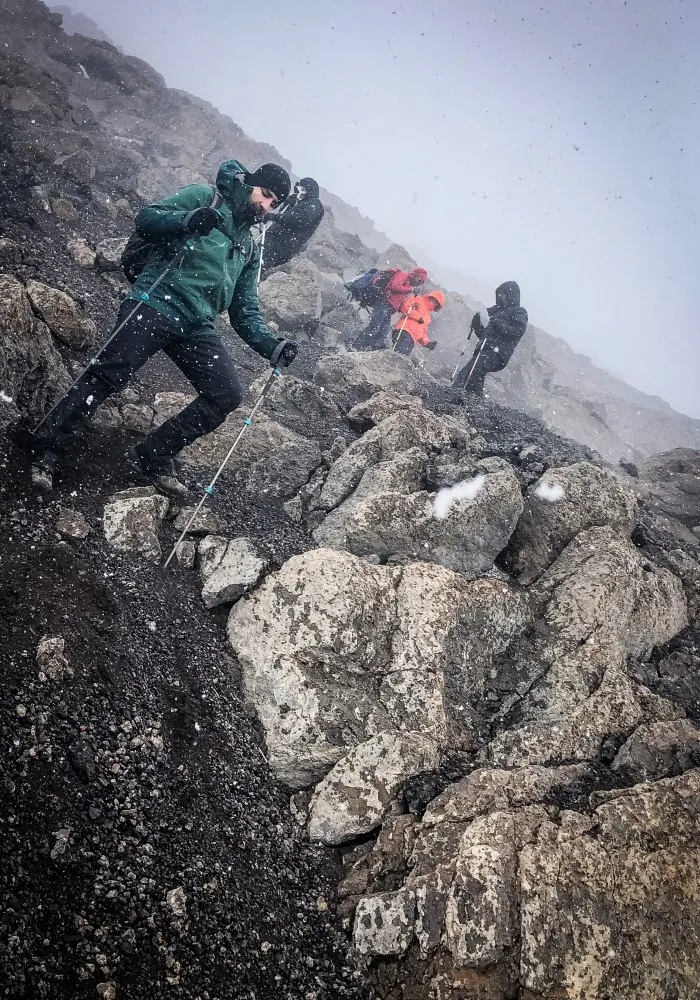
Hikers descending Mount Kilimanjaro in wet and rainy conditions

April – May

The Long Rains

April and May are normally the wettest months on Kilimanjaro. Persistent rain can make lower trails muddy and camps damp, while cloud may reduce mountain views.

Least recommended

November

The Short Rains

November usually brings a shorter rainy period. Conditions can be very changeable, with showers, cloud and occasional clearer windows between weather systems.

More unpredictable

December

A Transition Month

Weather often starts improving during December as the short rains ease. Conditions may still be variable, particularly earlier in the month, before the January climbing window.

Variable but improving

Our general advice: if you have flexibility, we would choose one of the drier climbing windows rather than April, May or November. If your travel dates fall in a wetter period, route choice and good waterproof equipment become even more important.
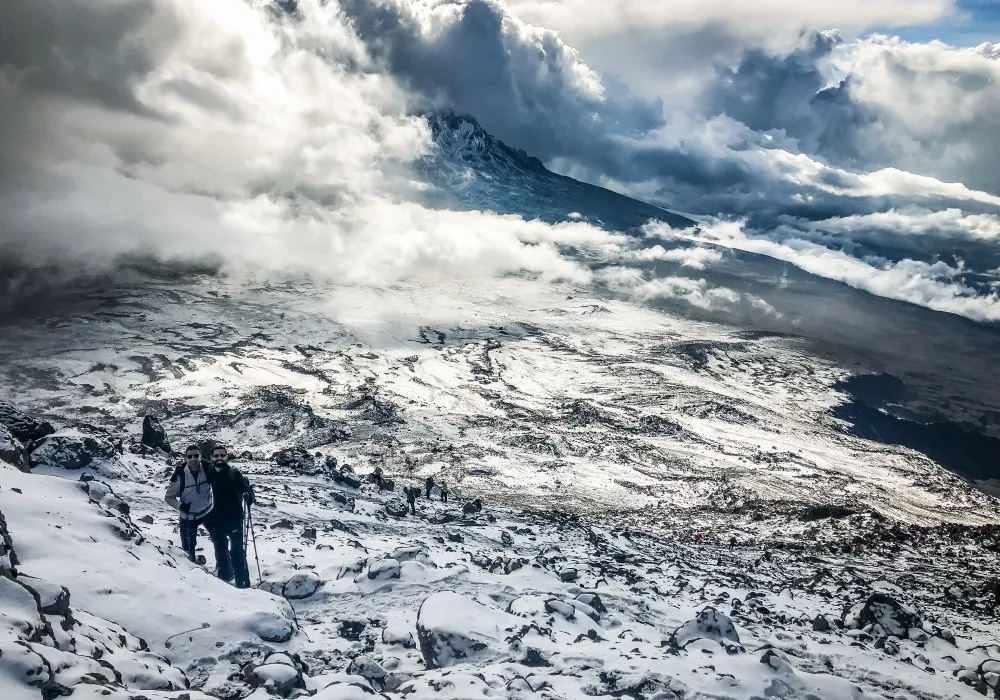
Hikers trekking through snow on Mount Kilimanjaro at high altitude

High-Altitude Conditions

Kilimanjaro Weather Changes with Altitude

Choosing a dry month does not mean you will have warm or perfectly clear weather from the trailhead to the summit. Kilimanjaro rises to 5,895 m and passes through several climate zones on the way to Uhuru Peak.

A climb can begin in warm conditions on the lower slopes, move through cloud, mist or rain, and finish in freezing temperatures, wind, ice or snow near the summit. This is why climbers must prepare for a wide range of conditions regardless of the month they choose.

Lower Mountain

Warm, Humid & Sometimes Wet

The lower slopes can feel warm and humid, particularly in the rainforest zone where cloud and rainfall are more common.

Higher Camps

Colder, Drier & More Exposed

Temperatures drop as you gain altitude, while stronger winds can make conditions feel considerably colder than the air temperature alone suggests.

Summit Night

Freezing Conditions Are Normal

Summit night is cold in every season. Snow, ice and strong winds are possible even when the lower mountain has been dry and sunny.

Pack for the mountain, not just the season

Even during Kilimanjaro's best climbing months, you should be prepared for sunshine, rain, wind and sub-zero conditions. The season improves your odds of favourable weather, but it can never guarantee it.
Choosing Your Dates

Crowds, Clear Views & Full Moon Climbs

Weather is usually the most important factor when choosing when to climb Kilimanjaro, but crowd levels, mountain views and full-moon dates can also influence the experience you want.

Crowd Levels

When Is Kilimanjaro Quieter?

July through September are popular because they fall within the long dry season. If you would prefer fewer hikers, June, January and February can be attractive alternatives while still offering generally favourable climbing conditions.

Worth remembering: the route you choose can influence how busy the mountain feels just as much as the month you travel.

Mountain Views

Best Time for Clear Views

The drier months generally give you a better chance of clear views across the mountain and surrounding plains. July, August and September are particularly attractive, although cloud can develop at any time of year.

For photography: early mornings often provide the clearest conditions before afternoon cloud develops.

Summit Night

Should You Climb During a Full Moon?

A full moon can create a memorable summit-night atmosphere and may provide more natural light on the trail. These dates are popular, however, and can attract additional climbers.

Our view: choose a good season, suitable route and proper acclimatization first. A full moon should be a bonus rather than the main reason for selecting your climb date.

Don't chase the “perfect” date

There is no single date that guarantees dry weather, empty trails and a cloudless summit. Choose a favourable climbing season first, then consider crowd levels and personal preferences when narrowing down your dates.

Route Choice Matters

Which Kilimanjaro Route Is Best for the Season?

Weather affects every route, but the route you choose can also influence how exposed, crowded or comfortable your climb feels. For most climbers, we still prioritise acclimatization and route quality over choosing a route purely for the weather.

Machame Route

Scenic & Excellent Value

The 7-day Machame route remains one of Kilimanjaro's most popular choices. It offers dramatic scenery, a good acclimatization profile and strong value, although it can feel busier during peak dry-season months.

Best for Climbers looking for a scenic tented route with a good balance of acclimatization, duration and cost.

Marangu Route

Useful in Wetter Conditions

Marangu is the only main Kilimanjaro route with hut accommodation instead of tents. That can make it more practical during wetter periods, although its shorter itineraries generally offer less time for acclimatization.

Best for Climbers travelling in wetter conditions who strongly prefer hut accommodation over camping.

Choose the route first for acclimatization

A slightly quieter route or a hut may improve comfort in certain conditions, but good acclimatization and enough days on the mountain remain more important than chasing the “perfect” weather route.

Compare Kilimanjaro Routes

Frequently Asked Questions

Best Time to Climb Kilimanjaro FAQ

These are some of the most common questions climbers ask when deciding which month or season to choose for Kilimanjaro.

What is the best time to climb Kilimanjaro?

The best time to climb Kilimanjaro is generally from June to early October, during Tanzania's long dry season. January and February are also very good alternatives, especially for climbers who would prefer a quieter mountain.

What is the best month to climb Mount Kilimanjaro?

There is no single perfect month, but July, August and September usually provide some of the most reliable dry-season conditions. June can be quieter, while January and February are excellent early-year alternatives.

Which are the wettest months on Kilimanjaro?

April and May are normally the wettest months because they fall within Tanzania's long rainy season. November generally brings a shorter rainy period, although rainfall varies from year to year.

Can you climb Kilimanjaro during the rainy season?

Yes. Kilimanjaro can be climbed throughout the year, including during the rainy seasons. However, wetter trails, heavier cloud, reduced visibility and damp camps can make the climb more demanding, so we generally recommend choosing a drier period when your dates are flexible.

Is January or February a good time to climb Kilimanjaro?

Yes. January and February usually fall within one of Kilimanjaro's better climbing windows. Conditions are often relatively dry and the mountain may be quieter than during the busiest July-to-September period.

When is Kilimanjaro least crowded?

The mountain is generally quieter outside the busiest July-to-September period. June, January and February can offer a useful balance between generally good weather and lower crowd levels. Route choice also affects how busy your climb feels.

Does it snow on Kilimanjaro during the dry season?

Yes. Snow, ice, strong winds and freezing temperatures can occur near the summit even during the dry season. Kilimanjaro's high altitude creates very different conditions from those experienced on the lower slopes.

Is a full moon the best time to climb Kilimanjaro?

A full moon can make summit night especially memorable and may provide additional natural light, but it should not be the main factor when choosing your dates. We recommend prioritising a favourable climbing season, a good route and enough time for acclimatization first.

Still not sure which dates are best for you?

Tell us when you are planning to travel and what matters most to you — weather, fewer crowds, route choice or joining a scheduled group — and we can help you narrow down the best Kilimanjaro climbing window.

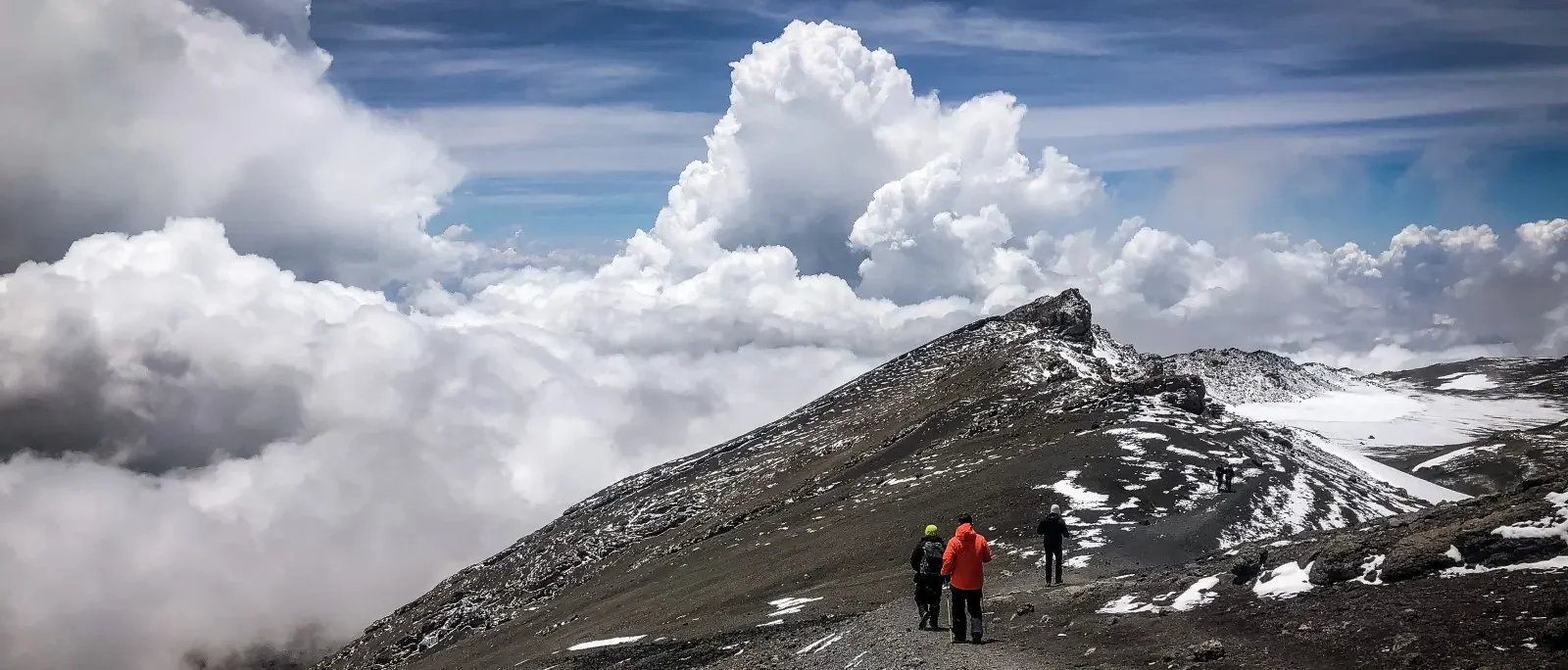
Hikers walking above the clouds on Mount Kilimanjaro

Ready to Choose Your Dates?

Find the Right Time for Your Kilimanjaro Climb

If your travel dates are flexible, we can help you choose a climbing window and route that suit your priorities. View our scheduled group departures or contact us for help planning your Kilimanjaro trek.