
Lemosho Itinerary: Days 1–4
Your first four days take you from Kilimanjaro's western rainforest across the Shira Plateau to Lava Tower and Barranco Camp. Along the way, you'll gain altitude gradually and begin adjusting to the thinner air.
 Day 1
Into the rainforest
Lemosho Gate to Big Tree Camp
Habitat: Montane rainforest
Your first day begins with a drive from Moshi to Londorossi Gate for registration. From there, a vehicle takes you to the Lemosho trailhead, where your walk begins.
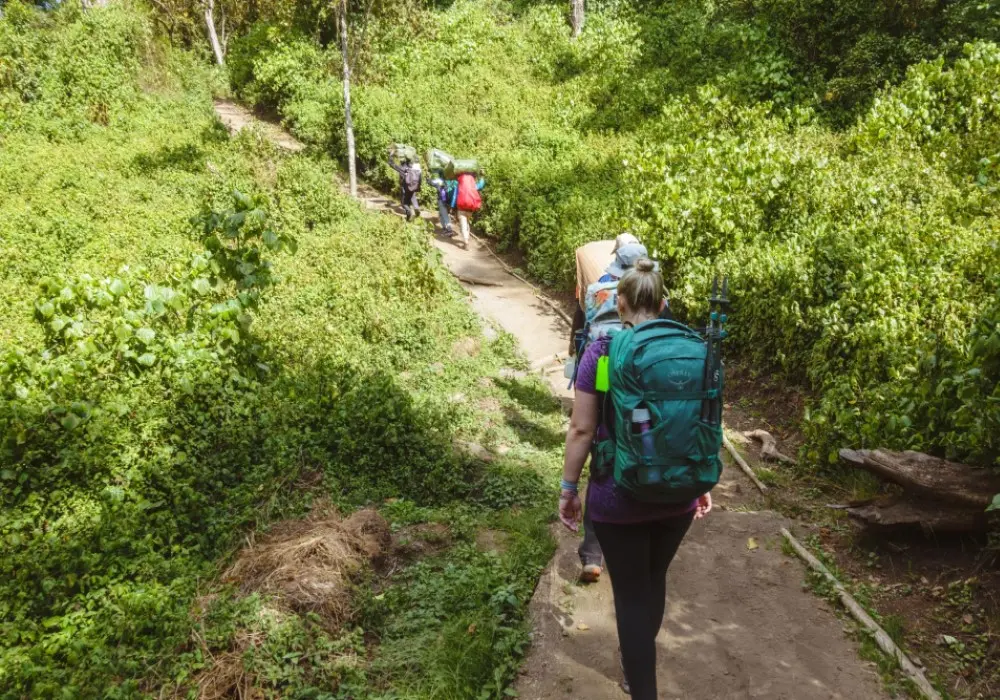
The trail winds through thick rainforest, with giant ferns, moss-covered trees and plenty of shade. It can be muddy underfoot, and you may spot colobus monkeys or other wildlife along the way.
By afternoon, you'll arrive at Mti Mkubwa, better known as Big Tree Camp, where your mountain crew will have camp ready for your first night.
 Day 2
Leaving the forest behind
Big Tree Camp to Shira 1 Camp
Habitat: Rainforest and moorland
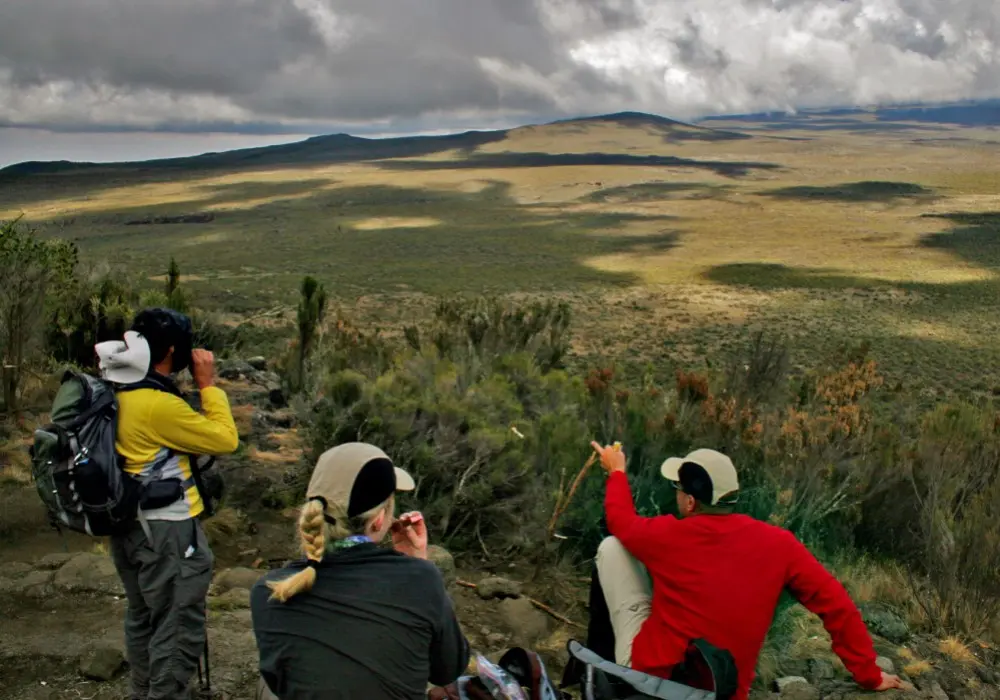
Today you'll climb out of the rainforest and onto the Shira Plateau. As the trees thin out, the landscape opens into heather, grasses and volcanic ridges, with increasingly wide mountain views.
It's a noticeable climb, with almost 1,000 metres of altitude gain. Your guide will set a steady pole pole (slowly, slowly) pace, with time to catch your breath and take short breaks.
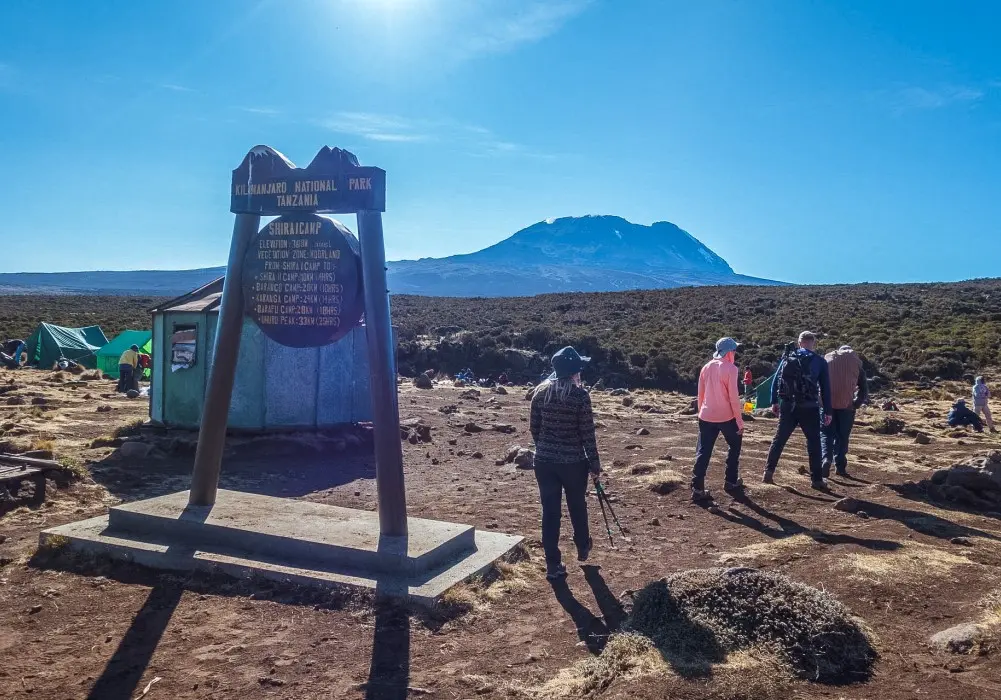
Shira 1 Camp is your overnight stop. On a clear day, you may enjoy excellent views of Kibo rising above the plateau.
 Day 3
Across the Shira Plateau
Shira 1 Camp to Shira 2 Camp
Habitat: Moorland
You'll spend the day crossing the wide, open Shira Plateau towards Shira 2 Camp. The walking is generally less steep than yesterday, although you'll still feel the effects of the altitude.
Depending on conditions and your guide's plans, there may be an opportunity to explore towards Shira Cathedral, a distinctive volcanic formation with beautiful views across the plateau.
You'll sleep only around 240 metres higher than the previous night. This more gradual increase in sleeping altitude is one of the reasons we recommend the eight-day itinerary.
 Day 4
Climb high, sleep low
Shira 2 Camp to Barranco via Lava Tower
Habitat: Alpine desert and Barranco Valley
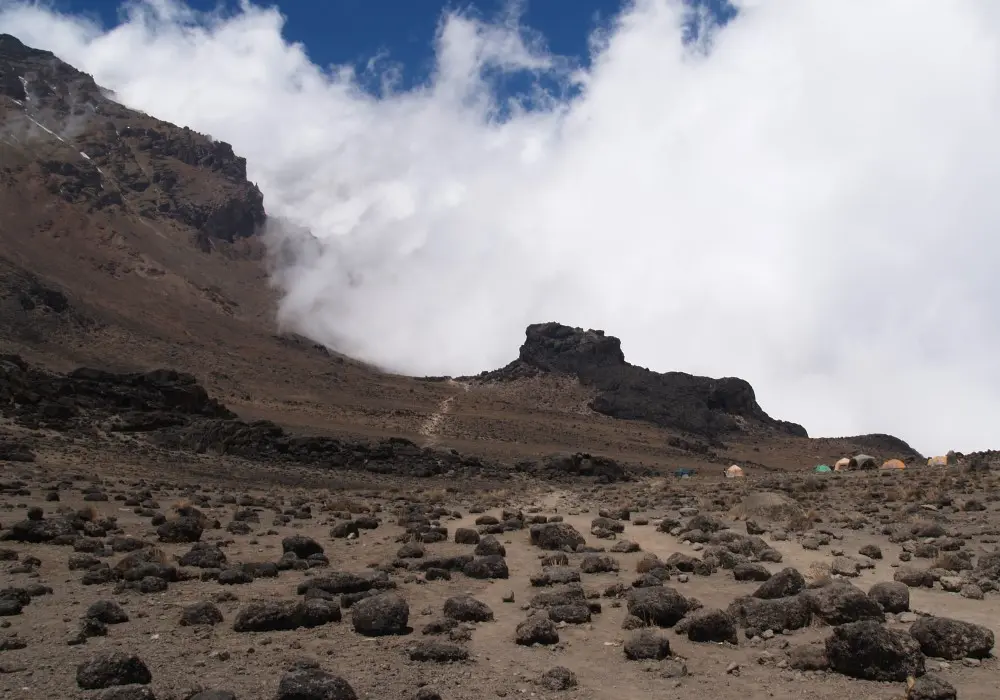
Today is an important acclimatisation day. You'll climb towards Lava Tower, at approximately 4,600 metres, where the group will usually stop for lunch.
From Lava Tower, the trail descends into Barranco Valley. You'll notice the landscape changing again as you approach camp, with giant groundsels growing among the rocky slopes.
Although you've climbed much higher during the day, you'll sleep at around 3,900 metres. This is the familiar Kilimanjaro approach of climbing high and sleeping lower to support acclimatisation.
Ready to plan your Lemosho climb?
Explore our upcoming 8-day Lemosho group departures, or contact us about arranging a private climb.
Barranco Wall, Summit Day and Descent
The second half of your Lemosho trek takes you over Barranco Wall, up to Barafu Camp and finally to Uhuru Peak. After summit day, you'll descend through the rainforest to Mweka Gate.
 Day 5
Over the Barranco Wall
Barranco Camp to Karanga Camp
Habitat: Alpine desert and semi-desert
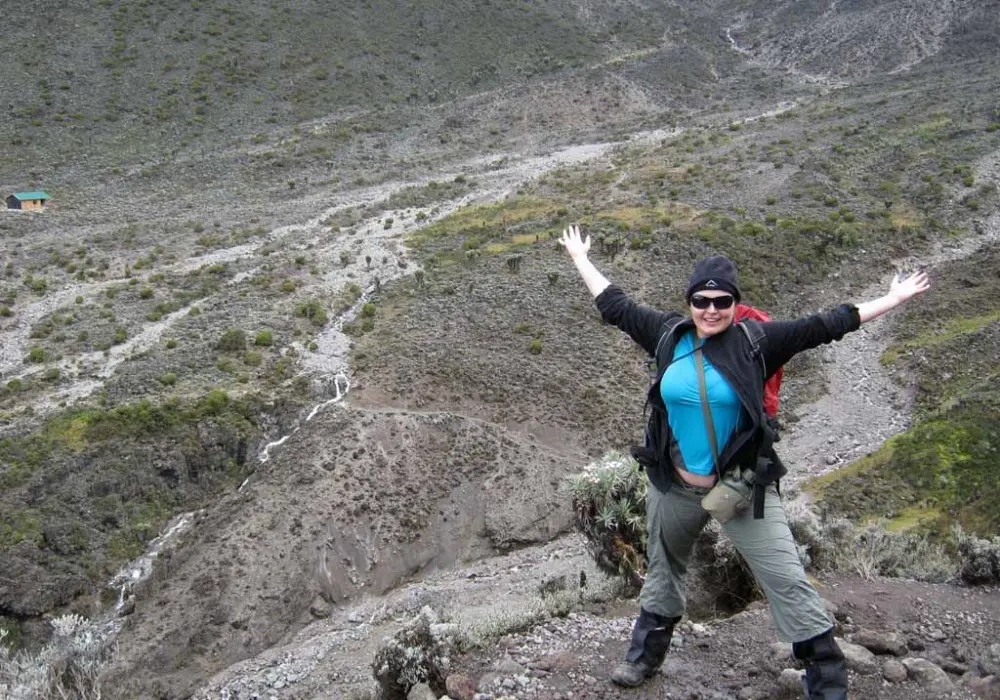
Your morning begins with the climb up Barranco Wall. It looks intimidating from camp, but it's a steep scramble rather than a technical rock climb. Your guides will help you through the sections where you need to use your hands.
Once at the top, you'll cross a series of ridges and valleys, with views towards Kilimanjaro's southern glaciers when the weather is clear. The trail then descends into Karanga Valley before a final climb to camp.
Although you've tackled some steep terrain, you'll sleep only slightly higher than the previous night.
 Day 6
Preparing for summit night
Karanga Camp to Barafu Camp
Habitat: Alpine desert
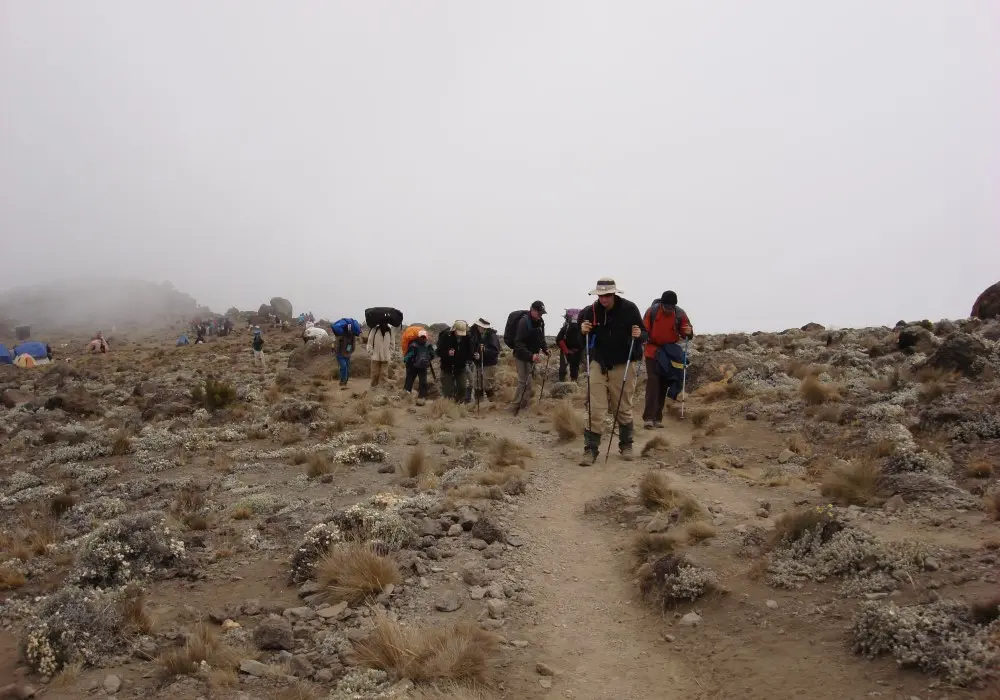
Today's walk is shorter, but you'll feel the altitude as you climb towards Barafu Camp. The landscape is rocky and exposed, with very little vegetation.
You'll normally reach camp around lunchtime or early afternoon. After a meal, your guide will explain the summit plan, check how everyone is feeling and help you prepare the clothing and equipment you'll need.
The rest of the day is for eating, staying hydrated and getting as much rest as possible before the overnight summit attempt.
 Day 7
Summit day
Barafu Camp to Uhuru Peak and Mweka Camp
Habitat: Arctic conditions and alpine desert
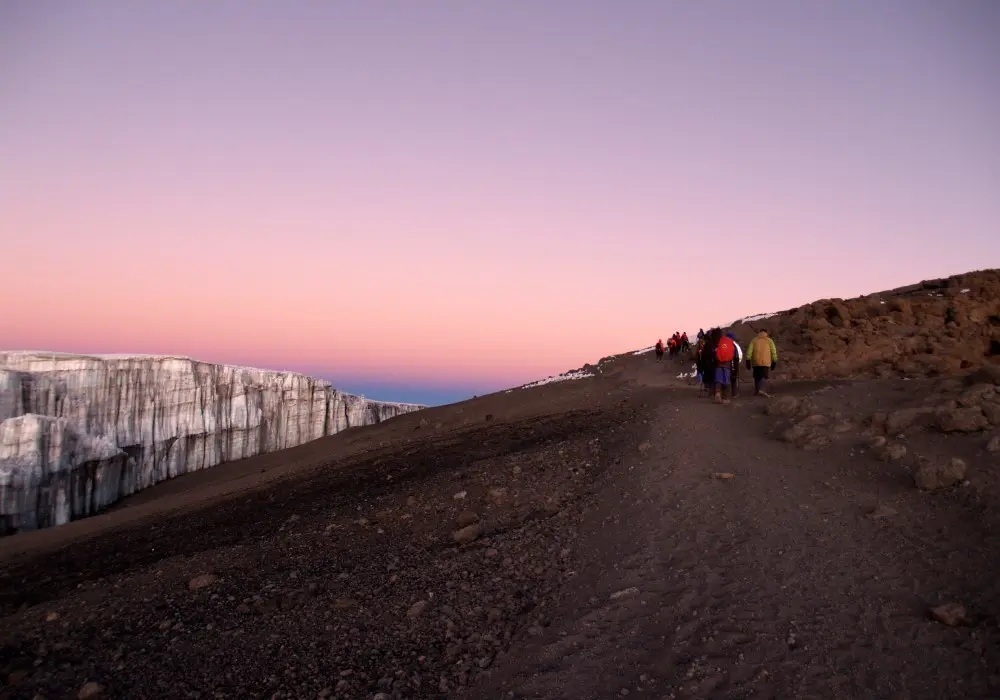
Summit day usually begins around midnight. You'll leave Barafu Camp in the darkness and make your way slowly up the steep, loose volcanic scree towards Stella Point at 5,756 metres.
This is often the hardest part of the entire trek. The air is thin, temperatures can be well below freezing, and every step requires patience.
From Stella Point, you'll follow the crater rim towards Uhuru Peak, the highest point in Africa at 5,895 metres.
After reaching the summit, you'll descend to Barafu Camp for a meal and a short rest before continuing down to Mweka Camp. It's a very long day, and your guide will manage the pace according to the group's condition.
 Day 8
The final descent
Mweka Camp to Mweka Gate
Habitat: Montane rainforest
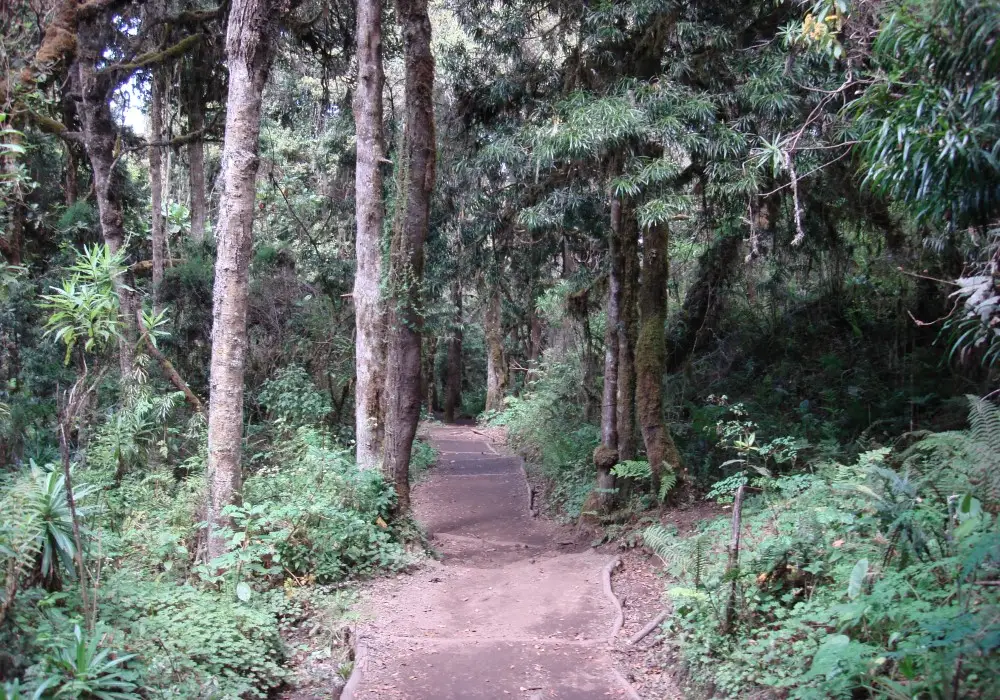
After breakfast, you'll say goodbye to Mweka Camp and make your final descent through Kilimanjaro's rainforest. The trail can be slippery, particularly after rain, so take your time on the way down.
At Mweka Gate, you'll complete the park formalities and receive your summit certificate if you've reached the summit.
You'll then be transferred back to your hotel in Moshi, where a hot shower and a comfortable bed will be very welcome.
What Is Summit Night Like on Lemosho?
Summit night is usually the most physically and mentally demanding part of the eight-day Lemosho trek. You'll walk for several hours in darkness, often in freezing temperatures, before reaching the crater rim.
A slow pace, warm layers and following your guide's instructions are essential. Your guide will continue monitoring your condition and make safety decisions throughout the ascent.
Depart Barafu Camp around midnight
Climb steadily towards Stella Point
Continue to Uhuru Peak if conditions allow
Descend to Barafu and then Mweka Camp

See the 8-Day Lemosho Route on a Map
Want to see exactly where you'll be hiking? Our interactive Lemosho route map shows the trail, overnight camps and important landmarks from the western approach to Uhuru Peak and the descent to Mweka Gate.
Use it alongside this itinerary to get a better picture of each day's location on the mountain.
8-Day Lemosho Itinerary FAQ
A few practical things to know before your eight days on Kilimanjaro.
How difficult is the 8-day Lemosho itinerary?
It's a demanding high-altitude trek, even though no technical climbing experience is required. Most days involve several hours of walking, and summit day is particularly challenging. Good preparation and a steady pace are important.
How long do you walk each day?
Most days involve approximately three to eight hours of hiking. The summit stage is much longer, usually around 13–15 hours from Barafu Camp to Uhuru Peak and down to Mweka Camp. Actual times depend on weather, trail conditions and your pace.
Where do you sleep during the eight days?
You'll sleep in mountain tents at designated camps. Our crew carries and pitches the tents, so your accommodation is ready when you arrive. On group climbs, two hikers normally share a tent; a single tent is arranged under the applicable single-supplement policy.
Do you need special climbing equipment for Barranco Wall?
No ropes or technical climbing equipment are normally required. Barranco Wall includes steep sections where you'll use your hands for balance. Your guides will help you negotiate these sections safely.
What happens if I cannot continue the climb?
Your guides monitor your condition throughout the trek, including daily health checks. If it's unsafe for you to continue, the guide will arrange an appropriate descent or evacuation. Your safety always takes priority over reaching the summit.
Ready to Climb the 8-Day Lemosho Route?
Join one of our small group departures or arrange a private climb on our recommended eight-day itinerary. We'll help you choose suitable dates and prepare for the mountain.