
Best Hiking Boots for Climbing Kilimanjaro
Choosing the right hiking boots for Kilimanjaro can make a significant difference to your comfort on the mountain. Learn what to look for in fit, waterproofing, ankle support, grip and warmth so you can choose footwear suited to Kilimanjaro's changing terrain and conditions.
- Waterproof
- Supportive
- Well broken-in
- Good grip
What Hiking Boots Do You Need for Kilimanjaro?
The best hiking boots for climbing Kilimanjaro are not simply the most expensive or most technical pair you can buy. They need to fit your feet properly, provide reliable grip and support, cope with changing mountain conditions and remain comfortable for several consecutive days of hiking.
Choose a Well-Fitting, Waterproof Hiking Boot With Good Grip
For most Kilimanjaro hikers, a good-quality mid- or high-cut hiking boot is a practical choice. Look for reliable traction on rocky, loose and sometimes muddy trails, waterproof protection and enough room for suitable hiking socks without restricting your toes.
Just as importantly, your boots should already be comfortable before you arrive in Tanzania. Kilimanjaro is not the place to discover that a new pair of boots causes pressure points or blisters.
Comfortable Fit
Your heel should feel secure without excessive movement, while your toes still have enough room — particularly on descents when your feet naturally move forward inside the boot.
Waterproof Protection
Lower trails can be wet and muddy, and mountain weather can change quickly. Waterproof footwear helps keep your feet dry when conditions deteriorate.
Good traction
Kilimanjaro trails include sand, dirt, rocks, loose gravel and uneven ground. A quality hiking outsole should provide dependable traction across changing terrain.
Support & Protection
A well-fitting mid- or high-cut boot can provide useful support and additional protection around the ankle when walking over rocky and uneven terrain.
Suitable Warmth
Your boots need to work comfortably with appropriate hiking socks, including warmer socks for the cold conditions you may encounter at higher elevations and on summit night.
Already Tested
Wear your Kilimanjaro hiking boots during training. Test them on longer walks and hikes with the socks you plan to use on the mountain.
A highly rated hiking boot is not automatically the best boot for your feet. No two pairs of feet are the same, so try different models where possible and prioritise secure fit, comfort and suitability for Kilimanjaro over brand reputation alone.
How Should Hiking Boots Fit for Kilimanjaro?
A correct fit is one of the most important factors when choosing hiking boots for Kilimanjaro. A boot that feels comfortable during a short fitting can become uncomfortable after several hours on the trail, especially as your feet swell or during long descents.
Secure at the Heel, Enough Room at the Toes
Your heel should feel secure without excessive lifting, while the toe box should provide enough room for your toes to move naturally. This is especially important on descents, when your feet naturally move forward inside the boot.
Leave Enough Toe Room
Your toes should not press against the front of the boot when walking downhill. Repeated contact during long descents can lead to pain, blisters and bruised toenails.
Keep Your Heel Secure
A small amount of natural movement may occur, but excessive heel lifting can increase friction and contribute to blisters.
Allow for Foot Swelling
Your feet can swell after several hours of hiking, particularly on long trekking days. A boot that already feels tight at the start of the day may become increasingly uncomfortable later.
Test With Your Hiking Socks
Try boots with the same type and thickness of hiking socks you plan to wear on Kilimanjaro. Different sock thicknesses can noticeably change the fit inside the boot.
Different brands and models fit differently. What matters is having sufficient toe room, a secure heel and enough space for your planned socks without the boot feeling loose. Judge the fit of the actual boot rather than relying only on the size printed on the box.
Break In Your Hiking Boots Before Kilimanjaro
Never make Kilimanjaro the first serious test of a new pair of hiking boots. Wearing your boots during training gives you time to confirm the fit, get comfortable walking in them and identify potential problems before your climb.
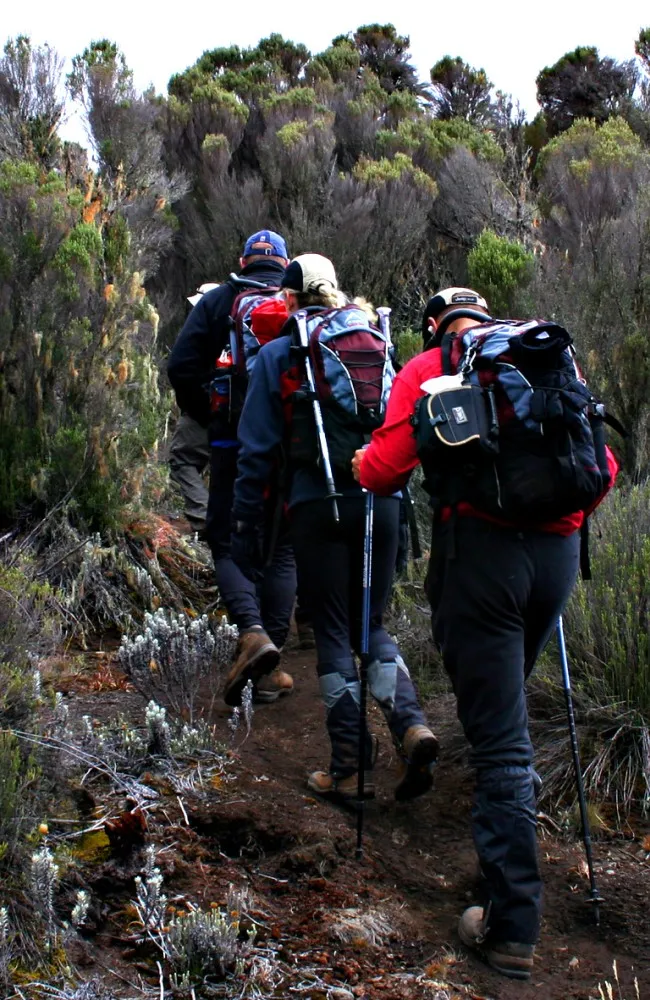
Train in the Boots You Plan to Wear
Start with shorter walks and gradually use your boots on longer hikes. Where possible, include hills, uneven ground and descents so you can see how your feet and boots respond under conditions closer to those you will experience on Kilimanjaro.
Wear the same type of hiking socks you intend to use on Kilimanjaro and experiment with your lacing. The aim is not simply to break in the boots — it is to make sure your entire footwear system works comfortably for your feet.
Start With Short Walks
Begin with shorter walks and pay attention to any pressure, rubbing or discomfort.
Increase the Distance
Gradually extend your walking time so you can judge how the boots feel after several hours on your feet.
Add Hills & Descents
Add hills, uneven terrain and longer descents to test grip, heel security and toe room under more demanding conditions.
Complete Longer Hikes
Before travelling, complete longer training hikes in your boots, ideally while carrying the daypack you plan to use.
If your boots repeatedly cause significant rubbing, pressure or pain during training, do not assume they will suddenly become comfortable on Kilimanjaro. Identify the problem early and, if necessary, reconsider the fit or choose a different model before your trip.
Hiking Socks, Warmth & Footwear for Summit Night
Good Kilimanjaro hiking boots are only part of the equation. Your socks, the room inside your boots and how you manage warmth and moisture all affect foot comfort during a multi-day climb.
Wear Socks That Work With Your Boots
Hiking socks should feel comfortable inside your boots, help manage moisture and provide cushioning without making your boots too tight. Test the combination during training rather than deciding on your sock system once you are already on the mountain.
Avoid ordinary cotton socks for long hiking days. Cotton absorbs moisture and can remain damp against the skin, increasing friction and discomfort. Hiking-specific synthetic or wool-blend socks are generally a better choice for trekking.
Everyday Trekking Socks
Choose comfortable, moisture-managing hiking socks for your regular trekking days. The thickness should work comfortably with the fit of your boots.
Warmer Summit Socks
A warmer pair can be useful for the cold summit attempt, provided your boots still fit comfortably and your toes are not compressed.
Liner Socks — Optional
Some hikers prefer a thin liner sock beneath their main hiking sock to help manage friction. Others are more comfortable with a single sock layer, so test what works for you.
Lightweight hiking shoes can be comfortable and may suit experienced hikers who know they perform well in them, but they generally provide less ankle coverage and weather protection than hiking boots. Because Kilimanjaro combines wet and muddy lower trails, rocky and uneven terrain, loose ground and cold conditions at higher elevations, we generally recommend well-fitting mid- or high-cut hiking boots for the main trek.
Do You Need Gaiters for Kilimanjaro?
Gaiters are not a substitute for good hiking boots, but they can be a useful addition to your Kilimanjaro footwear. They cover the top of your boots and lower legs, helping keep dust, loose stones, mud and moisture away from your socks and the inside of your boots.
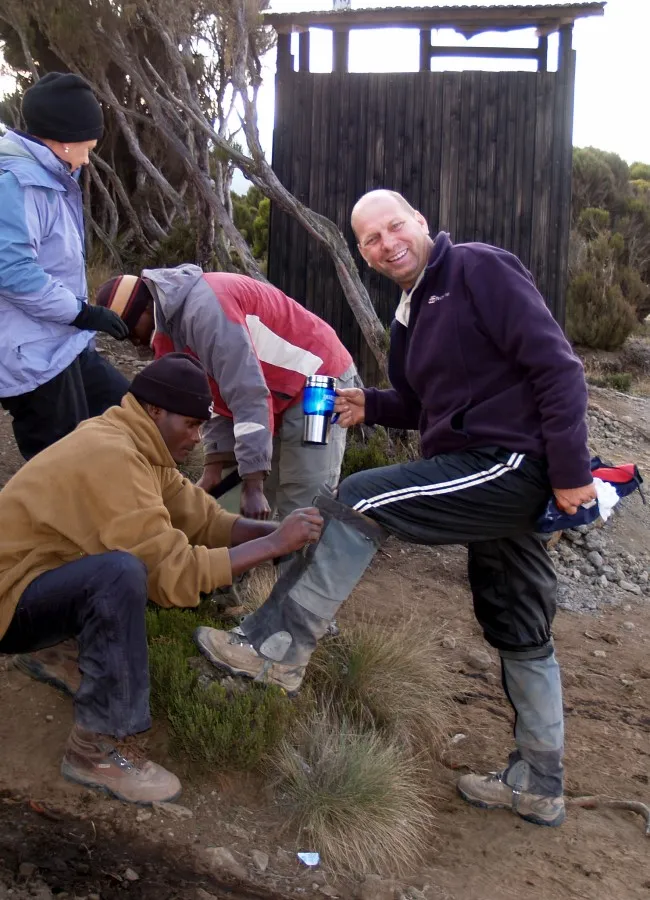
Why Many Kilimanjaro Hikers Use Gaiters
Trail conditions on Kilimanjaro can change considerably as you climb. Lower sections may be wet or muddy, while higher trails can be dry, dusty, rocky and covered with loose gravel. Gaiters create an extra barrier around the opening of your hiking boots.
They can be especially useful on loose or dusty sections where small stones and debris might otherwise enter your boots. In wet conditions, they can also help reduce the amount of mud and water reaching your socks through the top of the boot.
Secure Fit
Choose gaiters that fit securely around your boots and lower legs without slipping down or constantly needing adjustment.
Boot Compatibility
Test the gaiters with the actual hiking boots you plan to use, including the straps and attachment points.
Weather Protection
Water-resistant or waterproof gaiters can provide additional protection in wet and muddy trail conditions.
Practise Before Your Climb
Practise fitting and removing them before your trip so you are comfortable using them when conditions change.
Your boots still need to fit correctly and provide the grip, support and weather protection needed for the trek. Think of gaiters as a useful additional layer of protection rather than a replacement for waterproof, well-fitting hiking boots.
Some of the Best Hiking Boots for Kilimanjaro
There is no single hiking boot that is best for every Kilimanjaro climber. Foot shape, fit and personal comfort vary from one person to another. The models below are examples of waterproof hiking boots with features that make them worth considering for a multi-day Kilimanjaro trek.
A boot that fits another hiker perfectly may not suit your feet. Whenever possible, try different models with your hiking socks, compare the fit and choose the pair that feels secure and remains comfortable as you walk.
Salomon Quest 4 GORE-TEX
A hiking and backpacking boot designed for multi-day use and mixed terrain. It is worth considering if you prefer a more structured feel with substantial support and protection underfoot.
Worth Trying for Multi-Day TrekkingLOWA Renegade EVO GTX Mid
A mid-cut waterproof hiking boot designed for all-day hiking and moderate backpacking. It is worth trying if you want a balance of support, cushioning and traditional hiking-boot construction.
Worth Trying as a Versatile All-RounderSCARPA Rush TRK GTX
A waterproof trekking boot with a more cushioned, lighter-feeling design than some traditional trekking boots. It is worth considering if you want support without automatically choosing the heaviest boot available.
Worth Trying for Support Without Excess WeightHanwag Banks GTX
A mid-cut waterproof hiking and trekking boot with a leather upper and Vibram outsole. It is worth considering if you prefer a more traditional trekking-boot feel and robust construction.
Worth Trying for a Traditional Trekking FeelCompare Fit Before Comparing Brand Names
Use the features we have already covered in this guide to evaluate any hiking boot you are considering — whether or not it appears in the examples above.
Hiking-boot ranges and model names change over time and differ by market. Use these examples to understand the type of footwear worth considering, then choose a well-fitting waterproof hiking boot with appropriate grip, support and protection for the conditions you will encounter on Kilimanjaro.
Camp Shoes, Dry Socks & Foot Care on Kilimanjaro
Your hiking boots work hard during a Kilimanjaro trek, and so do your feet. Once you reach camp, changing out of your boots gives your feet a break and allows your footwear to air before the next day's hike.
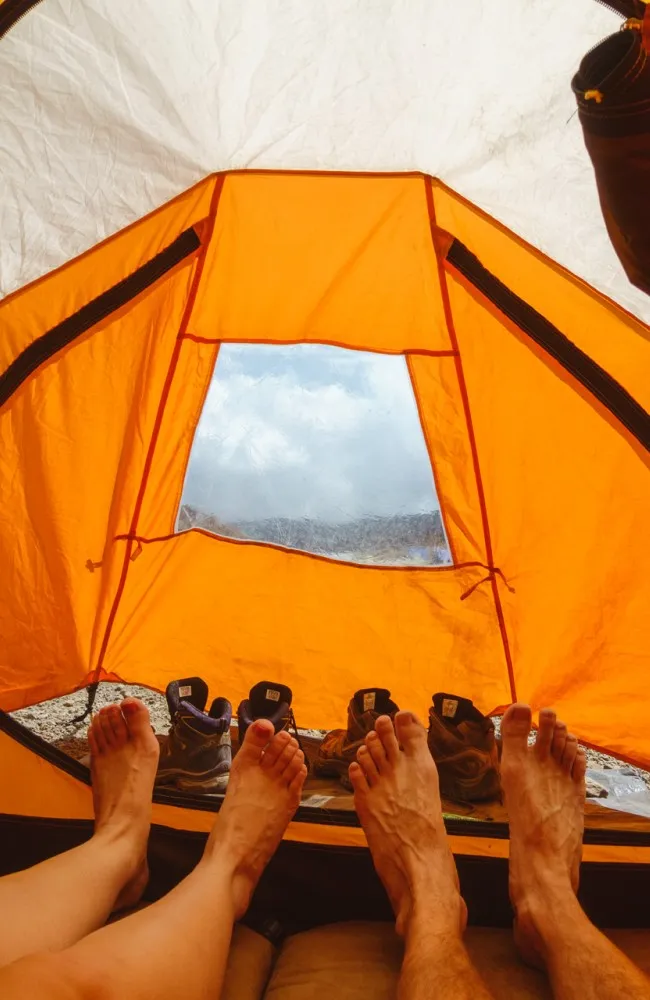
Change Out of Your Hiking Boots at Camp
After several hours on the trail, remove your hiking boots when practical and give your feet time to air. Change into clean, dry socks and suitable camp footwear rather than remaining in damp or dusty hiking boots all evening.
This is also a good time to check your feet for hot spots, rubbing or developing blisters so that small problems can be dealt with before the following day's hike.
Lightweight Camp Shoes
Lightweight shoes are a practical camp option, giving your feet a break from hiking boots while still providing protection when walking around camp.
Sandals or Similar Footwear
Lightweight sandals can work at lower camps in suitable conditions, but they offer less protection and may not be appropriate as temperatures drop higher on the mountain.
Warm Camp Footwear
At colder, higher camps, warmth becomes increasingly important. Make sure your camp footwear has enough room for warm, dry socks without restricting your feet.
Remove damp insoles where appropriate, loosen the laces and open the boots to improve airflow. Avoid placing them directly against a strong heat source, which can damage some boot materials, adhesives or waterproof membranes.
Common Hiking Boot Mistakes to Avoid on Kilimanjaro
Choosing good hiking boots is only part of the preparation. Many footwear problems on Kilimanjaro can be avoided by getting the fit right, testing your boots during training and dealing with small problems early.
Buying Boots Just Before Your Trip
New boots may feel comfortable during a short fitting but cause rubbing or pressure after several hours of hiking. Leaving your purchase until the last minute gives you little time to identify potential problems.
Choosing by Brand Alone
A highly rated boot from a respected manufacturer may still be wrong for your foot shape. Brand reputation cannot compensate for poor fit.
Wearing Boots That Are Too Tight
Your feet may swell during long hiking days, while descents can push your toes towards the front of the boot. Boots that already feel cramped can become increasingly uncomfortable on the mountain.
Choosing Boots That Are Too Heavy
More weight and stiffness do not automatically make a boot better for Kilimanjaro. Heavy, overly rigid footwear may be unnecessary if you can get the support, protection and grip you need from a lighter option.
Ignoring Your Socks
Hiking socks affect the fit inside your boots. A combination that is too thick can make your footwear tight, while unsuitable socks may contribute to moisture and friction.
Ignoring Small Foot Problems
A minor hot spot on the first day can become a much bigger problem after several more days of walking. Do not assume discomfort will simply disappear if you keep hiking.
Your Kilimanjaro hiking boots should not still be an experiment when the trek begins. By the time you travel, you should already have used them on longer walks or hikes, tested them with your hiking socks and confirmed that they remain comfortable on both climbs and descents.
Hiking Boots for Kilimanjaro: FAQs
Still deciding what footwear to take? Here are quick answers to some of the most common questions about hiking boots, socks and gaiters for climbing Kilimanjaro.
Do I need waterproof hiking boots for Kilimanjaro?
Waterproof hiking boots are a practical choice for most Kilimanjaro climbers. Lower trails can be wet and muddy, while mountain weather can change quickly. Waterproof protection helps reduce the amount of moisture reaching your feet when conditions deteriorate.
Can I climb Kilimanjaro in hiking shoes instead of boots?
Some experienced hikers may prefer lightweight hiking shoes and already know that they work well for them. For most Kilimanjaro climbers, however, we generally recommend well-fitting mid- or high-cut hiking boots for their additional coverage, weather protection and suitability across changing terrain.
Should Kilimanjaro hiking boots be one size bigger?
Not automatically. Different brands and models fit differently. What matters is having a secure heel, enough toe room for descents and sufficient space for your hiking socks without making the boot loose. Always judge the fit of the actual boot rather than relying on a fixed sizing rule.
How long should I break in hiking boots before Kilimanjaro?
There is no fixed number of kilometres that suits every boot or hiker. Start using your boots well before your trip and gradually progress from shorter walks to longer hikes. Before travelling, you should already know how they feel after several hours and on both climbs and descents.
Do I need gaiters for Kilimanjaro?
Gaiters are not essential for every hiker, but they can be useful. They help keep dust, small stones, gravel and mud away from the top of your boots and provide an additional barrier in wet conditions.
What socks should I wear with Kilimanjaro hiking boots?
Hiking-specific wool-blend or synthetic socks are generally more practical than ordinary cotton socks. The correct thickness depends on your boots and personal comfort. Test your planned sock combination during training and make sure warmer summit socks do not make your boots too tight.
Do I need special boots for Kilimanjaro summit night?
Most hikers use the same suitable hiking boots throughout their Kilimanjaro trek, including summit night. What becomes particularly important at higher elevations is warmth: start the summit attempt with dry socks, make sure your toes still have room to move and use a footwear combination you have already tested before travelling.
Can I rent hiking boots for Kilimanjaro?
Yes, hiking boots are available to rent. However, because fit is so important, we recommend using rental boots only as a backup or in an emergency. Whenever possible, bring hiking boots that you have already fitted, tested and worn during training before arriving in Tanzania.
Get Your Gear Right — Then Start Planning Your Climb
The right hiking boots are only one part of preparing for Kilimanjaro. Explore our complete preparation guide for more practical advice, or take the next step and view our scheduled group climbs.