
Hikers enjoying a meal together while climbing Mount Kilimanjaro

Meals on Kilimanjaro

Kilimanjaro Food Menu: What You Eat on the Mountain

Freshly Prepared Meals From Breakfast to Dinner

Good food matters when you are trekking for several days at altitude. Our mountain cooks prepare filling breakfasts, lunches, snacks and hot dinners throughout your climb, with vegetarian, vegan, gluten-free and other dietary options available when arranged in advance.

Since 2008 Kilimanjaro Guiding Experience
Max 12 Hikers Small Group Climbs
Emergency Oxygen Carried on Every Climb
KPAP & KRTO Independent Monitoring Rated Excellent Trustpilot Reviews

Food on Kilimanjaro

What Do You Eat on Kilimanjaro?

Meals on Kilimanjaro are designed to give you regular, filling food throughout the day. Expect a mixture of familiar trekking meals and local Tanzanian dishes, with plenty of carbohydrates, vegetables, fruit, soups, hot drinks and protein depending on your dietary needs.
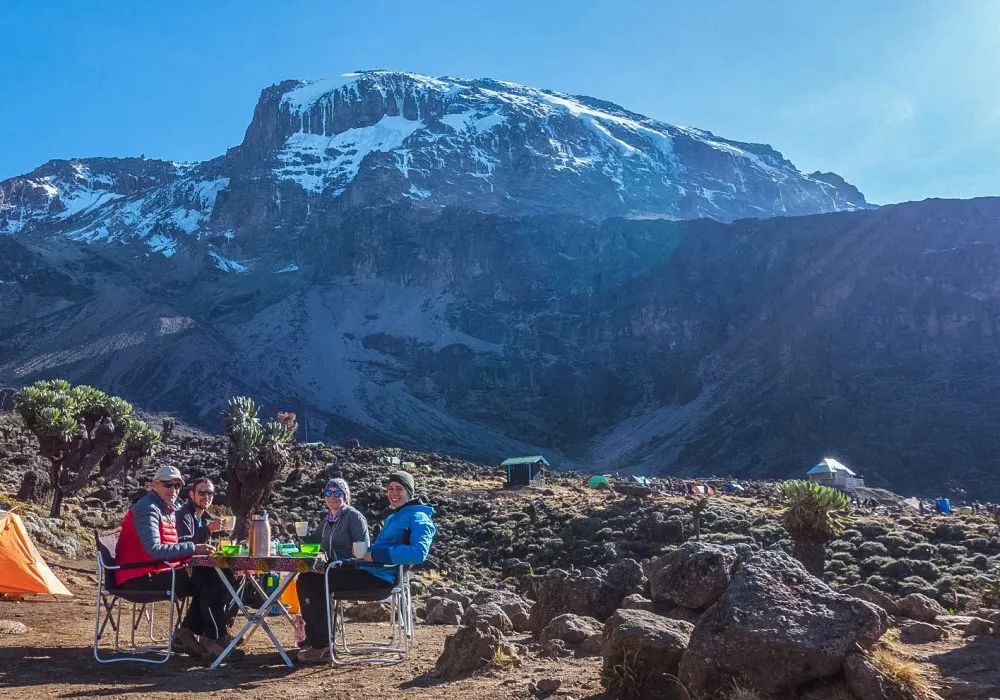
Hikers having breakfast at Barranco Camp on Mount Kilimanjaro
Breakfast at Barranco Camp

Freshly Prepared Meals Throughout Your Trek

Your mountain cook prepares meals at camp while the rest of the crew supports the daily movement of equipment and supplies up the mountain.

Breakfast is usually substantial, lunch may be served hot at camp or provided as a packed meal depending on the day's route, and dinner is normally a hot meal after you arrive at camp.

Tea, coffee, hot chocolate and snacks are also served during the trek, helping you refuel between hiking and main meals.

Menus are flexible, not fixed. Your final menu may vary according to ingredient availability, the cook's speciality, route logistics and any dietary requirements arranged before your climb.

A Typical Day of Meals on Kilimanjaro

The exact dishes change from day to day, but the general rhythm of eating on the mountain remains fairly consistent.

01

Breakfast

Often includes porridge, eggs, bread or pancakes, fruit, potatoes or other carbohydrates, together with tea, coffee or hot chocolate.

02

Lunch

Depending on the hiking day, lunch may be a hot meal at camp or a packed lunch that can be eaten while travelling between camps.

03

Afternoon Tea

Once you reach camp, hot drinks are commonly served with a light snack such as popcorn, biscuits, peanuts or fruit.

04

Dinner

Dinner is generally hot and filling, often beginning with soup followed by rice, pasta, potatoes or local dishes with vegetables, protein and fruit.

Next: below you will find an actual sample Kilimanjaro food menu showing the kinds of meals that may be served over several days on the mountain.

Sample Menu

Sample 7-Day Kilimanjaro Food Menu

This sample menu gives you a realistic idea of the kinds of meals that may be served during a Kilimanjaro trek, from hearty breakfasts and hot lunches to soups, dinners, snacks and summit-night food.

This is an example menu, not a fixed daily menu. Final meals are planned by the mountain cook shortly before your trek and may vary according to fresh ingredient availability, route logistics, the cook's speciality and any dietary requirements arranged in advance.
1

Day 1

Breakfast Served at your pre-climb lodge.
Packed Lunch Beef burger, fried chicken, chips, cake, local-style sweet doughnut, fruit and juice.
Teatime Coffee, hot chocolate or tea with fruit and a light snack.
Dinner Mixed vegetable soup, potatoes, fish fingers, green vegetables, salad and fruit.
2

Day 2

Breakfast Oat porridge, beef sausage, pancake, bread, eggs, peanut butter, jam, fruit and hot drinks.
Lunch Carrot soup with macaroni bolognaise, salad and fruit, or a packed lunch depending on the day.
Dinner Zucchini soup, chickpea fritters, vegetable rice, chicken curry, salad and fruit.
3

Day 3

Breakfast Finger millet porridge, sausage, sweet potatoes or yams, bread, eggs, fruit and hot drinks.
Lunch Guacamole with toast, potatoes, fried chicken, salad and fruit.
Dinner Cucumber soup, peppered steak, mashed potatoes, salad, a sweet doughnut and fruit.
4

Day 4

Breakfast Oat porridge, sausage, pancake, bread, eggs, fruit and hot drinks.
Lunch Pea soup with pancake, stir-fried mushroom noodles, salad and fruit.
Dinner Pumpkin soup, mushrooms, ugali, spinach, mixed salad and fruit.
5

Day 5

Breakfast Finger millet porridge, sausage, sweet potatoes or yams, bread, eggs and fruit.
Lunch Fried chicken and chips with mixed salad and fruit, or a packed lunch where required.
Dinner French onion soup, chickpea fritters, Swahili-style kidney beans with rice, salad and fruit.
6

Day 6

Breakfast Oat porridge, sausage, pancake, bread, eggs, fruit and hot drinks.
Lunch Cucumber soup, chips, salad and fruit, or a packed option depending on the route.
Dinner Carrot soup, mixed vegetable noodles, salad and fruit.
Pre-summit snack: fruit, juice and a chocolate bar before the summit attempt.
7

Day 7

Post-Summit Brunch Leek soup, sandwich, chapati, mixed fruit and hot drinks.
Teatime Coffee, tea or hot chocolate with a light snack.
Dinner Green banana matoke stew, beef pilau, spinach, salad and fruit.
+

Meals Vary by Trek

Hot or Packed Lunches Some days allow time for a hot lunch, while longer or slower hiking days may use a packed lunch instead.
Local Dishes Meals may include Tanzanian favourites such as ugali, chapati, pilau, beans and green banana dishes.
Dietary Options Vegetarian, vegan, gluten-free and other dietary menus can be planned when arranged before the climb.

Your menu may look different — and that is normal.

The purpose of this sample is to show the variety and style of meals you can expect on Kilimanjaro. Exact dishes change according to the route, market availability, dietary needs and the mountain cook preparing your meals.

From Moshi to the Mountain

Fresh Ingredients & Menu Planning

Before your trek begins, ingredients are purchased and menus are planned for the days ahead. This allows the mountain cook to prepare a practical menu around available produce, route logistics and the dietary requirements of the group.
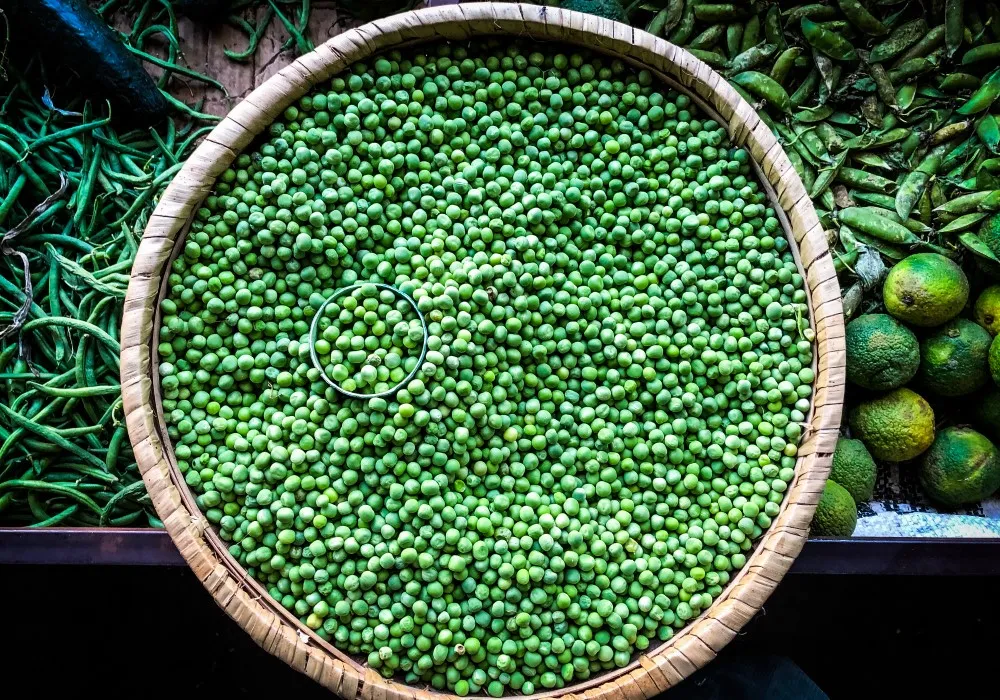
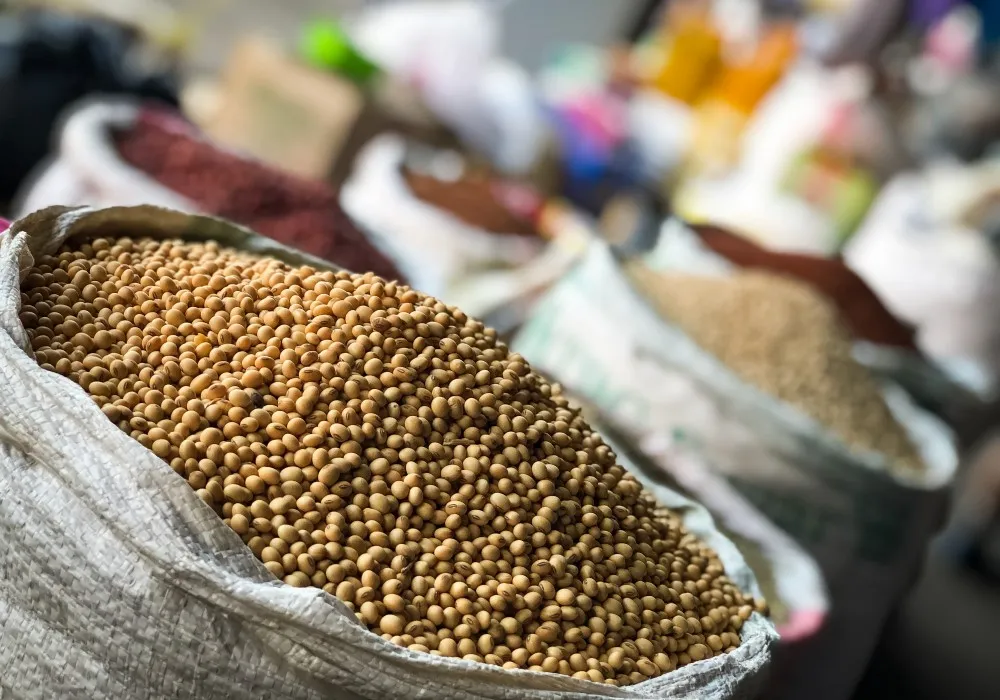
Fresh ingredients at Moshi market before a Kilimanjaro climb
Fresh ingredients from Moshi market
Local ingredients from Moshi market used for Kilimanjaro meals
Local ingredients for mountain meals

Menus Are Planned Before Your Climb

Mountain meals need to be practical as well as enjoyable. Ingredients must be bought in advance, packed and carried up the mountain with the rest of the expedition supplies.

For this reason, your final menu is not fixed weeks in advance. The cook plans the menu shortly before the trek, taking into account what is available locally, what can be transported successfully and any dietary requirements that have been communicated before arrival.

1
Ingredients are purchased in advance This is why dietary requirements should be shared with us before you arrive in Tanzania.
2
The cook adapts the final menu Meals can vary according to ingredient availability, route conditions and the cook's own speciality.
3
Local and familiar foods are combined Expect a mixture of familiar trekking meals and Tanzanian dishes such as chapati, pilau, beans, ugali and green banana dishes.
Please tell us about dietary requirements before your climb. Last-minute changes may not always be possible because market purchasing and food preparation are arranged in advance.

Dietary Requirements

Vegetarian, Vegan & Gluten-Free Kilimanjaro Meals

Dietary requirements do not automatically mean a very limited menu. Our mountain cooks can prepare a range of meal styles when we know your requirements before the trek and have time to plan and purchase the correct ingredients.

V

Vegetarian

Vegetarian menus can include filling breakfasts, soups, lentil and vegetable curries, pasta, rice, beans, chapati and fresh fruit.

Examples: lentil curry, vegetable pasta, banana and potato stew, rice and beans, chapati and soups.
VG

Vegan

Vegan meals can be planned around grains, potatoes, vegetables, legumes, pasta, rice and local Tanzanian dishes without animal products.

Examples: vegetable rice, chickpea fritters, mushroom pasta, ugali with spinach, pilau and beans.
GF

Gluten-Free

Gluten-free meals can be planned using suitable breads, rice, potatoes, sweet potatoes, vegetables, eggs, meat and naturally gluten-free local dishes.

Examples: gluten-free bread, rice-flour pancakes, ugali, curries, rice and sweet potatoes.
AV

Asian Vegetarian

We can also plan vegetarian menus with familiar Asian-style flavours and dishes for hikers who prefer this type of food.

Examples: masala tea, lentil curry, chapati, papadum, bhajia, kachori and vegetable curry.
+

Other Requirements

If you avoid certain foods, ingredients or types of meat, tell us before arrival so the cook can plan around your requirements wherever reasonably possible.

Important: please give us as much detail as possible before your trek.
MIX

Mixed Dietary Groups Can Be Catered For

Not everyone in your group needs to eat the same menu. We can plan meals for groups containing both vegetarian and non-vegetarian hikers, or groups where particular meats or ingredients need to be avoided.

Example: one of our sample menus combines vegetarian and non-vegetarian meals while excluding beef.
!

Tell Us Before You Arrive

Food purchasing for the trek is done in advance. Please tell us about dietary requirements as early as possible so that the correct ingredients can be sourced and the mountain cook can prepare an appropriate menu. Last-minute changes may not always be possible.

Food allergies require special attention. Please tell us about any allergy, particularly a severe allergy, before the trek. Depending on the requirement, separate utensils, food preparation methods or other precautions may need to be arranged.

Higher on the Mountain

Eating at Altitude & on Summit Night

As you climb higher, meals remain an important part of your daily routine. Warm food, hot drinks and regular snacks become especially welcome as temperatures drop and the summit attempt approaches.
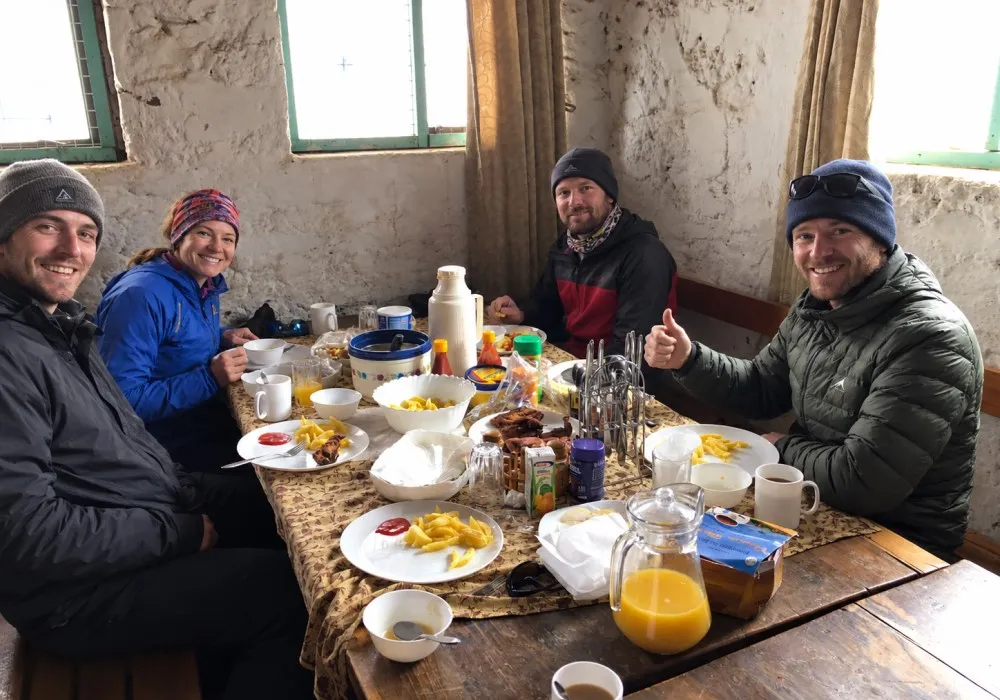
Hikers enjoying a meal at Kibo Hut on Mount Kilimanjaro
A meal at Kibo Hut on Kilimanjaro

Meals Change as the Mountain Changes

The style of food may become simpler at higher camps, where conditions are colder and the logistics of preparing meals become more demanding.

The aim is still to provide food that is warm, familiar and easy to eat, while giving you opportunities to refuel before the next stage of the climb.

1
Keep eating regularly Even when you do not feel as hungry as usual, try to eat something at each meal and snack opportunity.
2
Warm food is especially welcome Soups, hot meals and warm drinks become increasingly comforting as temperatures fall higher on Kilimanjaro.
3
Familiar foods can be easier to manage Simple carbohydrates, fruit, snacks and drinks can be useful when you want something easy to eat.

Before the Summit Attempt

A pre-summit snack is provided before setting out for the summit. Depending on the menu, this may include fruit, juice, chocolate, porridge or another light snack together with a hot drink.

After the Summit

After returning from the summit, a more substantial meal or brunch is served. Sample menus include soup, sandwiches, chapati, fruit and hot drinks before continuing the descent.
Remember: summit-night food can vary between routes and menus. The examples above show the type of food you may receive rather than a guaranteed fixed menu.

Drinks & Snacks

Drinking Water, Hot Drinks & Snacks on Kilimanjaro

Meals are only one part of your daily routine on the mountain. Drinking water, warm drinks and regular snacks are also important parts of the trekking day.

H2O

Drinking Water

Water is provided during the mountain trek and prepared for drinking by the crew. You should carry suitable reusable bottles or a hydration system for use while hiking.

HOT

Tea, Coffee & Hot Chocolate

Hot drinks are commonly served with breakfast, lunch where practical, teatime and dinner. Tea, coffee and hot chocolate feature regularly in our sample menus.

PM

Afternoon Snacks

After arriving at camp, you may be served a hot drink with a light snack such as popcorn, biscuits, peanuts or fruit before the evening meal.

Should You Bring Your Own Kilimanjaro Snacks?

Yes. Although snacks are included in the mountain menu, we recommend bringing a small supply of favourite snacks that you know you enjoy. At altitude, familiar foods can be especially useful when you feel less interested in eating.

Energy or cereal bars
Dried fruit or nuts
Sweets or chocolate
A favourite familiar snack
Keep your drinking water protected from freezing at higher camps. Temperatures can fall below freezing, particularly around summit night. Keep bottles insulated where possible and avoid leaving drinking water exposed overnight.

Behind the Meals

How Kilimanjaro Meals Are Prepared & Served

Preparing food on Kilimanjaro is very different from cooking in a hotel kitchen. Ingredients, cooking equipment and supplies must move with the expedition, while the cook prepares meals at camp throughout the trek.

1

Ingredients Are Planned

Food is purchased before the climb according to the expected menu, group size and dietary requirements communicated in advance.

2

Supplies Go Up the Mountain

Ingredients and cooking supplies travel with the mountain crew, which is why menus need to work within the practical realities of a multi-day trek.

3

Your Cook Prepares the Meals

The mountain cook prepares meals at camp, adapting dishes where necessary according to conditions, available ingredients and the needs of the group.

4

Meals Follow the Trek

Some hiking days allow for a hot lunch, while longer days may require a packed lunch. Breakfast, teatime and dinner are planned around the day's hiking schedule.

On the Tented Routes

Meals are generally served at camp, with the group eating together before or after the day's hiking. The exact setup can vary according to the campsite, weather and stage of the trek.

On the Marangu Route

Marangu uses mountain huts rather than tents, so dining arrangements differ from the camping routes. The Kibo Hut meal shown earlier on this page is an example of eating indoors higher on the mountain.

Hot lunch or packed lunch? This depends on the route, pace and hiking day. Longer sections may require a packed lunch, while other days allow the crew to prepare a hot meal at camp.

Frequently Asked Questions

Kilimanjaro Food & Meal FAQ

These are some of the most common questions hikers ask about meals, snacks, drinking water and dietary requirements on Kilimanjaro.

What food do you eat on Kilimanjaro?

Meals typically include porridge, eggs, bread, pancakes, potatoes, rice, pasta, soups, vegetables, fruit and protein, together with Tanzanian dishes such as chapati, pilau, beans, ugali and green banana dishes.

What meals can I expect on a Kilimanjaro climb?

Breakfast commonly includes foods such as porridge, eggs, toast, pancakes, fruit and hot drinks. Lunch may be a packed lunch or a hot meal depending on the day’s itinerary, while dinner usually includes soup followed by a main meal with carbohydrates, vegetables and a source of protein.

Snacks and hot drinks are also provided during the climb. Exact dishes vary from day to day, but our mountain cooks prepare a varied menu designed to provide hikers with plenty of energy for the trek.

Is food included in the Kilimanjaro climb?

Yes. Meals during the mountain trek are included in your Kilimanjaro package. Breakfasts, lunches, dinners, hot drinks and mountain snacks are provided according to the itinerary and menu planned for your trek.

Can vegetarians and vegans be catered for?

Yes. Vegetarian and vegan menus can be arranged when we know your requirements in advance. Meals may include lentils, beans, vegetable curries, rice, pasta, potatoes, chapati, soups and other plant-based dishes.

Can you provide gluten-free meals?

Gluten-free meals can be arranged when requested before the trek. Depending on the menu, options may include gluten-free bread, rice, potatoes, sweet potatoes, rice-flour pancakes, ugali, vegetables, eggs and meat.

What snacks are served on Kilimanjaro?

Sample menus include snacks such as popcorn, biscuits, peanuts, fruit, juice and chocolate. Hot drinks are often served with snacks during teatime at camp.

Should I bring my own snacks?

Yes. We recommend bringing a small supply of favourite snacks such as energy bars, nuts, dried fruit, sweets or chocolate. Familiar foods can be useful if your appetite changes at altitude.

Is drinking water provided on Kilimanjaro?

Yes. Drinking water is provided during the mountain trek and prepared by the crew. You should bring suitable reusable bottles or a hydration system so you can carry enough water while hiking.

What should I do if I have a food allergy?

Tell us about any food allergy before you arrive in Tanzania, especially if the allergy is severe. Depending on the requirement, separate utensils, preparation methods, cooking arrangements or other precautions may need to be organised.

Because food and equipment are transported in a shared mountain environment, severe allergies should always be discussed with us in advance.

Have a dietary requirement we have not covered?

Tell us about your dietary preferences, allergies or foods you avoid before your climb. The earlier we know, the easier it is for our team to plan the correct ingredients and mountain menu.

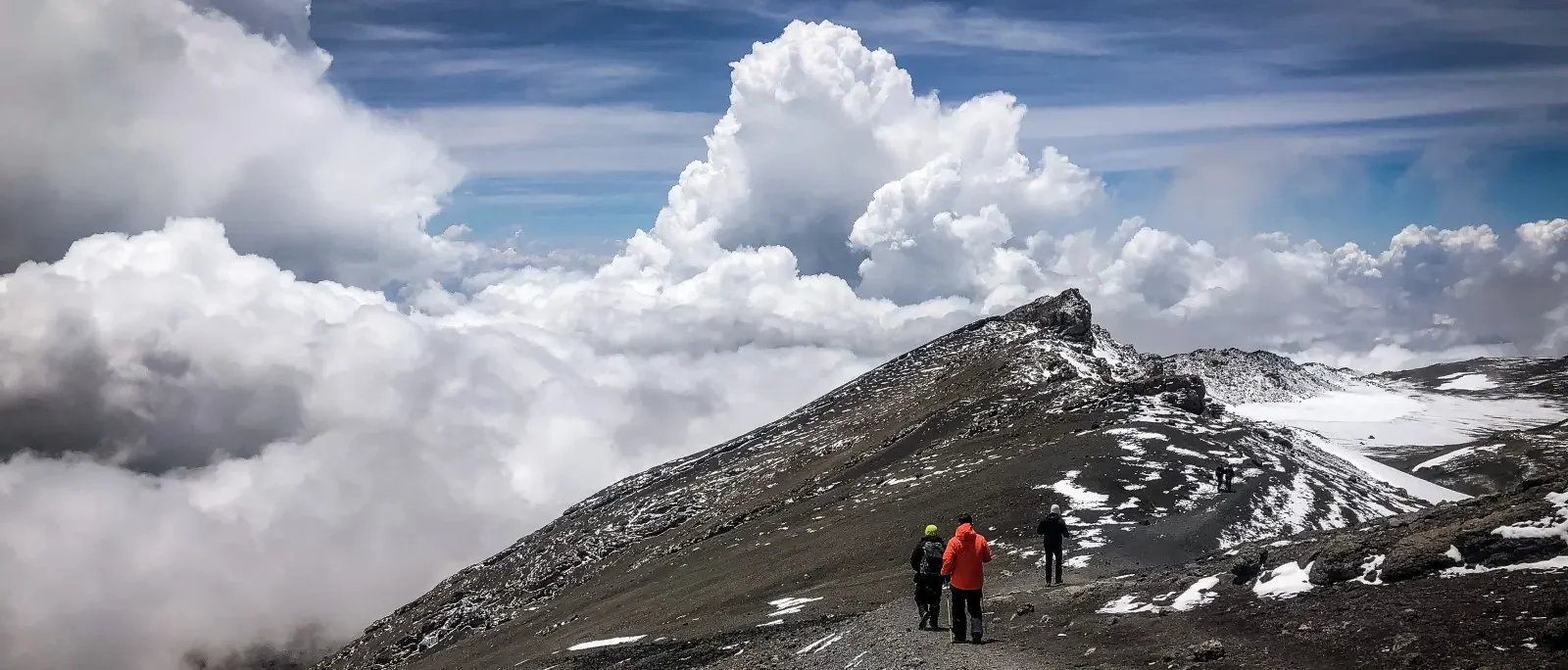
Hikers trekking above the clouds on Mount Kilimanjaro

Ready to Climb?

Plan Your Kilimanjaro Adventure

From route choice and acclimatization to meals, mountain support and group departures, our team can help you plan a Kilimanjaro climb that fits your dates, preferences and experience.