
Life on Kilimanjaro
A Typical Day Climbing Mount Kilimanjaro
From Morning Tea to Bedtime
Wondering what climbing Mt Kilimanjaro is really like? Follow a typical day from morning tea and breakfast to hours on the trail, meals, health checks and an early night at camp.
Since 2008
Guiding Experience
Small Group Climbs
Maximum 12 Hikers
Twice-Daily Health Checks
Climber Monitoring
Life on the Mountain
What Does a Typical Day on Kilimanjaro Feel Like?
A typical day on Kilimanjaro follows a steady rhythm: start early, walk slowly, eat and drink regularly, and give your body time to adjust to the altitude. The pace is deliberately unhurried, because acclimatisation matters more than moving quickly.
Start Early
Most mornings begin with tea or coffee at your tent, followed by washing water, packing and breakfast before the group leaves camp.
Walk Pole Pole
Your guide sets a slow, sustainable pace. On Kilimanjaro, moving steadily and allowing time to acclimatise is far more important than moving quickly.
Eat & Hydrate
Meals, snacks and regular drinking are part of the daily routine. Even when altitude affects your appetite, keeping up your energy and fluids remains important.
Recover at Camp
By late afternoon, you usually reach the next camp, where your tent and duffel are waiting. Tea, washing water, dinner, a health check and an early night follow.
Morning on Kilimanjaro
Waking Up, Breakfast & Preparing to Hike
Mornings on Kilimanjaro follow a simple routine: wake up, wash, pack your gear, eat breakfast, complete your morning health check and prepare for the day's hike.
Wake Up on Kilimanjaro
Morning Tea, Washing Water & Packing Up
Your morning usually starts with tea or coffee brought to your tent, followed by a small bowl of warm water for washing. After dressing, you pack your sleeping bag and duffel and make sure everything you need during the day is in your daypack.
Tea or Coffee
Start the morning with a hot drink brought to your tent before you begin packing up.
Wash & Dress
Use the warm washing water, get dressed for the day's conditions and prepare your layers before breakfast.
Pack Your Bags
Pack your sleeping bag and duffel for the porter team, then make sure your water, layers, rain gear and personal essentials are in your daypack.
Before You Start Hiking
Breakfast & Your Morning Health Check
Breakfast is served in the dining tent before the day's hike begins. It is also a good time to drink, refill your bottles and make sure your daypack is ready before leaving camp.
Breakfast in Camp
Sit down for breakfast in the dining tent and take the opportunity to eat and drink before the day's walking begins.
Prepare for the Trail
Check your water, clothing layers, rain protection, sunscreen and anything else you may need before reaching the next camp.
Your Guide Checks How You Are Adjusting to the Altitude
Your guide will ask how you are feeling and use a pulse oximeter to record your blood oxygen saturation and heart rate. These readings are considered together with any symptoms and your overall condition to help monitor how you are adjusting to the altitude.
Life on the Trail
Leaving Camp & Settling Into the Hike
Once breakfast and the morning health check are complete, the day's hike begins. The aim is to settle into a comfortable rhythm, walk slowly, drink regularly and give your body time to adjust to the altitude.
Leave Camp
Start Hiking Towards the Next Camp
After breakfast, you leave camp with your guide and begin walking towards the next campsite. While the hiking group moves ahead, the porter team remains behind briefly to dismantle camp and prepare the equipment for transport.
The first part of the morning can feel cool, but conditions change quickly on Kilimanjaro. Your guide sets the pace, while you manage your layers, hydration and short breaks as needed.
Terrain and distance vary from day to day. Some sections are gradual and open, while others are steeper or more uneven, but the goal remains the same: move steadily rather than rush.
Follow Your Guide
Your guide sets a steady pace for the group and adjusts it when necessary as the terrain and altitude change.
Drink Regularly
Keep your water accessible and drink throughout the day rather than waiting until you feel thirsty.
Adjust Your Layers
Temperatures can change quickly, so add or remove layers before you become too hot or too cold.
“Pole pole” — slowly, slowly
On Kilimanjaro, a controlled pace is part of the acclimatisation strategy. The aim is not to cover ground quickly, but to conserve energy and give your body more time to adapt as you gain altitude.
The Climb Begins to Unfold
Walking, Resting & Acclimatising
As the morning continues, the rhythm becomes simple: walk steadily, stop briefly when needed, drink often and keep moving at a sustainable pace.
The scenery changes as you move through different vegetation and altitude zones, and the character of the trail can vary considerably from one day to the next.
Your guide keeps an eye on the group throughout the hike and may adjust the pace or rest breaks depending on how everyone is coping.
Changing Scenery
Landscapes change as you move through different vegetation and altitude zones on the mountain.
Short Rest Stops
Brief stops give you time to drink, adjust layers, have a snack and catch your breath before moving on.
Snacks & Hydration
Regular fluids and small snacks help maintain energy during the hours spent walking between camps.
Gradual Acclimatisation
The slow pace and carefully planned itinerary give your body valuable time to adjust as you move higher.
Speak Up If Something Doesn't Feel Right
Tell your guide if you develop a headache, nausea, dizziness, unusual fatigue or anything else that feels different from normal. Hiding symptoms makes it harder for the guide to assess how you are coping with the altitude.
Midday to Late Afternoon
Lunch & the Afternoon Hike
Around midday, the group stops to rest and refuel before continuing towards the next campsite. The afternoon is still taken slowly, with changing weather, increasing altitude and tired legs all forming part of the day's hike.
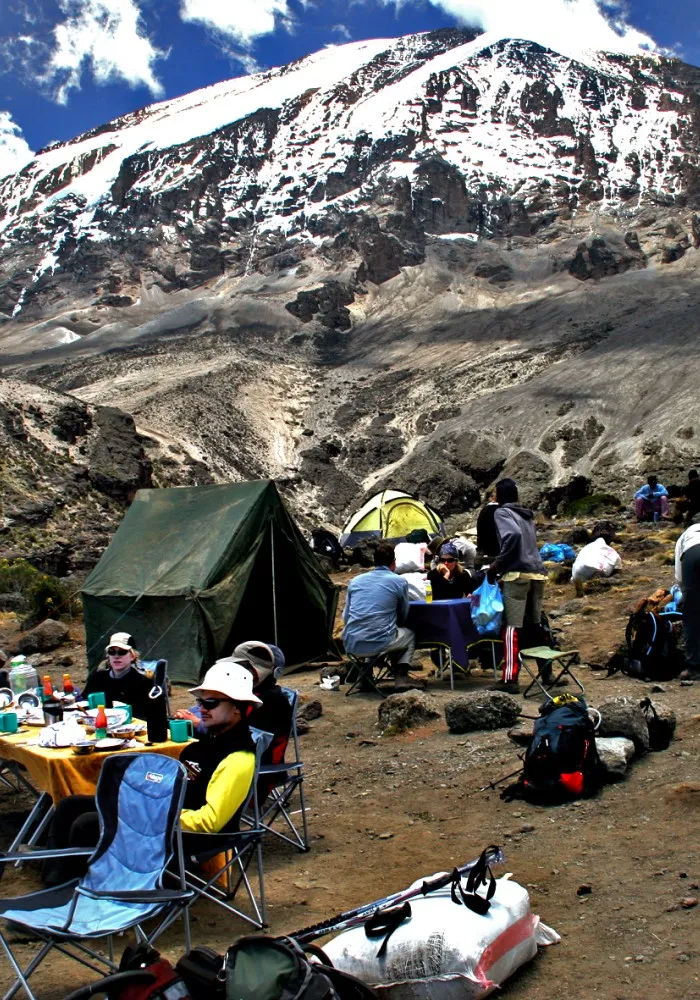
A well-earned lunch break on the mountain
Refuel on the Mountain
Lunch on Kilimanjaro
Lunch may be a picnic or a hot meal, depending on the route, the day and where it is practical to stop. Either way, it is an important chance to rest, eat, drink and recharge before the afternoon hike.
Your guide also uses the stop to see how the group is feeling before continuing. Some lunch breaks are fairly short, while others allow more time to sit and enjoy the scenery.
Picnic Lunch
A packed lunch is practical on days when the group needs to keep moving or there is no suitable place for a longer stop.
Hot Lunch
On some days, the crew may prepare a hot meal where the route and schedule allow.
The Second Half of the Day
The Afternoon Trek to Camp
After lunch, you continue towards the next campsite. The afternoon can feel harder as your legs tire and the altitude becomes more noticeable, so the same slow, steady pace remains important.
Conditions can change quickly. Sunshine may give way to cloud, wind, mist or colder temperatures, which is why extra layers and rain protection should remain accessible in your daypack.
Your guide continues to monitor the group and may adjust the pace or rest breaks as needed. The goal is to reach camp comfortably rather than push to arrive quickly.
Changing Weather
Conditions can shift quickly, so keep your rain protection and warmer layers within easy reach.
Tired Legs
The afternoon may feel tougher than the morning, especially as altitude and accumulated walking begin to take their toll.
Camp Gets Closer
As the day progresses, the focus is simply to maintain a comfortable pace and steadily work towards the next campsite.
The Final Approach to Camp
The last part of the day can sometimes feel longer than expected, especially at altitude. Seeing the tents ahead is a welcome sight — once you reach camp, the boots come off, hot drinks arrive and the recovery part of the day begins.
Behind the Scenes
Meanwhile, Your Mountain Crew Is Already Moving
While you are walking with your guide, much of the day's work is happening behind the scenes. Once the hikers leave camp, the crew dismantles the tents, packs the equipment and begins moving everything towards the next campsite.
Break Down Camp
The porter team dismantles tents and packs the communal equipment after the hikers leave.
Carry the Equipment
Tents, dining equipment, food, cooking gear and hikers' duffels are carried towards the next campsite.
Move Ahead
Porters generally move faster than the hiking group and often pass hikers during the day.
Rebuild the Next Camp
By the time you arrive, much of the camp is usually already set up and your duffel is waiting.
The Camp You Leave in the Morning Has to Appear Again Before You Arrive
Every morning the camp is dismantled, transported and rebuilt at the next campsite. It is easy to forget how much work happens while you are walking.
Reaching the Next Campsite
Arriving at Camp & Settling In
Reaching camp in the late afternoon is one of the most welcome moments of the day. Your tent is usually already pitched and your duffel waiting, so you can take off your boots, have a hot drink and begin recovering from the day's hike.
Tea or coffee and a snack are often served soon after arrival, followed by a bowl of warm water for washing. This is also the time to change into dry clothing, organise your gear and rest before dinner.
Tea & a Snack
A hot drink and something to eat help you settle in and start replacing energy after the hike.
Wash & Change
Use the warm water to freshen up and change out of damp or dusty trekking clothes.
Unpack Your Duffel
Organise the clothing and equipment you will need for the evening and the next morning.
Rest Before Dinner
Put your feet up, relax in your tent or spend time with the group before the evening routine begins.
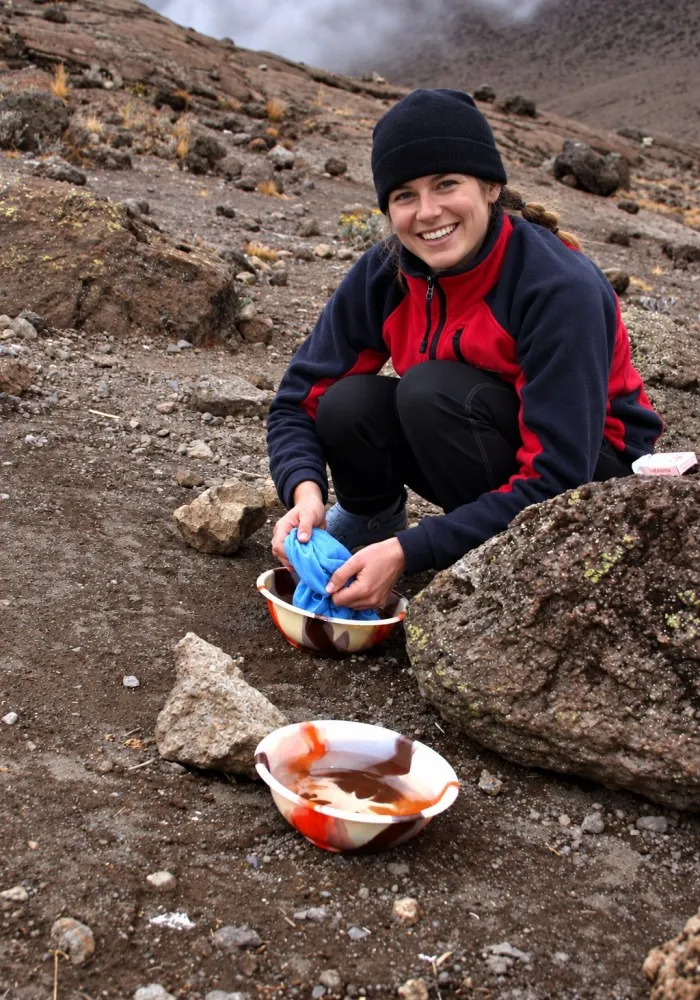
Washing and settling into camp after the day's hike
Evening at Camp
Health Check, Dinner & an Early Night
After you have washed, changed and had time to rest, the evening settles into another simple routine: a health check, dinner, a briefing about the next day and then an early night in your tent.
Daily Climber Monitoring
Your Evening Health Check
Later in the day, your guide carries out another health check and asks how you are feeling after the day's hike. A pulse oximeter is used to record your blood oxygen saturation and heart rate, but these readings are considered together with your symptoms and overall condition.
This is another important opportunity to mention a headache, nausea, dizziness, unusual fatigue, poor appetite or anything else that does not feel normal.
Pulse & Oxygen
Your heart rate and blood oxygen saturation are recorded using a pulse oximeter.
Symptoms
Your guide asks about symptoms such as headache, nausea, dizziness, appetite and unusual fatigue.
Overall Condition
The readings are considered alongside how you look, feel and respond after the day's hike.
A Pulse Oximeter Is One Part of the Assessment
Pulse oximeter readings are useful, but they do not tell the whole story. Your guide also considers how you look, how you feel and the symptoms you report when assessing how you are coping with the altitude.
Winding Down at Camp
Dinner, Tomorrow's Briefing & Bedtime
Dinner is served in the dining tent and gives the group a chance to eat, drink and relax together after the day's hike.
Your guide will also explain the plan for the next day, including the expected start time, terrain, approximate walking time and any important preparation.
After the briefing, most hikers organise their gear, prepare what they need for the morning and head to bed early. Rest becomes increasingly important as the climb progresses.
Dinner Together
Eat, drink and spend some time with the group while you recover from the day's effort.
Tomorrow's Briefing
Your guide explains the next day's route, timing, terrain and anything you need to prepare.
Early to Bed
Most hikers settle into their tents early so they can rest before another day on the mountain.
Make the Next Morning Easier
Before getting into your sleeping bag, organise the clothing and equipment you will need first thing in the morning. Keeping your headlamp, warm layers, water and daypack essentials ready saves time when you wake up.
Practical Life on the Mountain
Toilets, Washing & Hygiene on Kilimanjaro
Life on Kilimanjaro is simple. You will not have the comforts of a hotel bathroom, but with a little preparation it is perfectly manageable to stay reasonably clean and comfortable throughout the climb.
Toilet Facilities
Basic shared toilet facilities are available at Kilimanjaro campsites, but standards can vary. On KHT shared group hikes, a private portable toilet is included for the group. We also include a portable toilet on Northern Circuit climbs. For private hikes on other routes, a portable toilet is available as an optional extra.
Washing Water
There are no regular showers on the tented routes. Instead, you are usually given a small bowl of warm water in the morning and again after arriving at camp so you can wash your face, hands and body.
Personal Hygiene
Wet wipes, hand sanitiser, toilet paper and a small quick-dry towel make mountain hygiene much easier. Keep the items you may need during the day in your daypack rather than in your duffel.
Think “Clean Enough,” Not “Hotel Clean”
You do not need to feel perfectly clean every day. The goal is to stay comfortable, keep your hands clean, change out of damp clothing and maintain enough basic hygiene to feel fresh and ready for the next day.
Keep hand sanitiser easy to reach, especially before meals and after using the toilet.
Bring your own toilet paper and keep some in your daypack during the hike.
Change into dry socks and clothing at camp whenever your trekking clothes are damp.
Seal used wipes and other hygiene waste in a bag and carry it out rather than leaving it on the mountain.
The Exception to the Routine
Summit Night Is Different
Most days on Kilimanjaro follow the steady rhythm described above. Summit night is the exception. Instead of waking in the morning, you prepare late in the evening for a long, cold ascent through the night towards the summit.
From a Normal Trekking Day to a Night-Time Summit Attempt
After arriving at high camp, you eat, prepare your summit clothing and equipment, and try to rest. Later in the evening — often around midnight, depending on the route and conditions — you begin the final ascent with your headlamp on and most of the mountain still in darkness.
A Night-Time Start
You normally begin while it is still dark, often late in the evening or around midnight depending on the route and conditions.
Headlamps & Warm Layers
Temperatures can be very cold, so your headlamp, gloves and warm summit layers need to be ready before you leave camp.
Slow, Steady Climbing
The pace remains deliberately slow. The climb is long, steep in places and physically demanding, so conserving energy matters.
Sunrise & the Summit
Depending on your pace, sunrise may find you approaching the crater rim, continuing towards Uhuru Peak or already high on the mountain.
Reaching the Summit Is Only Part of the Day
After reaching the summit and taking time for photos, you begin descending. You normally return to high camp for a short rest and something to eat before continuing farther down the mountain. The exact routine depends on the route and itinerary, but summit day is considerably longer and more demanding than an ordinary trekking day.
Frequently Asked Questions
A Typical Day Climbing Kilimanjaro: FAQ
Still wondering what daily life on the mountain is really like? These are some of the most common practical questions hikers ask before climbing Kilimanjaro.
What time do you wake up on Kilimanjaro?
On a normal trekking day, wake-up is often around 6:00–6:30 AM, although this can vary. Tea or coffee and warm washing water are usually brought to your tent before you pack, have breakfast and prepare for the day’s hike.
How many hours do you hike each day on Kilimanjaro?
Walking time varies from day to day depending on the route, terrain, altitude, weather and pace of the group. Some days are shorter, while others are considerably longer. Summit day is the major exception and is normally the longest and most demanding day of the climb.
What do you eat during a typical day on Kilimanjaro?
Breakfast and dinner are normally served at camp. Lunch may be a picnic or a hot meal depending on the route and the day’s schedule. Snacks and regular hydration also form an important part of the daily routine.
Do porters carry my daypack while climbing Kilimanjaro?
Normally, you carry your own daypack containing the items you need during the hike, such as water, rain gear, warm layers, snacks and personal essentials. Your main duffel is carried separately by the porter team and is usually waiting for you at the next camp.
How does KHT monitor climbers during the day?
KHT guides carry out health checks twice daily. A pulse oximeter is used to record blood oxygen saturation and heart rate, while your guide also considers your symptoms, appetite, energy levels and overall condition.
What are the toilets and washing facilities like on Kilimanjaro?
Campsite toilet facilities are basic and standards vary. KHT includes a portable toilet on shared group hikes and Northern Circuit climbs. On other private hikes, a portable toilet is available as an optional extra. Warm washing water is normally provided in the morning and again after reaching camp.
Is summit night like a normal day on Kilimanjaro?
No. Summit night follows a completely different routine. You usually rest at high camp before beginning the final ascent late in the evening or around midnight, depending on the route and conditions. It is normally the longest and most demanding part of the climb.
Route, weather, altitude, terrain, group pace and individual condition can all affect the schedule, so the times on this page should be treated as a guide rather than a fixed timetable.
Ready for the Real Experience?
Your Kilimanjaro Adventure Starts Here
Now that you know what a typical day climbing Mount Kilimanjaro is really like, the next step is choosing the right route and departure. Join one of our small-group hikes or start planning a private Kilimanjaro climb.