

How to Train for Kilimanjaro
Prepare for Kilimanjaro with our practical 8-week training plan, designed to build the hiking endurance, leg strength and hill fitness you’ll need for several days on the mountain.
Guiding Experience
High Summit Success Rate
Group Departures
How Fit Do You Need to Be to Climb Kilimanjaro?
You do not need to be an elite athlete to climb Kilimanjaro, but you should arrive with enough endurance and strength to walk for several hours on consecutive days and recover well enough to hike again the next morning.
The Right Type of Fitness Matters Most
Kilimanjaro is a non-technical trek, so you do not need climbing skills or speed. Most days involve slow, steady walking over forest paths, rocky ground and long uphill sections.
The real physical challenge is the amount of time you spend on your feet, the repeated hiking days and the gradual build-up of fatigue. Your training should therefore be centred on walking and hiking, supported by cardio and strength work.
The goal is not to become the fastest hiker. It is to be able to walk steadily for hours, recover overnight and repeat the effort the next morning.
If you are already active, you may have a useful fitness base to build from. If you have been less active, start earlier and increase your training gradually.
Consistent, mountain-specific preparation is more useful than chasing extreme fitness targets. The sections below show you what to train and how to build your fitness progressively towards your climb.
What Are You Actually Training For?
Kilimanjaro training is most effective when it prepares you for the real demands of the trek: long hours on your feet, steady climbing, controlled descents and the ability to recover and hike again the next day.
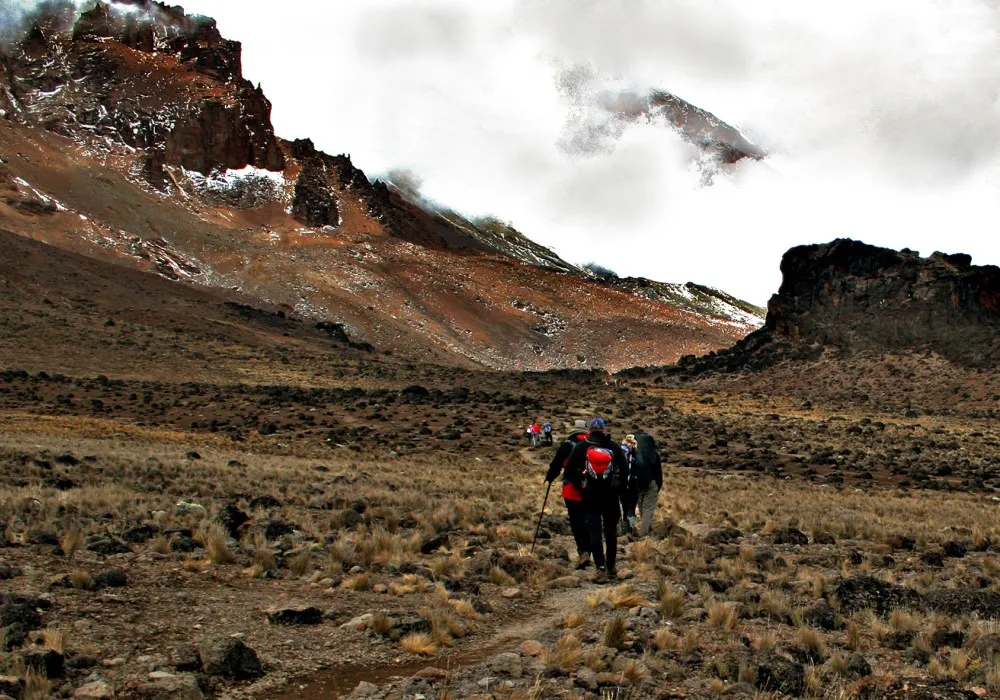
Kilimanjaro Is an Endurance Challenge
Most of the physical effort on Kilimanjaro comes from walking steadily for several hours rather than from short bursts of high-intensity exercise. Your training should therefore build the ability to maintain a controlled effort for longer periods.
You also need to cope with repeated hiking days, tired legs and uneven terrain. That is why a good Kilimanjaro training plan combines endurance, strength and recovery rather than focusing on only one type of fitness.
Endurance
Build the stamina to stay on your feet for several hours at a steady, sustainable pace.
Uphill Strength
Prepare your legs and cardiovascular system for long, gradual ascents.
Downhill Control
Develop the leg strength and control needed for long descents when your muscles are already tired.
Recovery
Train your body to recover well enough to repeat the effort over consecutive days.
The more your preparation resembles long, steady hiking on hills and uneven terrain, the more useful that training will be when you arrive on Kilimanjaro.
Train for the Mountain, Not Just the Gym
The most useful Kilimanjaro training prepares your body for long hours of walking on hills and uneven terrain. Gym work can be valuable, but it should support your hiking rather than replace it.
Walking and hiking should form the foundation of your preparation. Whenever possible, train outdoors on varied terrain and gradually increase both the duration of your walks and the amount of climbing you do.
Strength and cardio training can improve leg strength, aerobic endurance and your ability to keep moving when tired. But the more closely your training resembles a real mountain day, the more specific and useful it becomes.
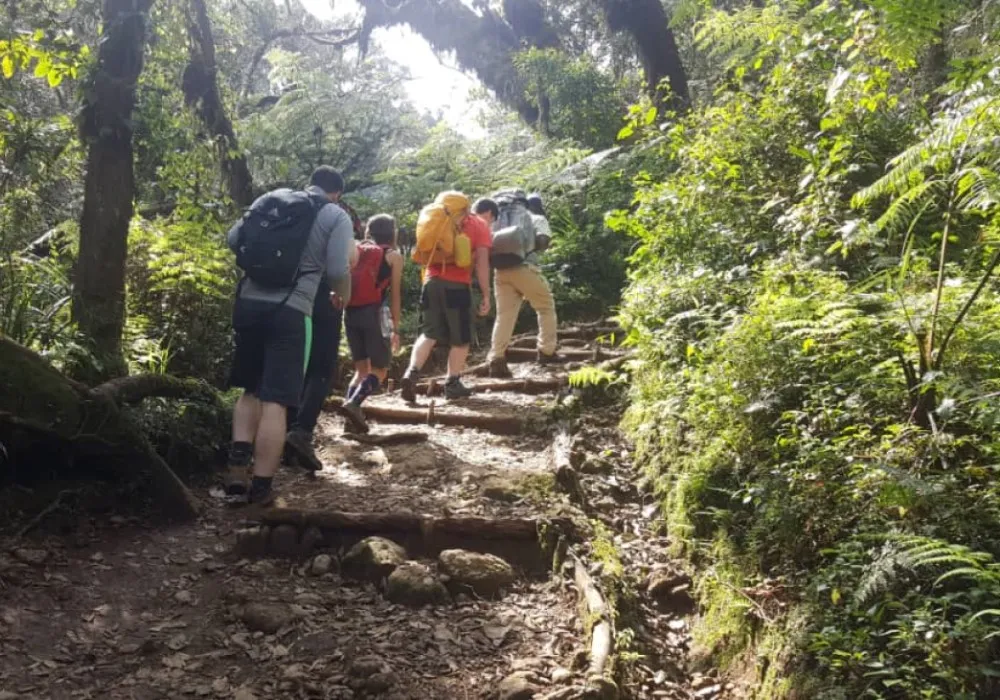
Hiking
Build time on your feet with progressively longer walks and hikes, including hills and uneven terrain.
Cardiovascular Endurance
Build steady aerobic endurance through walking, cycling, incline work or similar low-impact cardio.
Leg Strength
Strengthen your thighs, calves and glutes for repeated climbing and better control on descents.
Train With Your Daypack
Practise with your daypack so your shoulders, back and balance become familiar with carrying it for longer periods.
Back-to-Back Hiking
Occasionally train on consecutive walking or hiking days so your body learns to perform before it is fully recovered.
Practise With Trekking Poles
Use trekking poles during training so they feel natural before your climb, especially on uphill and downhill terrain.
If you have access to hills or hiking trails, make them a regular part of your preparation. If you do not, incline treadmill work, stairs and similar uphill conditioning can help reproduce some of the same physical demands.
When Should You Start Training for Kilimanjaro?
Ideally, you should begin training for Kilimanjaro at least eight weeks before your climb. If you are starting from a lower fitness base, returning to exercise after a break or simply want more time to build gradually, starting earlier is even better.
Build Your Foundation
Establish a consistent routine with regular walking, basic strength work and steady cardio. Focus on good movement and consistency rather than trying to train hard from the first week.
Increase Time on Your Feet
Gradually make your walks and hikes longer, add more hills or incline work and continue building your leg strength and aerobic endurance.
Make Your Training More Mountain-Specific
Include longer hikes, more climbing and uneven terrain where possible. Start using the boots, daypack and trekking poles you plan to take to Kilimanjaro, and introduce occasional back-to-back hiking days.
Complete Your Final Strong Training Weeks
Your training should now feel well established. Complete your final longer hikes, then begin reducing the overall workload so your body has time to recover before departure.
Arrive Rested, Not Exhausted
Keep activity light with easy walking and gentle mobility. Avoid hard training, unusually long sessions or new exercises in the final days before your climb.
Eight weeks is a useful structured training period, but it is not a deadline for getting fit. If you need more time, start 10–12 weeks or even earlier and build gradually. Consistent training over a longer period is far more useful than trying to make up for lost time with very hard sessions.
Already within eight weeks of your climb? Start with our 8-week Kilimanjaro training plan below.
Kilimanjaro Training Plan: Your 8-Week Programme
Our 8-week Kilimanjaro training programme combines walking and hiking, strength work, cardio and recovery to build the endurance and leg strength needed for several days on the mountain. The workload increases gradually so that your training becomes more mountain-specific as your climb approaches.
Use this programme as a guideline. Adapt it to your current fitness level. If you are starting from a lower fitness base, begin more gently and allow yourself additional preparation time.
The Four Training Phases
The programme becomes progressively more mountain-specific, then reduces the workload before your climb so you can arrive rested.
Build the Foundation
Establish your weekly routine, develop consistency and allow your body to adapt to regular walking, strength and aerobic training.
Build Endurance
Increase your time on your feet, gradually add more hills and continue developing the leg strength needed for longer walking days.
Make It Mountain-Specific
Increase longer hikes, hill work and time on uneven terrain. Begin using your daypack, boots and trekking poles more consistently.
Final Build and Taper
Complete your strongest hiking sessions early in this phase, then reduce your workload so that you arrive at Kilimanjaro rested rather than fatigued.
Your Weekly Training Rhythm
This weekly structure preserves the balance between strength, walking, aerobic conditioning, longer hiking and recovery.
Week-by-Week Progression
Each week builds on the previous one, with more endurance and mountain-specific work before tapering in the final week.
Establish the Routine
Begin conservatively. Focus on completing your scheduled sessions comfortably and learning the weekly rhythm rather than pushing intensity.
Build Consistency
Repeat the structure with slightly more confidence. If you are adapting well, increase your walking duration or training load gradually.
Add More Endurance
Increase your time on your feet and begin adding more incline or hill work while maintaining your strength sessions.
Extend the Hiking Work
Make your longer walks more substantial and include hills, stairs or incline work whenever possible.
Train More Like the Mountain
Increase hiking time, use your daypack and practise with your boots and trekking poles. Include varied or uneven terrain where available.
Build Multi-Day Endurance
Continue your long hike and introduce an occasional second walking or hiking session on the following day to practise moving on partially tired legs.
Complete Your Final Strong Week
This can be one of your strongest training weeks, with a solid long hike and mountain-specific work, provided you are recovering well.
Reduce the Load and Recover
Gradually reduce training volume, keep your legs moving with light activity and avoid hard sessions close to departure. The goal is to arrive fresh.
Increase the workload gradually and pay attention to how well you are recovering. If persistent fatigue, pain or poor recovery develops, reduce the workload rather than trying to force your way through the programme.
Make Hiking the Core of Your Kilimanjaro Training
Hiking is the most specific training you can do for Kilimanjaro because it prepares you for the same basic demands you will face on the mountain: long hours on your feet, steady climbing, uneven ground and moving efficiently when your legs are tired.
Start with distances and durations that feel manageable, then increase your time on your feet gradually. The goal is not to walk fast or chase a particular distance; it is to become comfortable moving steadily for longer periods.
What Should Your Longer Hikes Include?
Use your longer training walks to prepare for the practical demands of a Kilimanjaro trekking day.
Time on Your Feet
Gradually build towards spending several hours walking or hiking at a comfortable, sustainable pace.
Hills and Elevation
Include uphill and downhill terrain whenever possible so your legs become familiar with sustained climbing and descending.
Uneven Terrain
Train on trails, rocky paths or other varied surfaces when available so your balance and foot placement improve.
Your Daypack
Carry your daypack during longer training walks so the weight and fit become familiar before the climb.
Your Hiking Boots and Socks
Use the footwear and sock combination you intend to wear on Kilimanjaro so you can identify comfort or blister issues before departure.
Trekking Poles
Practise using your poles on both uphill and downhill sections until the movement feels natural.
Why Back-to-Back Hiking Matters
Kilimanjaro is not a one-day hike. You will walk on consecutive days, often starting the next morning with some fatigue still in your legs. Occasional back-to-back training days help prepare you for that repeated effort.
You do not need to make every weekend a back-to-back hiking weekend. As your training progresses, occasionally follow a longer hike with an easier walk or hike the next day. The second session should teach your body to keep moving on tired legs, not leave you exhausted.
No Mountains Nearby? You Can Still Train Well
You do not need access to mountains to prepare effectively. Look for any opportunity to create sustained uphill work and longer periods on your feet.
A combination of these is more useful than relying on one exercise alone.
One very hard hike will not prepare you for Kilimanjaro. Regular walking and hiking, gradually increased over several weeks, will do far more to build the endurance and confidence you need on the mountain.
Build the Leg Strength You Need for Kilimanjaro
Strength training supports the hiking work you are already doing by building the leg strength and stability needed for long climbs, controlled descents and repeated days on the mountain.
The goal is not to lift the heaviest weights possible. Focus instead on controlled, repeatable movements that strengthen your legs, calves, glutes and core while allowing you to recover well enough to keep hiking and walking regularly.
Useful Strength Exercises for Kilimanjaro
These exercises reflect the structure of the KHT training programme and focus on the muscle groups that support walking, climbing and descending.
Squats
Build strength through the thighs and glutes for uphill walking, repeated steps and general leg endurance.
Leg Press
Develop lower-body strength in the thighs and glutes while allowing you to control the training load.
Leg Extensions
Strengthen the quadriceps, which work hard during both climbing and downhill walking.
Leg Curls
Strengthen the hamstrings to support knee control and balanced lower-body strength.
Calf Raises
Build calf endurance for repeated uphill steps and long periods on your feet.
Toe Pulls
Strengthen the muscles at the front of the lower leg, which can help with foot control during walking and descending.
Back Extensions
Strengthen the lower back and posterior chain to support posture during longer hiking days.
Good Mornings
Train the hips, hamstrings and lower back using a controlled hip-hinge movement.
Crunches
Build basic abdominal strength to support posture and stability while walking with a daypack.
Leg Raises
Strengthen the lower abdominal and hip-flexor area to support trunk control and repeated stepping.
Choose a resistance that allows you to complete each repetition with good control and technique. You should finish the session feeling worked, not destroyed.
If you are new to strength training, start lighter during the first two weeks and increase resistance gradually as your body adapts.
A Simple Three-Day Strength Rhythm
The original KHT programme uses strength sessions on Monday, Wednesday and Friday, allowing roughly 48 hours between sessions. The exact days can be adjusted around your hiking schedule and recovery.
- Squats — 3 × 12
- Leg Extensions — 3 × 10
- Leg Curls — 3 × 10
- Calf Raises — 3 × 20
- Toe Pulls — 3 × 20
- Back Extensions — 3 × 12
- Crunches — 2 × 20
- Leg Raises — 2 × 20
- Leg Press — 4 × 12
- Leg Extensions — 3 × 10
- Leg Curls — 3 × 10
- Calf Raises — 3 × 20
- Toe Pulls — 3 × 20
- Good Mornings — 3 × 12
- Crunches — 2 × 20
- Leg Raises — 2 × 20
- Squats — 4 × 12
- Leg Extensions — 4 × 10
- Leg Curls — 4 × 10
- Calf Raises — 4 × 20
- Toe Pulls — 4 × 20
- Back Extensions — 4 × 12
- Crunches — 3 × 20
- Leg Raises — 3 × 20
No Gym? You Can Still Build Useful Strength
A gym is convenient, but it is not essential. Squats, step-ups, lunges, calf raises, core exercises and other bodyweight movements can all be adapted for home training. What matters most is consistent, controlled strength work that supports your hiking.
Use strength training to support your walking and hiking, not replace it. The best results come from combining stronger legs and core stability with regular time on your feet, hills and longer endurance sessions.
Build the Aerobic Endurance You Need for Kilimanjaro
Cardio training helps build the aerobic endurance needed to keep walking steadily for long periods without becoming exhausted too quickly. For Kilimanjaro, the focus should be on controlled, sustainable effort rather than speed or high-intensity performance.
Your cardio sessions should support your hiking, not compete with it. Walking, incline work, cycling and stair training can all improve endurance while placing different levels of stress on the joints and muscles.
Useful Cardio Training Options
Choose activities that help you build steady aerobic fitness while still allowing you to recover well enough for your walking, hiking and strength sessions.
Brisk Walking and Hiking
The most specific option because it develops endurance while also increasing time on your feet.
Incline Treadmill Walking
Useful when hills are limited and allows you to build sustained uphill effort at a controlled pace.
Stairs or Stair Climber
Helps develop climbing endurance and repeated stepping strength, especially when outdoor hills are difficult to access.
Cycling
A useful low-impact way to improve aerobic fitness while reducing impact on the legs compared with additional walking.
How Cardio Fits Into the KHT Training Programme
In the original KHT programme, cardio is added to the Monday, Wednesday and Friday strength sessions. These short sessions supplement your walking and hiking rather than replacing them.
20 Minutes Total
10 minutes cycling + 10 minutes of low-intensity stair climbing or incline work.
20 Minutes Total
10 minutes cycling + 10 minutes of slightly harder stair climbing or incline work.
25 Minutes Total
15 minutes cycling + 10 minutes of low-intensity stair climbing or incline work.
Keep most cardio sessions controlled. Your effort should generally feel manageable enough that you could still speak in short sentences. You are building endurance for long mountain days, not training for a sprint.
If these sessions feel easy as your fitness improves, increase the duration or incline gradually rather than suddenly making every session very intense.
Do You Need to Run to Train for Kilimanjaro?
No. Running can improve cardiovascular fitness if you already enjoy it, but it is not required to prepare for Kilimanjaro. Walking, hiking, incline training, stairs and cycling can all build the aerobic endurance you need.
If you are not already a runner, there is no need to start running simply because you are climbing Kilimanjaro. Your training time is generally better spent building consistent walking and hiking endurance.
The best cardio preparation for Kilimanjaro is the kind you can perform consistently and recover from well. Build your aerobic fitness gradually, then combine it with hiking, hills and strength work for a more complete preparation programme.
Train With the Gear You’ll Use on Kilimanjaro
Use your training walks to become familiar with the gear you will actually use on Kilimanjaro. Your boots, socks, daypack and trekking poles should all feel comfortable and familiar before you arrive in Tanzania.
Training with your gear gives you time to adjust the fit, solve rubbing or pressure points and learn what feels comfortable over longer periods. These small details are much easier to fix at home than during your climb.
Gear to Use During Your Training
Practise with the equipment you will rely on most during your daily Kilimanjaro trekking stages.
Hiking Boots
Wear your boots regularly during training so they are well broken in and you know they remain comfortable during longer walks, hills and descents.
Hiking Socks
Test the exact sock combinations you plan to use. This helps you identify rubbing, pressure points and moisture issues before the trek.
Daypack
Train with the daypack you intend to carry so you can adjust the shoulder straps, hip belt and packing position for comfort.
Trekking Poles
Practise using your poles on both uphill and downhill terrain so adjusting their length and moving with them feels natural.
Train With a Realistic Daypack — Not Your Full Expedition Load
On Kilimanjaro, a porter carries your main duffel bag. You carry only your daypack with the items you need during the day, such as water, extra layers, rain gear, snacks and personal essentials.
Your training pack should therefore resemble the weight and contents of your actual daypack rather than an unnecessarily heavy backpack. The aim is to become comfortable carrying what you will realistically use on the mountain.
Increase Pack Weight Gradually
Start with a light daypack and add weight gradually as your training progresses. Use longer walks and hikes to check that the pack remains comfortable and does not create shoulder, back or hip discomfort.
Use Your Full Hiking Setup Before Departure
During your final longer training hikes, wear the boots, socks and clothing layers you expect to use on Kilimanjaro and carry your daypack with a realistic load. This is your opportunity to identify any last equipment or comfort problems before you travel.
The first time you wear your boots, adjust your daypack or use trekking poles should not be on Kilimanjaro. Regular practice with your actual hiking gear makes your equipment easier and more comfortable to use when the trek begins.
Fitness Does Not Prevent Altitude Sickness
Good fitness can make the physical demands of Kilimanjaro easier to manage, but it does not protect you from altitude sickness. A very fit hiker can still develop symptoms of Acute Mountain Sickness (AMS) if the body does not acclimatise well to the increasing altitude.
Fitness and acclimatisation are different. Training prepares your muscles, cardiovascular system and endurance for the physical effort. Acclimatisation is your body’s response to reduced oxygen availability at altitude.
Fitness Can Help With
- Walking for several hours
- Climbing hills and uneven terrain
- Managing repeated trekking days
- Carrying your daypack
- Recovering from physical exertion
Fitness Does Not
- Prevent Acute Mountain Sickness
- Guarantee successful acclimatisation
- Make it safe to ascend too quickly
- Replace a well-paced itinerary
- Mean you should ignore altitude symptoms
Kilimanjaro Reaches 5,895 Metres
Uhuru Peak stands at 5,895 metres above sea level. At this altitude, acclimatisation becomes a major part of the challenge, regardless of how fit you are.
That is why route choice, gradual ascent, a sensible pace and monitoring how you feel are just as important as physical preparation.
Health Monitoring During Your KHT Climb
During KHT climbs, our guides monitor hikers throughout the trek and carry out regular health checks.
Oxygen is carried for emergency use, but it is not a substitute for proper acclimatisation or a safe ascent profile.
Read our guide to altitude sickness on Kilimanjaro , including symptoms, prevention and acclimatisation.
Medical note: If you have a medical condition, take regular medication or have concerns about exercising or travelling to high altitude, speak to a qualified healthcare professional before beginning your training or climb.
Strong fitness helps you cope with the effort of Kilimanjaro, but safe acclimatisation depends on how your body responds to altitude and how gradually you ascend. Both matter, but they are not the same thing.
Common Kilimanjaro Training Mistakes to Avoid
A good training plan does not need to be extreme, but it does need to be consistent and specific to the demands of Kilimanjaro. Avoiding a few common mistakes can make your preparation more effective and reduce the chance of arriving at the mountain tired, underprepared or carrying unnecessary niggles.
Starting Too Late
Leaving your preparation until the final few weeks gives you very little time to build endurance gradually. Start earlier where possible and increase your training progressively rather than trying to catch up with very hard sessions.
Training Hard, but Not Hiking Enough
Gym sessions and cardio can help, but they do not replace regular walking and hiking. Kilimanjaro is a multi-day trek, so your training should include plenty of time on your feet.
Ignoring Hills and Descents
Flat walking is useful, but it does not fully prepare your legs for sustained climbing and long downhill sections. Include hills, stairs or incline work whenever possible.
Increasing Too Much, Too Quickly
Rapid increases in distance, duration, hill work or strength training can leave you excessively fatigued or sore. Build the workload gradually and allow your body time to adapt.
Training With the Wrong Gear
Do not save new boots, socks, a daypack or trekking poles for the mountain. Use your actual hiking gear during training so comfort and fit problems can be corrected before departure.
Neglecting Recovery
Fitness improves when training is balanced with enough recovery. Rest days, sleep and lighter sessions are part of the programme, not time wasted.
Assuming Fitness Prevents Altitude Sickness
Being very fit does not make you immune to Acute Mountain Sickness. Fitness prepares you for the physical effort; acclimatisation depends on how your body responds to altitude and how gradually you ascend.
Do Not Train Hard Right Up to Departure
One of the biggest mistakes is trying to squeeze in extra fitness during the final few days before travelling. Hard training at this stage is unlikely to create meaningful new fitness, but it can leave you tired, sore or carrying a minor injury into your climb.
Complete your final demanding sessions earlier, then reduce the workload and focus on light activity, mobility and recovery before departure. You want to arrive in Tanzania feeling fresh.
You will gain more from several weeks of steady, progressive training than from a few very hard sessions close to departure. Build your fitness gradually, recover well and arrive at Kilimanjaro ready to hike rather than recover from your training.
How Do I Know If I’m Ready for Kilimanjaro?
There is no single fitness test that can guarantee you are ready for Kilimanjaro. A better indicator is whether you have built enough endurance, strength and consistency to handle long walking days, hills and repeated effort without needing excessive recovery.
By the final weeks of your training, you should feel increasingly comfortable with the type of activity you will experience on the mountain.
You Can Walk for Several Hours
You can complete a long walk or hike at a steady pace without feeling completely exhausted afterwards.
You Can Handle Hills
Sustained uphill walking feels manageable, and you can control your pace rather than needing frequent stops because of poor fitness.
Your Legs Cope With Descents
Your thighs, knees and calves can manage downhill walking without becoming excessively sore or unstable.
You Recover Well
After a longer training session, you recover well enough to walk or train again the following day.
Your Gear Feels Familiar
Your boots, socks, daypack and trekking poles have all been tested on longer walks and do not create unresolved comfort problems.
Your Training Has Been Consistent
You have built your fitness over several weeks rather than relying on a few hard sessions close to departure.
You Do Not Need to Be Fast
Kilimanjaro is climbed at a slow, controlled pace. Your goal is not to reach a particular walking speed during training, but to build the endurance to keep moving steadily for long periods.
Being able to maintain a sustainable effort is more useful than being able to walk quickly for a short distance.
Not Feeling Ready Yet? Keep Building Gradually
If longer walks still leave you completely exhausted, hills feel unusually difficult or you are struggling to recover between sessions, use the remaining time to keep building gradually rather than suddenly increasing the intensity.
If your climb is still several weeks away, small improvements made consistently can add up. If you have any concerns about your health or ability to exercise safely, speak to a qualified healthcare professional.
Kilimanjaro will still be physically demanding, even after good training. The aim is to arrive with enough endurance, strength and confidence that the physical effort is manageable and you can focus on pacing yourself through each day of the climb.
Frequently Asked Questions About Kilimanjaro Training
Still have questions about how to prepare? These answers cover some of the most common questions hikers ask us about fitness, training and getting ready for Kilimanjaro.
How long should I train for Kilimanjaro?
For most hikers, at least eight weeks of structured training is a useful starting point. If you are currently less active, returning to exercise after a break or simply want more time to build gradually, starting 10–12 weeks or earlier is even better.
Is 8 weeks enough to train for Kilimanjaro?
Eight weeks can be enough if you already have a reasonable fitness base and train consistently. If you are starting from a lower fitness level, use the 8-week programme as the structured part of a longer preparation period rather than trying to rush your fitness.
See our 8-week Kilimanjaro training plan .
How fit do I need to be to climb Kilimanjaro?
You do not need to be an elite athlete, but you should be comfortable walking for several hours, handling hills and recovering well enough to repeat the effort on consecutive days. Endurance and consistency are more important than speed.
Can a beginner train for Kilimanjaro?
Yes. Many people begin their Kilimanjaro preparation without a strong hiking background. The key is to start early, build gradually and give your body enough time to adapt to regular walking, hills, strength work and longer hiking days.
If you are new to exercise or have any concerns about exercising safely, speak to a qualified healthcare professional before beginning a training programme.
Do I need to run to train for Kilimanjaro?
No. Running is not required. Walking, hiking, incline treadmill work, stairs and cycling can all build the aerobic endurance needed for Kilimanjaro. If you already enjoy running, it can form part of your training, but it should not replace your hiking preparation.
Should I train with my Kilimanjaro daypack?
Yes. Use your daypack during longer training walks so you become comfortable with its fit and weight. On Kilimanjaro, your porter carries your main duffel, while you carry the items you need during the day such as water, extra layers, rain gear and snacks.
What if I do not have mountains nearby?
You can still train effectively. Use stairs, an incline treadmill, a stair climber, repeated local hills or steep roads to create uphill work. Combine this with longer flat walks to continue building time on your feet.
Is gym training enough for Kilimanjaro?
No. Strength and cardio work in the gym can be very useful, but they should support regular walking and hiking rather than replace them. Hiking remains the most specific training for Kilimanjaro.
How many days a week should I train?
The KHT 8-week programme uses a structured mix of walking, hiking, strength, cardio and recovery across the week. The exact number of sessions can be adjusted to your current fitness and recovery, but consistency is more important than trying to train hard every day.
Does being very fit prevent altitude sickness?
No. Fitness helps with the physical effort of climbing Kilimanjaro, but it does not prevent Acute Mountain Sickness. A very fit person can still struggle with altitude because fitness and acclimatisation are different.
Learn more in our guide to altitude sickness on Kilimanjaro .
When should I stop hard training before Kilimanjaro?
Reduce your training load during the final week and avoid hard or unfamiliar sessions in the last few days before departure. The goal is to arrive in Tanzania rested and healthy, not tired from a final burst of training.
Ready to Start Planning Your Kilimanjaro Climb?
Choose your Kilimanjaro route, find a departure date that suits you and start preparing for the mountain with an experienced local team behind you.
Our small-group climbs include experienced mountain guides, a dedicated mountain crew and carefully planned itineraries designed to give you the time and support you need on Kilimanjaro.