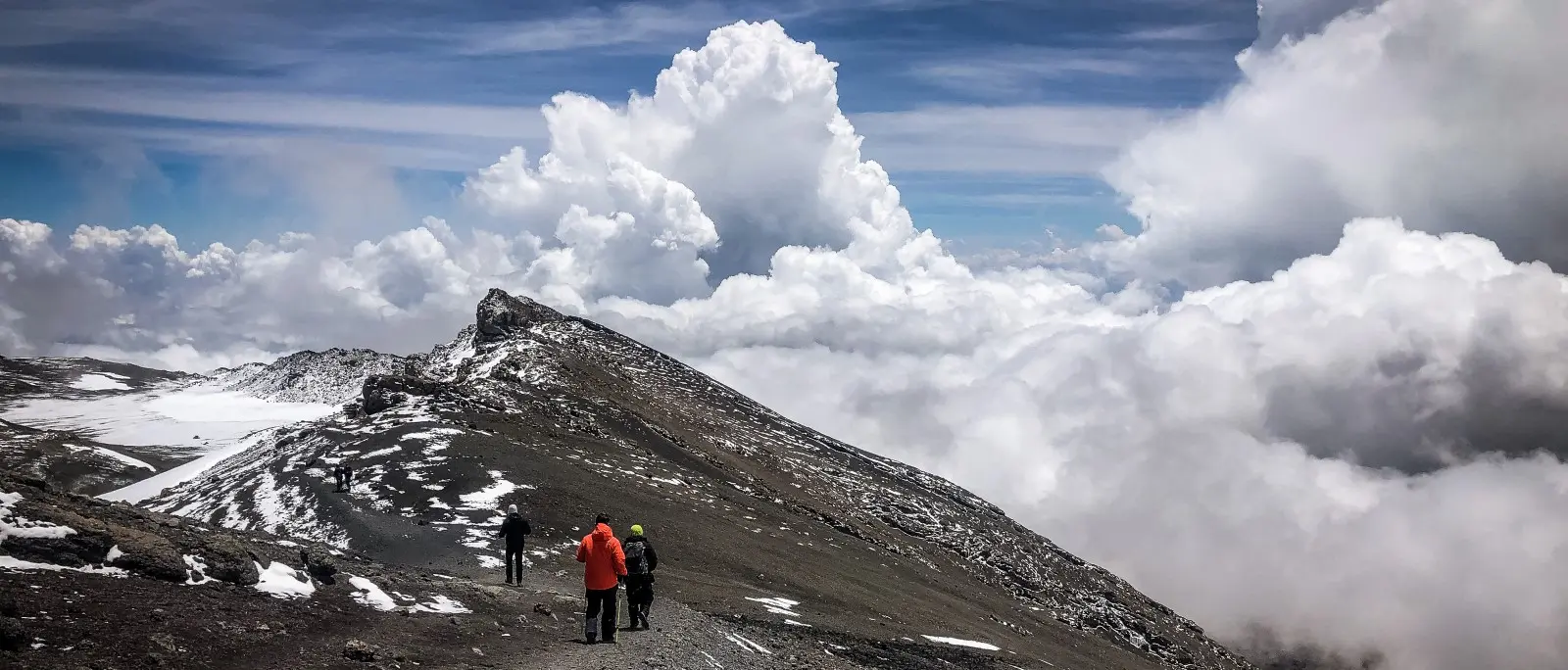
Hikers climbing Mount Kilimanjaro on a high-altitude mountain trail

Kilimanjaro Climbing Difficulty

How Hard Is It to Climb Kilimanjaro?

Kilimanjaro is not a technical climb, but reaching 5,895 metres should never be underestimated.

For most climbers, altitude is the greatest challenge. Long trekking days, cold conditions, accumulated fatigue and a demanding summit night all contribute to the difficulty — but good preparation and a well-paced itinerary can make a significant difference.

15+ Years Kilimanjaro Experience
95% Summit Success Across Our Kilimanjaro Climbs
Small Groups Maximum 12 Climbers
Safety First Daily Health Checks
Excellent Reviews Trustpilot

The Quick Answer

So, How Difficult Is Kilimanjaro?

Kilimanjaro is physically demanding but not technically difficult on the standard trekking routes. For most climbers, the greatest challenge is altitude rather than technical climbing. Long days on the trail, cold conditions, accumulated fatigue and a demanding summit night all add to the difficulty.

You do not need mountaineering experience to climb Kilimanjaro on the standard routes, but that does not make it an easy mountain. Reaching Uhuru Peak at 5,895 metres requires good preparation, enough time to acclimatise and the ability to keep walking for several hours over consecutive days.

Altitude

5,895 m

The high altitude is the greatest challenge for most climbers.

Technical Skills

Not Normally Required

Standard routes are high-altitude treks rather than technical climbs.

Fitness

Good Endurance Needed

Expect several hours of walking on consecutive days.

Summit Night

The Toughest Stage

Cold, darkness, fatigue and high altitude combine during the final ascent.

Mental Challenge

Significant

Patience and determination become increasingly important as the climb progresses.

The Bottom Line

Technically Straightforward. Physically Demanding. Altitude Challenging.

That combination is what makes Kilimanjaro achievable for many ordinary hikers while still being a serious high-altitude challenge.

How hard Kilimanjaro feels will vary from person to person. Fitness, route length, acclimatisation, weather and your individual response to altitude can all influence the experience. Below, we look at each of these factors in more detail.

Understanding the Challenge

Kilimanjaro Is Not a Technical Climb — So Why Is It Hard?

On the standard Kilimanjaro routes, you are trekking rather than mountaineering. Under normal conditions, climbers do not need ropes, technical climbing equipment or previous mountaineering experience. Most of the journey is completed on foot along established mountain trails.

What makes Kilimanjaro difficult is the environment in which that trekking takes place. Over several days you climb through changing terrain and weather while gaining thousands of metres in altitude. As you get higher, the same walking pace can feel considerably harder than it would at lower elevations.

Technical Difficulty

Relatively Low

The standard routes are trekking routes and do not normally require specialist climbing skills or technical mountaineering experience.

Physical Demands

Several Days on Your Feet

The challenge builds over consecutive trekking days rather than coming from one technically difficult section of the mountain.

High Altitude

The Major Challenge

As elevation increases, reduced oxygen availability makes physical effort harder and increases the risk of altitude illness.

A Common Concern

What About the Barranco Wall?

The Barranco Wall can look intimidating in photographs, but it is not a technical rock climb. The ascent involves steep hiking and some sections where you may use your hands for balance. KHT guides assist climbers through the more awkward sections, and the Wall is normally crossed during the daytime rather than as part of summit night.

KHT Guide Insight

Being comfortable on hiking trails matters far more than having climbing experience. Good endurance, steady pacing and allowing enough time for acclimatisation are much more important on Kilimanjaro than technical mountaineering ability.

The Biggest Challenge

Why Altitude Makes Kilimanjaro Difficult

Kilimanjaro rises to 5,895 metres above sea level. As you climb higher, the amount of oxygen available to your body decreases, making even a slow walking pace feel more demanding. This is why altitude — rather than technical climbing — is the biggest challenge for many people attempting Kilimanjaro.

You cannot predict exactly how your body will respond based on fitness alone. A very fit climber can experience altitude problems, while someone with more modest fitness may acclimatise well. The important factors are giving your body enough time, ascending gradually and telling your guide about symptoms as soon as they appear.
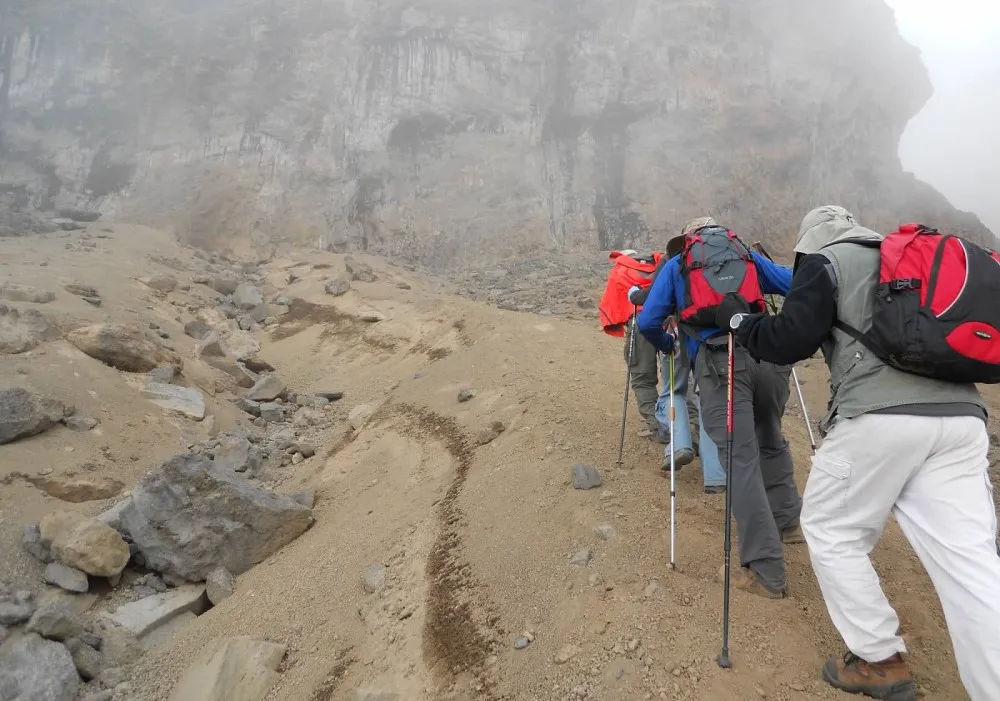
Hikers walking uphill towards Mawenzi on Mount Kilimanjaro

Acclimatisation

Why More Days on Kilimanjaro Matter

Shorter itineraries may look attractive because they reduce the number of days on the mountain, but they also compress the ascent. A longer itinerary allows altitude to be gained more gradually and gives your body more time to adjust before summit night.

KHT Health Monitoring

Your Guide Needs to Know How You Feel

KHT guides monitor climbers throughout the trek and carry out regular health checks. A pulse oximeter may be used as one part of the assessment, but the reading is considered alongside your symptoms, behaviour, breathing, walking ability and overall progress.

If you develop symptoms, tell your guide immediately rather than trying to hide them or push through. Depending on the situation, the appropriate response may include slowing the pace, resting, closer monitoring or descending.

Safety always takes priority over reaching the summit.

Read Our Kilimanjaro Altitude Sickness Guide
Physical Preparation

How Fit Do You Need to Be to Climb Kilimanjaro?

You do not need to be an elite athlete to climb Kilimanjaro, but you do need enough endurance to walk for several hours on consecutive days. The challenge is less about speed or strength and more about being able to keep moving at a steady pace as fatigue and altitude accumulate.

Most days involve sustained trekking rather than intense bursts of exercise. Your training should therefore prepare you for time on your feet, uphill and downhill walking, and carrying a daypack — not simply improve your gym fitness.

More Important

Walking Endurance

Being comfortable walking for several hours at a steady pace.

Consecutive Days

Recovering well enough to hike again the following morning.

Hills & Stairs

Preparing your legs for sustained uphill and downhill movement.

Time With Your Daypack

Training with the pack and footwear you expect to use on Kilimanjaro.

Less Important

Speed

Kilimanjaro is deliberately climbed slowly. Fast hiking is not the objective.

Maximum Strength

Strength work can support your training, but maximum strength is not what the climb demands.

Being an Elite Athlete

Exceptional fitness does not guarantee that your body will acclimatise successfully at high altitude.

An Important Distinction

Fitness and Acclimatisation Are Not the Same Thing

Training can make the physical work of climbing Kilimanjaro easier, but it cannot guarantee that you will acclimatise successfully. A strong climber still needs to ascend gradually, follow the guide's pace and allow enough days on the mountain.

Preparing Your Body

Train for the Mountain, Not Just the Gym

Hiking is the most specific preparation for Kilimanjaro. Build your training gradually and include longer walks, hills or stairs and back-to-back training days as your fitness improves. Wear your hiking boots and carry your daypack during some sessions so that both are familiar before you arrive in Tanzania.

Strength and cardiovascular training can support your preparation, but the goal is practical trekking endurance: being able to walk comfortably for hours and repeat that effort the next day.

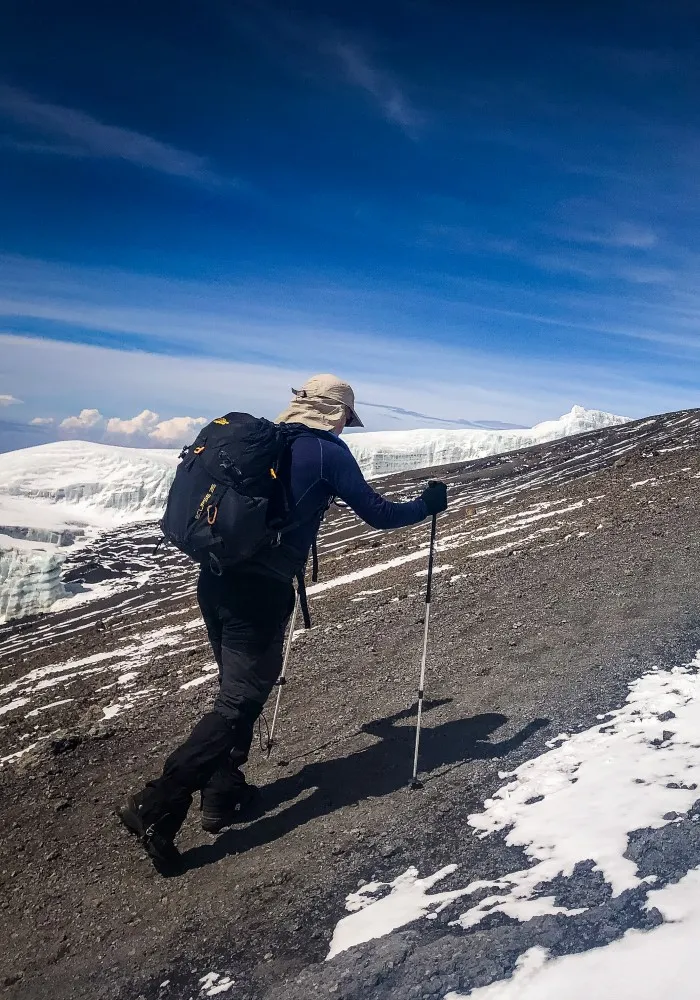
Hiker walking along the crater rim near the summit of Mount Kilimanjaro

The Toughest Part of the Climb

How Hard Is It to Summit Kilimanjaro?

For most climbers, summit night is the hardest part of climbing Kilimanjaro. You start the final ascent during the night, when temperatures are low and you are already several days into the trek. As you climb towards the crater rim, the increasing altitude makes every step more demanding.

The challenge is not technical climbing. It is continuing to walk slowly and steadily for hours while dealing with cold, fatigue and the effects of very high altitude. This is where your acclimatisation, training, equipment and mental preparation all come together.

The Final Ascent

What Makes Summit Night So Difficult?

The Beginning

Start During the Night

You leave camp in darkness and begin the long, slow ascent towards the crater rim.

Ascent

Cold & Fatigue

Temperatures fall and the accumulated effort of the previous trekking days becomes noticeable.

Higher Up

Very High Altitude

As you climb higher, maintaining even a slow walking pace requires more effort.

Crater Rim

Stella Point — 5,756 m

On routes approaching from the south, Stella Point is a major milestone — but the summit is still ahead.

The Summit

Uhuru Peak — 5,895 m

The final section follows the crater rim to the highest point on Kilimanjaro and in Africa.

Important to Know

Reaching Stella Point Is Not the End

Reaching the crater rim can feel like the finish after the long overnight ascent, but Uhuru Peak is still ahead. The final walk around the crater rim is not technically difficult, yet at this altitude it can feel surprisingly demanding.

The KHT Approach

Slow Is Exactly How You Should Be Climbing

Summit night is not a race. Your guides set a slow, controlled pace designed to conserve energy and help you manage the altitude. Trying to keep up with another climber or pushing the pace unnecessarily can make an already difficult night harder.

The objective is simple: keep moving steadily, communicate honestly with your guide and focus on the next section of the climb rather than the entire distance still ahead.

KHT Guide Insight

Many climbers find summit night more mentally demanding than they expected. Breaking the climb into small goals — the next rest stop, the next section of trail, then the crater rim — can make the challenge feel much more manageable.

Not Every Climb Feels the Same

What Makes a Kilimanjaro Climb Easier or Harder?

Two people can climb the same mountain and have very different experiences. Kilimanjaro is always a serious high-altitude trek, but route choice, itinerary length, preparation, weather and even how well you sleep can change how difficult the climb feels.

Some of these factors are within your control before you arrive in Tanzania. Others, particularly your individual response to altitude and mountain weather, are not. The goal is not to make Kilimanjaro “easy”, but to give yourself the best possible conditions for a safe and manageable climb.

Route & Itinerary

More Time Can Make a Big Difference

A well-paced itinerary gives your body more opportunity to acclimatise. Very short routes compress the altitude gain and can make the climb considerably tougher.

Your Fitness

Endurance Makes the Trek More Manageable

Training will not prevent altitude sickness, but good walking endurance means the normal physical demands of the mountain use less of your available energy.

Pacing

Slower Is Usually Better

Kilimanjaro is not a race. A controlled pace helps conserve energy and avoids unnecessary exertion as you move higher.

Weather & Temperature

Conditions Can Change Quickly

Rain, wind, cold and poor trail conditions can turn an otherwise manageable trekking day into a much harder one.

Sleep & Recovery

Several Days of Fatigue Add Up

Camping, unfamiliar surroundings and altitude can affect sleep. How well you eat, hydrate and recover between trekking days can influence how you feel later in the climb.

Your Response to Altitude

The Factor You Cannot Fully Predict

Previous fitness or trekking experience cannot tell you exactly how your body will respond at nearly 6,000 metres. This is why acclimatisation time and honest communication with your guide matter so much.

Practical Preparation

Control What You Can

You cannot control the altitude or the weather, but there are several things you can do before and during your climb to put yourself in a stronger position.

Before the Climb

  • Choose an itinerary with enough acclimatisation time
  • Train consistently for walking endurance
  • Break in your hiking boots
  • Test your daypack and equipment
  • Arrive rested rather than exhausted from travel

On the Mountain

  • Follow your guide's pace
  • Eat and drink regularly
  • Keep warm and dry
  • Tell your guide how you are feeling
  • Conserve energy for the higher days and summit night

Who Can Climb Kilimanjaro?

Can an Ordinary Person or Beginner Climb Kilimanjaro?

Yes. Many people who climb Kilimanjaro are ordinary hikers rather than experienced mountaineers. Because the standard routes are trekking routes, previous technical climbing experience is not normally required.

But being a beginner does not mean you can arrive unprepared. You still need to train, choose an appropriate itinerary, have suitable clothing and equipment, and be prepared for several days of trekking at high altitude.

Different Starting Points

Who Is Kilimanjaro Suitable For?

First-Time High-Altitude Trekkers

You do not need previous high-altitude experience, although understanding what altitude can feel like and allowing enough time to acclimatise are important.

Regular Walkers & Hikers

If you already enjoy long walks or hiking, you have a useful foundation. Training should build your endurance so you can comfortably repeat that effort over several days.

People Who Aren't Currently Very Active

Starting from a lower fitness level does not automatically rule out Kilimanjaro, but you will need enough time to build your fitness gradually before the climb.

Older Climbers

Age alone does not determine whether someone can climb Kilimanjaro. Fitness, health, preparation and individual response to altitude are more relevant than simply the number on your passport.

A Common Concern

What If You Are Nervous About Heights?

Most of the standard Kilimanjaro routes involve ordinary mountain trekking rather than exposed technical climbing. However, some sections can feel intimidating if you are uncomfortable with heights.

The Barranco Wall is the section that causes the most concern when people see photographs online. It is steep and there are places where you may use your hands for balance, but it is not a technical rock climb. Your guides will help you through the more awkward sections.

The Reality

You Don't Need to Be a Mountaineer — But You Do Need to Prepare

You Don't Need

  • Technical climbing experience
  • Exceptional speed
  • Elite athletic fitness
  • Previous Kilimanjaro experience

You Do Need

  • Good walking endurance
  • Appropriate training
  • Suitable clothing and equipment
  • Enough time to acclimatise
  • A willingness to walk slowly and listen to your guides

Kilimanjaro becomes much more realistic when you stop thinking of it as a technical climbing challenge and start preparing for what it actually is: a multi-day trek to very high altitude.

If you are considering Kilimanjaro and wondering whether you are capable of it, focus less on whether you fit the image of a “mountain climber” and more on whether you are willing to prepare properly. Fitness can be developed, equipment can be tested and the right itinerary can be chosen. Your response to altitude cannot be guaranteed, which is why acclimatisation and good mountain management remain so important.

Frequently Asked Questions

Kilimanjaro Climbing Difficulty FAQ

Still wondering how hard Kilimanjaro is? These are some of the most common questions climbers ask about fitness, altitude, summit night and the physical difficulty of the climb.

How difficult is it to climb Kilimanjaro?

Kilimanjaro is physically demanding but not normally technically difficult on the standard trekking routes. For many climbers, altitude is the greatest challenge. Several consecutive trekking days, cold conditions, fatigue and summit night all add to the difficulty.

How hard is it to summit Kilimanjaro?

Summit night is usually the toughest stage of the climb. You begin the final ascent during the night and continue climbing at very high altitude while dealing with cold temperatures and accumulated fatigue. The walking is not technically difficult, but the altitude can make each step feel considerably harder.

Do you need climbing experience for Kilimanjaro?

Previous technical climbing or mountaineering experience is not normally required on Kilimanjaro's standard trekking routes. Being comfortable hiking for several hours, having good endurance and preparing properly are more important than knowing technical climbing skills.

How fit do you need to be to climb Kilimanjaro?

You do not need elite athletic fitness, but you should have good walking endurance. Your body needs to cope with several hours of trekking on consecutive days, including uphill and downhill terrain and the much longer summit attempt.

See our Mount Kilimanjaro Training Plan for practical training guidance.

Can a beginner climb Kilimanjaro?

Yes. Many people climb Kilimanjaro without previous mountaineering experience. Beginners still need to prepare properly, build their walking endurance, use suitable clothing and equipment, and choose an itinerary that provides enough time for acclimatisation.

What is the hardest part of climbing Kilimanjaro?

Altitude is the biggest overall challenge for many climbers, while summit night is usually the most demanding individual stage. By then you are at very high altitude, have already spent several days trekking, and must continue walking through the night in cold conditions.

Which Kilimanjaro route makes the climb more manageable?

Route length and acclimatisation profile can make a significant difference. KHT generally recommends the 8-day Lemosho Route or 7-day Machame Route because the additional time provides better opportunities for gradual acclimatisation than very short itineraries.

Read more about the 8-day Lemosho Route or 7-day Machame Route .

Is the Barranco Wall difficult or dangerous?

The Barranco Wall looks intimidating in photographs, but it is not normally a technical rock climb. It involves steep hiking and some sections where you may use your hands for balance. KHT guides assist climbers through the more awkward sections.

Hikers walking above the clouds on Mount Kilimanjaro

Ready for the Challenge?

Kilimanjaro Is Challenging — But Preparation Makes a Difference

You do not need to be a mountaineer to climb Kilimanjaro. Give yourself enough time to acclimatise, prepare properly and climb with an experienced mountain team. Explore our upcoming group climbs or talk to us about planning your Kilimanjaro adventure.

15+ Years Experience 95% Summit Success Small Groups