
Mount Kilimanjaro Facts: Interesting Facts About Africa’s Highest Mountain
At 5,895 metres (19,341 ft), Mount Kilimanjaro is Africa’s highest mountain and one of the world’s most remarkable volcanic landscapes. Discover fascinating facts about its height, volcanic origins, glaciers, climate zones, wildlife, history and what it is really like to climb.
- 5,895 m high
- Africa’s highest mountain
- 3 volcanic cones
- UNESCO World Heritage Site
Mount Kilimanjaro Facts at a Glance
Mount Kilimanjaro rises above northern Tanzania to become the highest mountain in Africa. Before exploring its volcanoes, glaciers, wildlife and history in more detail, here are some of the most important facts about Mount Kilimanjaro.
Africa’s Highest Mountain
Mount Kilimanjaro reaches 5,895 metres (19,341 ft) above sea level.
Located in Tanzania
Kilimanjaro stands in northern Tanzania, close to the border with Kenya.
Uhuru Peak
The mountain’s highest point is Uhuru Peak, situated on the rim of Kibo’s summit crater.
A Volcanic Mountain
Kilimanjaro is a huge volcanic massif formed by three main volcanic cones.
Kibo, Mawenzi & Shira
The three volcanic cones are Kibo, Mawenzi and Shira, with Kibo forming the highest part of the mountain.
A UNESCO World Heritage Site
Kilimanjaro National Park has been recognised as a UNESCO World Heritage Site since 1987.
Dramatic Climate Zones
Climbers move through dramatically different environments, from cultivated foothills and forest to high-altitude alpine and summit conditions.
A High-Altitude Trek
The standard Kilimanjaro routes are non-technical trekking routes, although altitude and extreme summit conditions make the climb demanding.
How High Is Mount Kilimanjaro and Where Is It?
Kilimanjaro’s location and extraordinary height are a big part of what makes the mountain so distinctive. It rises dramatically from northern Tanzania and reaches the highest point anywhere on the African continent.
Kilimanjaro Is Africa’s Highest Mountain
Mount Kilimanjaro reaches 5,895 metres (19,341 ft) above sea level, making it the highest mountain in Africa.
Its enormous elevation also places the summit in an extreme high-altitude environment, despite the mountain’s location close to the equator.
Uhuru Peak Is the Highest Point
Uhuru Peak is Kilimanjaro’s highest point and lies on the rim of Kibo’s summit crater.
Reaching Uhuru Peak means standing at the highest point in Tanzania and on the African continent.
Mount Kilimanjaro Is in Tanzania
Kilimanjaro is located in northern Tanzania, close to the international border with Kenya.
Some of the most famous distant views of the mountain are photographed from Kenya, which can cause confusion, but Kilimanjaro itself lies within Tanzania.
Kilimanjaro Rises Dramatically Above the Surrounding Plains
Unlike mountains formed within a long chain of high peaks, Kilimanjaro rises as an enormous isolated volcanic massif above the surrounding East African landscape. This dramatic vertical rise is one reason the mountain appears so imposing from a distance.
Mount Kilimanjaro Volcano Facts
Mount Kilimanjaro is not simply one volcanic peak. It is a vast volcanic massif formed by three main cones — Kibo, Mawenzi and Shira — each representing a different part of the mountain’s geological history.
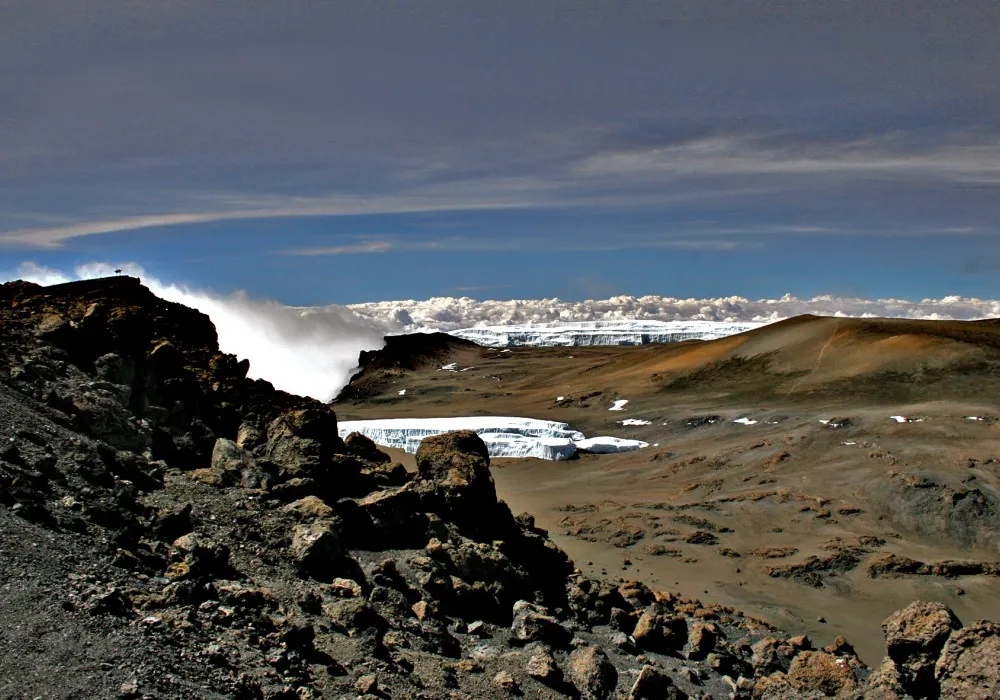
Kilimanjaro Is Made Up of Three Volcanic Cones
The three principal volcanic cones are Kibo, Mawenzi and Shira. Together they form the enormous Mount Kilimanjaro volcanic massif.
Kibo dominates the centre of the mountain and contains Kilimanjaro’s highest point, Uhuru Peak. Mawenzi forms the rugged eastern summit, while Shira is the older and heavily eroded western cone.
The crater landscape near Kibo’s summit, together with exposed volcanic rock, ash and remaining ice, gives climbers a striking view of Kilimanjaro’s volcanic origins.
Kibo
Kibo is the highest cone and contains Uhuru Peak, the 5,895 m summit of Kilimanjaro. Its broad summit area includes the main crater and inner volcanic features.
Mawenzi
Mawenzi is Kilimanjaro’s rugged eastern cone. Its steep, jagged ridges look very different from the broad rounded profile of Kibo and give this side of Kilimanjaro a dramatic appearance.
Shira
Shira is the oldest and most eroded of the three cones. Much of its original volcanic structure has worn away, leaving the broad Shira Plateau on the western side of Kilimanjaro.
Is Mount Kilimanjaro an Active Volcano?
Kilimanjaro is generally described as a dormant volcanic complex rather than an extinct mountain. Kibo is the youngest of the three main cones and still shows signs of geothermal activity around its summit crater, while Mawenzi and Shira are much older and heavily eroded.
Kilimanjaro Glaciers, Climate Zones & Unique Plants
One of the most remarkable facts about Mount Kilimanjaro is how quickly its landscape changes with altitude. A trek can begin among lush vegetation and eventually reach a cold, barren summit environment containing volcanic rock, snow and remaining ice.
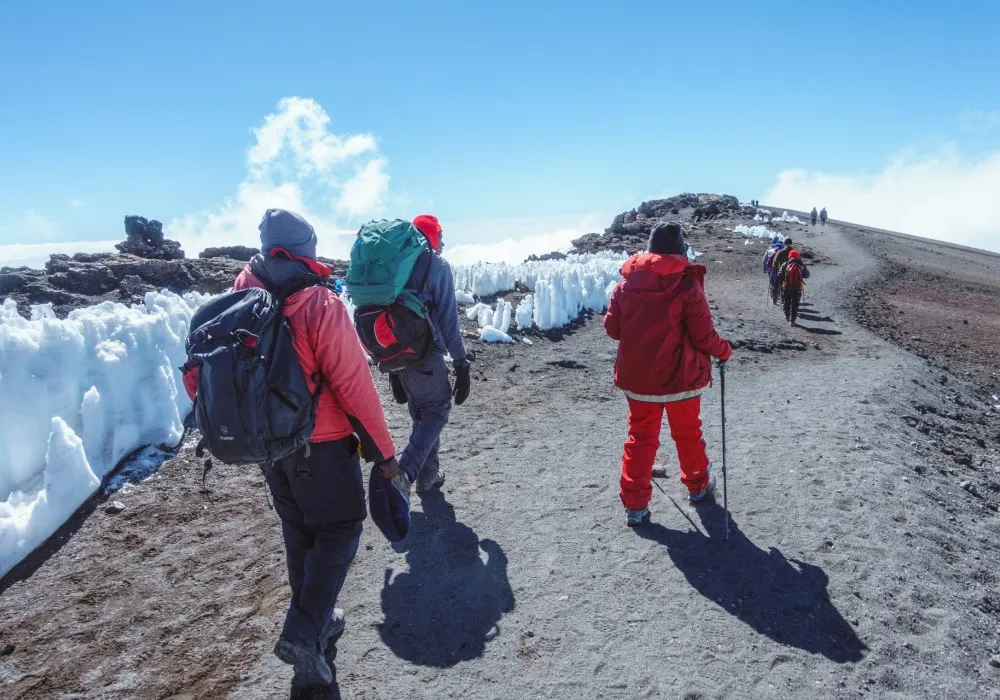
Kilimanjaro Has Glaciers Close to the Equator
One of Kilimanjaro’s most famous features is the presence of glaciers and permanent ice near its summit, despite the mountain lying only a few degrees south of the equator.
These ice formations occur at extreme altitude around Kibo and create a striking contrast with the dark volcanic terrain surrounding them.
Kilimanjaro’s glaciers have retreated substantially over time, making the remaining ice one of the mountain’s most recognisable and closely studied natural features.
Climbers Pass Through Dramatically Different Environments
As altitude increases, Kilimanjaro changes from lower cultivated landscapes and mountain forest to heath and moorland, alpine terrain and finally the harsh high-altitude summit environment.
Summit Conditions Are Very Different From the Base
Temperatures, vegetation and weather can change dramatically as hikers gain altitude. Conditions near the summit can be cold, dry and exposed, even when the lower slopes are much warmer.
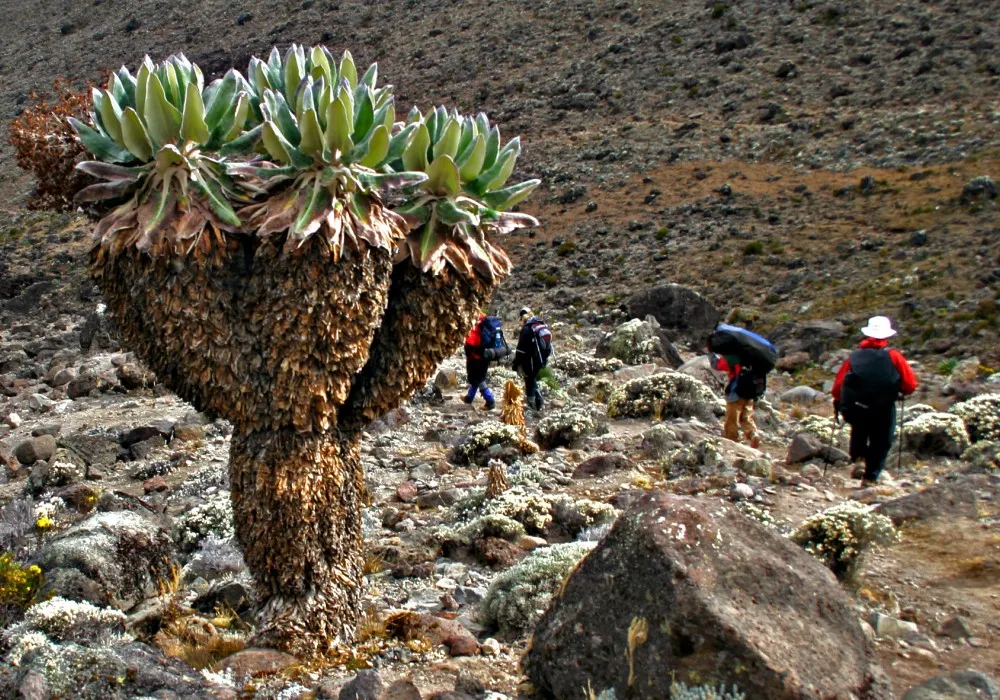
Kilimanjaro Has Remarkable High-Altitude Plants
Kilimanjaro’s heath and moorland areas contain some highly distinctive vegetation, including the unusual giant groundsels that have adapted to the mountain’s cold nights, intense sunlight and rapidly changing conditions.
Their unusual appearance makes them one of the most memorable natural sights encountered by hikers before reaching Kilimanjaro’s increasingly barren upper slopes.
Wildlife and Nature Facts About Mount Kilimanjaro
Kilimanjaro is much more than a high volcanic summit. Its lower slopes, forests and high-altitude ecosystems support a wide variety of plant and animal life, while Kilimanjaro National Park protects much of the mountain’s remarkable natural environment.
Kilimanjaro Has Extensive Mountain Forest
The lower mountain includes areas of montane forest, where higher rainfall and milder temperatures support much denser vegetation than the exposed upper slopes.
These forests form an important transition between the cultivated foothills below and the heath and moorland zones higher on the mountain.
Wildlife Lives on Kilimanjaro
Wildlife is most commonly encountered in the forested and lower-altitude areas of the mountain. Animals found in Kilimanjaro’s ecosystem include colobus monkeys and blue monkeys, together with a variety of birds and other mammals.
Sightings vary by route, altitude, weather and time of day.
Kilimanjaro National Park Protects the Mountain
Much of Mount Kilimanjaro lies within Kilimanjaro National Park, protecting its forests, high-altitude landscapes and summit area.
The park is also internationally recognised as a UNESCO World Heritage Site, reflecting the mountain’s exceptional natural importance.
You Are More Likely to See Wildlife Lower on the Mountain
As climbers move higher, vegetation becomes increasingly sparse and the environment becomes colder, drier and more exposed. This means most wildlife encounters occur in the forest and lower ecological zones rather than near Kilimanjaro’s summit.
Interesting Facts About Climbing Mount Kilimanjaro
Kilimanjaro is unusual among the world’s great high mountains because reaching its summit on the standard routes does not normally require technical mountaineering skills. That does not mean the climb is easy — altitude, cold, long trekking days and summit night remain serious challenges.
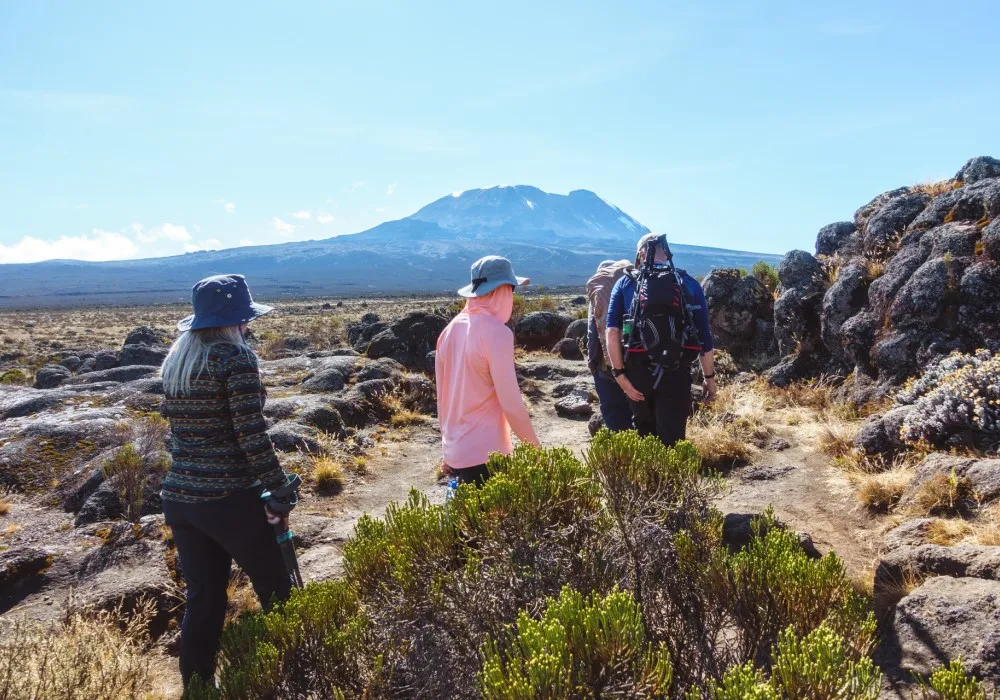
Kilimanjaro Is a Trek Rather Than a Technical Climb
On the normal trekking routes, climbers do not generally need ropes, rock-climbing techniques or technical mountaineering skills to reach Uhuru Peak.
Instead, the main difficulty comes from walking for several days at increasing altitude, adapting to thinner air and coping with cold, exposed conditions near the summit.
Good preparation, a sensible itinerary and gradual acclimatisation are therefore extremely important.
There Are Several Established Routes
Kilimanjaro can be climbed using several established trekking routes, each with different scenery, length, approach direction and acclimatisation profile. Popular choices include Lemosho, Machame and Marangu.
Summit Night Usually Begins in the Dark
The final summit attempt normally starts late at night or around midnight. Climbers ascend through the coldest hours of the night so they can reach the upper crater rim and, conditions permitting, continue towards Uhuru Peak around sunrise.
Acclimatisation Is More Important Than Speed
Being fit helps with the physical demands of trekking, but fitness does not prevent altitude sickness. Slower ascent profiles and sufficient time for acclimatisation are important parts of planning a Kilimanjaro climb.
Longer Routes Can Give More Time to Adapt
Routes and itineraries that spend more days on the mountain can provide additional time for the body to adjust to increasing altitude. This is one reason itinerary length matters when comparing Kilimanjaro routes.
Porters Are an Essential Part of Kilimanjaro Expeditions
Kilimanjaro climbs are supported by mountain crews that typically include guides, assistant guides, cooks and porters. Porters carry expedition equipment and supplies between camps, allowing hikers to carry a smaller daypack while trekking.
Historical and Fun Facts About Mount Kilimanjaro
Kilimanjaro’s story extends far beyond modern trekking. The mountain has long formed part of the landscape and culture of northern Tanzania, while its summit history reflects exploration, local knowledge and Tanzania’s own national history.
The First Recorded European Summit Was in 1889
German geographer Hans Meyer and Austrian mountaineer Ludwig Purtscheller reached Kilimanjaro’s highest summit in October 1889.
Their ascent was supported by Tanzanian guide Yohannes Kinyala Lauwo, highlighting the important role of local mountain knowledge in the expedition.
Uhuru Means “Freedom”
Kilimanjaro’s highest point is known as Uhuru Peak. “Uhuru” is the Swahili word for freedom.
The name became associated with the summit around Tanganyika’s independence in 1961, giving the highest point in Africa an important connection to the country’s national history.
Kilimanjaro Became a National Park in the 1970s
Kilimanjaro National Park was established in 1973 to help protect the mountain and its surrounding ecosystems.
It later became a UNESCO World Heritage Site in 1987, recognising Kilimanjaro’s exceptional natural importance.
A Few More Things That Make Kilimanjaro Remarkable
From equatorial ice to dramatic volcanic scenery, Kilimanjaro combines features that are rarely found together on a single mountain.
Kilimanjaro Can Be Seen From Kenya
Although the mountain is entirely in Tanzania, some of its most famous distant views are photographed from neighbouring Kenya.
The Summit Is on a Volcano
Uhuru Peak sits on the crater rim of Kibo, the highest of Kilimanjaro’s three volcanic cones.
Hikers Cross Several Very Different Landscapes
A single Kilimanjaro trek can pass from lush vegetation and forest to moorland, alpine desert and a cold summit environment.
Ice Exists Only a Few Degrees From the Equator
Kilimanjaro’s remaining summit glaciers and ice fields occur at extreme altitude despite the mountain’s equatorial location.
Shira Was Once a Much Larger Volcano
Shira is the oldest and most heavily eroded of Kilimanjaro’s volcanic cones, leaving the broad Shira Plateau visible today.
Kilimanjaro Stands in Isolation
Unlike a peak buried within a long mountain chain, Kilimanjaro rises dramatically above the surrounding East African plains.
Mount Kilimanjaro Facts: FAQs
Here are quick answers to some of the most common questions about Mount Kilimanjaro, including its height, volcanic origins, location and what makes the mountain unique.
What are five interesting facts about Mount Kilimanjaro?
Mount Kilimanjaro is 5,895 metres (19,341 ft) high, is the highest mountain in Africa, consists of three main volcanic cones, has glaciers close to the equator and can be climbed on the standard trekking routes without technical mountaineering skills.
Is Mount Kilimanjaro a volcano?
Yes. Kilimanjaro is a large volcanic massif formed by three main volcanic cones: Kibo, Mawenzi and Shira. Kibo is the highest cone and contains Uhuru Peak, the highest point on the mountain.
Is Mount Kilimanjaro still active?
Kilimanjaro is generally described as a dormant volcanic complex. Kibo is the youngest of the three main cones and still shows signs of geothermal activity around its summit area, while Mawenzi and Shira are much older.
Is Mount Kilimanjaro in Kenya or Tanzania?
Mount Kilimanjaro is in northern Tanzania, close to the border with Kenya. Some famous photographs of the mountain are taken from Kenya, which can sometimes cause confusion about its location.
Why is Mount Kilimanjaro famous?
Kilimanjaro is famous for being Africa’s highest mountain, its dramatic isolated volcanic form, summit glaciers, changing ecological zones and the fact that its highest point can be reached by trekking rather than technical climbing on the normal routes.
Can beginners climb Mount Kilimanjaro?
Many first-time high-altitude trekkers climb Kilimanjaro successfully, but the mountain should not be considered easy. Good preparation, appropriate fitness, a suitable route and enough time for acclimatisation are important because altitude is one of the main challenges.
Turn These Kilimanjaro Facts Into Your Own Adventure
Reading about Mount Kilimanjaro is only the beginning. Explore the different routes, compare itineraries and start planning a climb that gives you the time, preparation and support needed to experience Africa’s highest mountain for yourself.