
What is the hardest part of climbing Kilimanjaro? For most hikers, the hardest part is summit night.
The final ascent combines very high altitude, freezing temperatures, darkness, fatigue and several hours of continuous uphill walking before sunrise. By this stage of the climb, your body is also working with much less oxygen than at lower elevations.
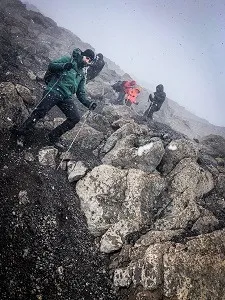
Why is summit night so difficult?
Summit night usually begins late at night or around midnight, depending on the route and itinerary. Hikers climb for several hours in darkness before reaching the crater rim and continuing towards Uhuru Peak.
The combination of cold, altitude and accumulated fatigue makes this stage much harder than an ordinary hiking day.
Is altitude the biggest challenge on Kilimanjaro?
Altitude is one of the biggest challenges because the amount of available oxygen decreases as you climb higher.
This can make walking feel much harder than expected and may cause symptoms such as headaches, nausea, dizziness or unusual fatigue. Good acclimatization and a slow pace are therefore very important.
How cold does it feel near the summit?
Temperatures near the summit can fall well below freezing, and wind can make conditions feel even colder.
Warm layers, gloves, a hat and proper summit clothing are essential because cold conditions can make the final ascent much more demanding.
Is the final ascent very steep?
The summit approach is steep and slow, especially on loose volcanic terrain. Hikers normally move at a very controlled pace to conserve energy and reduce the strain caused by altitude.
The difficulty comes less from technical climbing and more from the length, gradient, cold and reduced oxygen.
How can I prepare for the hardest part of Kilimanjaro?
The best preparation is a combination of endurance training, hill walking, strength work and spending enough days on the mountain to acclimatize.
Choosing a longer itinerary such as the 8-day Lemosho or 7-day Machame Route gives your body more time to adjust before summit night.
Preparing for summit night?
Read our Kilimanjaro training guide for advice on endurance, strength and hiking preparation.
You can also read our Kilimanjaro safety guide for more information about altitude and health on the mountain.